For your first trip to Sri Lanka, many people wonder, "When is the best time to go?"
In fact, Sri Lanka, though a small island nation roughly the size of Japan's Shikoku region, possesses a unique climate where the rainy and dry seasons differ by region.
In other words, it's a country where you can enjoy travelling all year round – you could even say that 'anywhere is in its prime season at any time!'
This article examines the climate patterns of Sri Lanka. By area と By purpose of travel We shall explain in detail, divided into sections.
World Heritage SiteWe introduce the optimal times for activities such as pilgrimages, Ayurveda, safaris, and surfing, along with monthly weather variations by region.
Finally, we have also prepared a table that allows you to compare the information at a glance.An itinerary to fully enjoy the colourful tropical paradise of Sri Lanka Let's think about it together!
Overview of Sri Lanka's Climate and Best Season
Sri Lanka's climate is close to the equatorTropical monsoon climateis.
The average temperature throughout the year is high, ranging from 27 to 30°C. The coastal areas are hot and humid, while the central highlands are somewhat cooler.There is no distinction between the seasons.。
However, whilst it is hot throughout the year, it does not have distinct seasons like Japan,Each region has a 'dry season' and a 'rainy season'.I will do so.
These two monsoons are responsible for creating the dry season and rainy season.
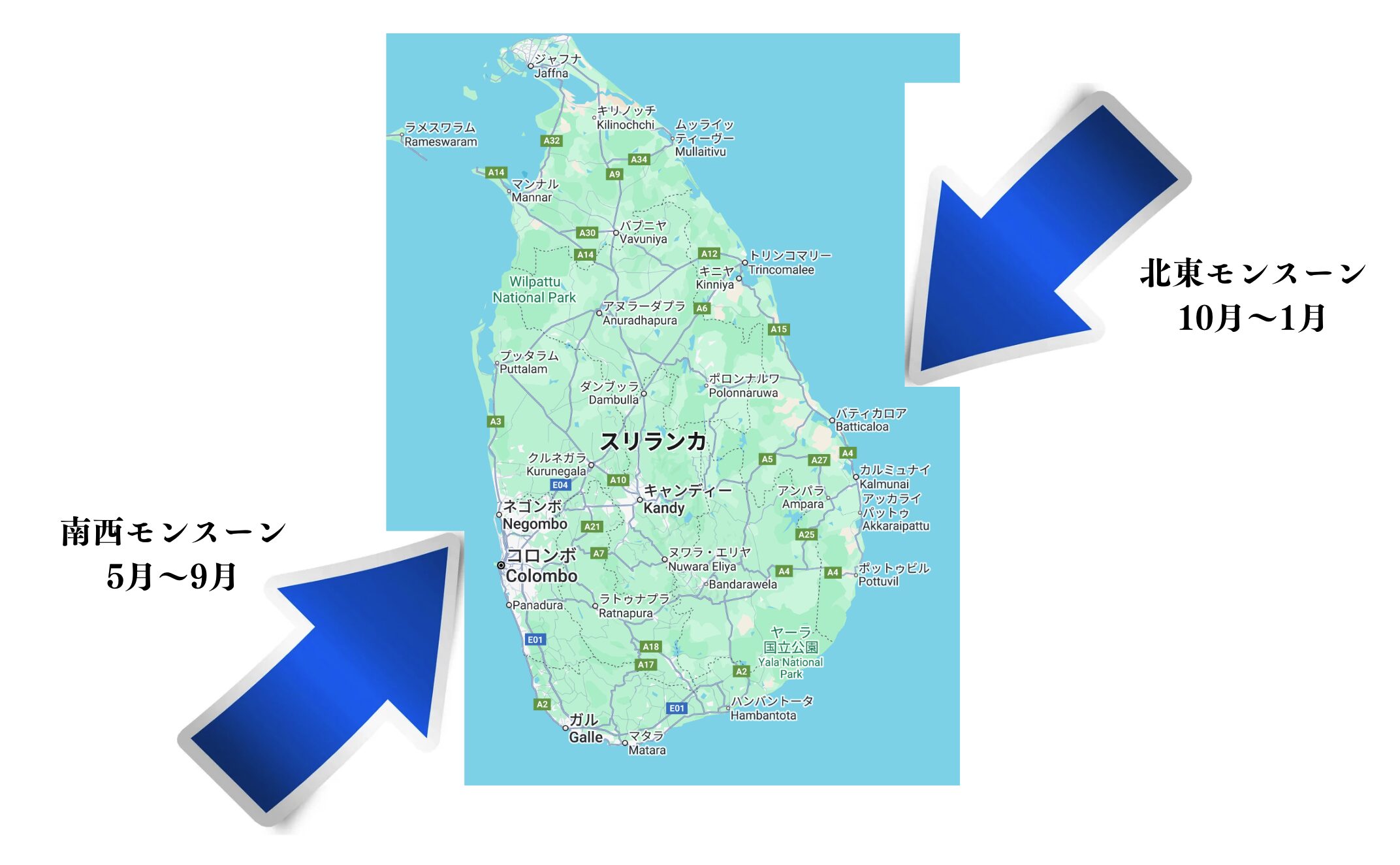
Two monsoons
Southwest monsoon (May to September):
Winds blow from the Indian Ocean towards the southwest, bringing the rainy season to southwestern Sri Lanka during this period. Meanwhile, the north and east experience the dry season at this time.
Northeast Monsoon (October to around January):
Winds blow from the Bay of Bengal towards the north and east, bringing the rainy season to the northern and eastern coasts. Conversely, the south-west experiences its dry season during this period.
In short,Sri Lanka experiences opposite rainy and dry seasons in its 'south-west' and 'north-east' regions.has become.
The dry season in the southwest (such as Colombo and Galle) coincides with the rainy season in the north and east (such as Trincomalee and Jaffna), and vice versa.
For this reasonThe best season for tourism also varies by area.is.
Generally speaking,The overall best season is from November to April, which corresponds to the dry season in the southwest.It is often said.
However, in reality, some regions experience a 'double dry season' where rainfall remains low even from July to August,Summer (July–August) is also perfectly suitable for travel.。
For example, "During the European summer holidays, the south-west sees a bit more rain, but in return, the east coast is absolutely glorious!"
📝Trivia: Sri Lanka is accessible for travel in any month of the year,It is difficult to time a single trip to coincide with the peak season for all areas.ThereforePrioritise and select regions and routes that align with the purpose of your journey.The key to a highly satisfying itinerary.
Now, let's take a closer look at the climate and best seasons for each region.
Sri Lanka is broadly divided into three regions for explanation: (1) the south-western coastal area, (2) the northern and eastern area, and (3) the central highland area.
Best Season by Region in Sri Lanka
As rainfall patterns vary across different regions, the best season for tourism (the dry season)and it rains a lotThe off-season (rainy season) differs.
Below, we introduce the characteristics, recommended times, and points to note for each area.
Southwestern coastal areas (Colombo, Galle, Southern Coast, etc.)
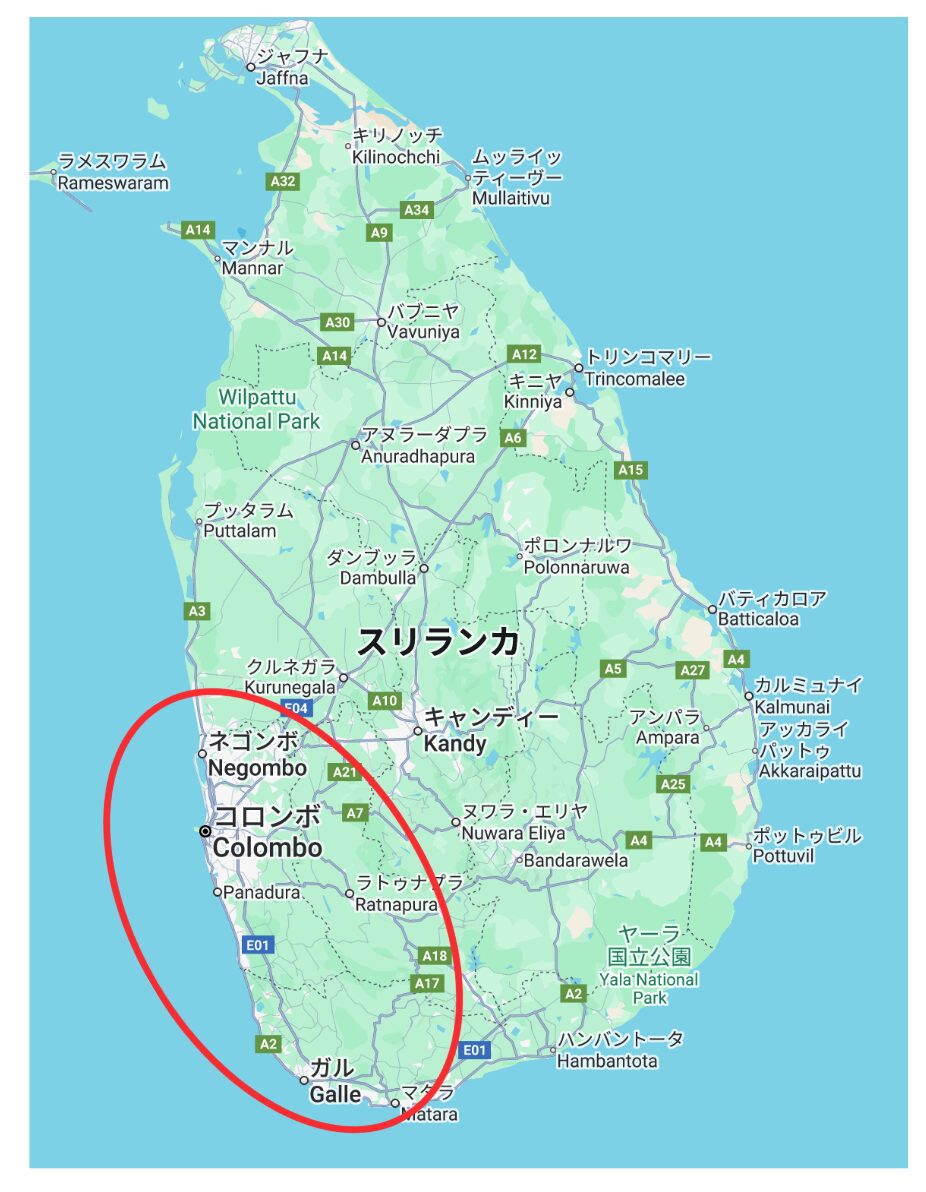
Major cities and tourist destinations
Colombo (largest city)
Negombo
Goal (Fortress City of World Heritage)
Hikkaduwa
Bentota
Millissa
Yala National Park (in the south-east, though access is from the southern coast), etc.
The south-western area isResorts and tourist centresFrom Colombo's metropolitan sightseeing to exploring Galle's old town, swimming and marine sports at beautiful beach resorts (such as snorkelling in Hikkaduwa), whale watching departing from Mirissa, and even safaris in Yala National Park,A packed areaThroughout the year, it attracts many winter holidaymakers from Europe and America, and its tourist infrastructure is well developed.
Best season (dry season)
SouthwestLate November to around MarchThe dry season offers high sunshine levels, making it ideal for sightseeing. Particularly from December to February, the weather remains comfortably summery without extreme heat, and the sea becomes calm, making it perfect for beaches and diving. As this period coincides with the European winter holidays, resorts become bustling, so booking hotels early is advisable. Departing from Mirissa,Whale watching (for blue whales) is also in season from December to March.And you're highly likely to encounter whales.
Off-peak season
May to OctoberIt is the rainy season of the southwest monsoon, butTravel itself is possibleis. ParticularlyJuly to AugustRainfall has decreased since its peak in May and June, and "surprisingly, there are quite a few sunny days."This is the season. Showers tend to concentrate in the evening to night, with some days remaining dry during the day; days of torrential rain all day long in the middle of the day are not particularly common. This period coincides with Japan's summer holidays and Silver Week.With fewer Western tourists, there's the advantage of easier reservations at renowned restaurants and hotels. Airfares and accommodation costs often drop to off-season rates, making the rainy season a viable option for a luxurious yet affordable trip.
Period requiring attention
AprilThe south-west experiences its hottest period of the year. With temperatures exceeding 30°C day after day, it becomes so sweltering that even locals avoid going out during the daytime. If you're sightseeing on foot, it's best to confine your activities to the cooler morning and evening hours. During the day, it's wise to take it easy, resting at your hotel or seeking refuge by the pool. Furthermore,mid-October to mid-NovemberThe monsoon transition period often brings unstable weather. Sudden thunderstorms can occur, so if visiting the southwest during this time, do remember to pack rain gear and allow for contingency time.
🐘 Trivia: Safaris to Yala National Park (southeast) are accessed from the southwest. ThisYala will be closed for approximately one month around September.There are years when closures are implemented. This is for the protection of animal breeding and environmental conservation. As closures coincide with periods of heavy rainfall, the impact on travel is minimal; however, we recommend checking the latest information just in case.
Northern and Eastern Areas (Jaffna, Trincomalee, East Coast, etc.)
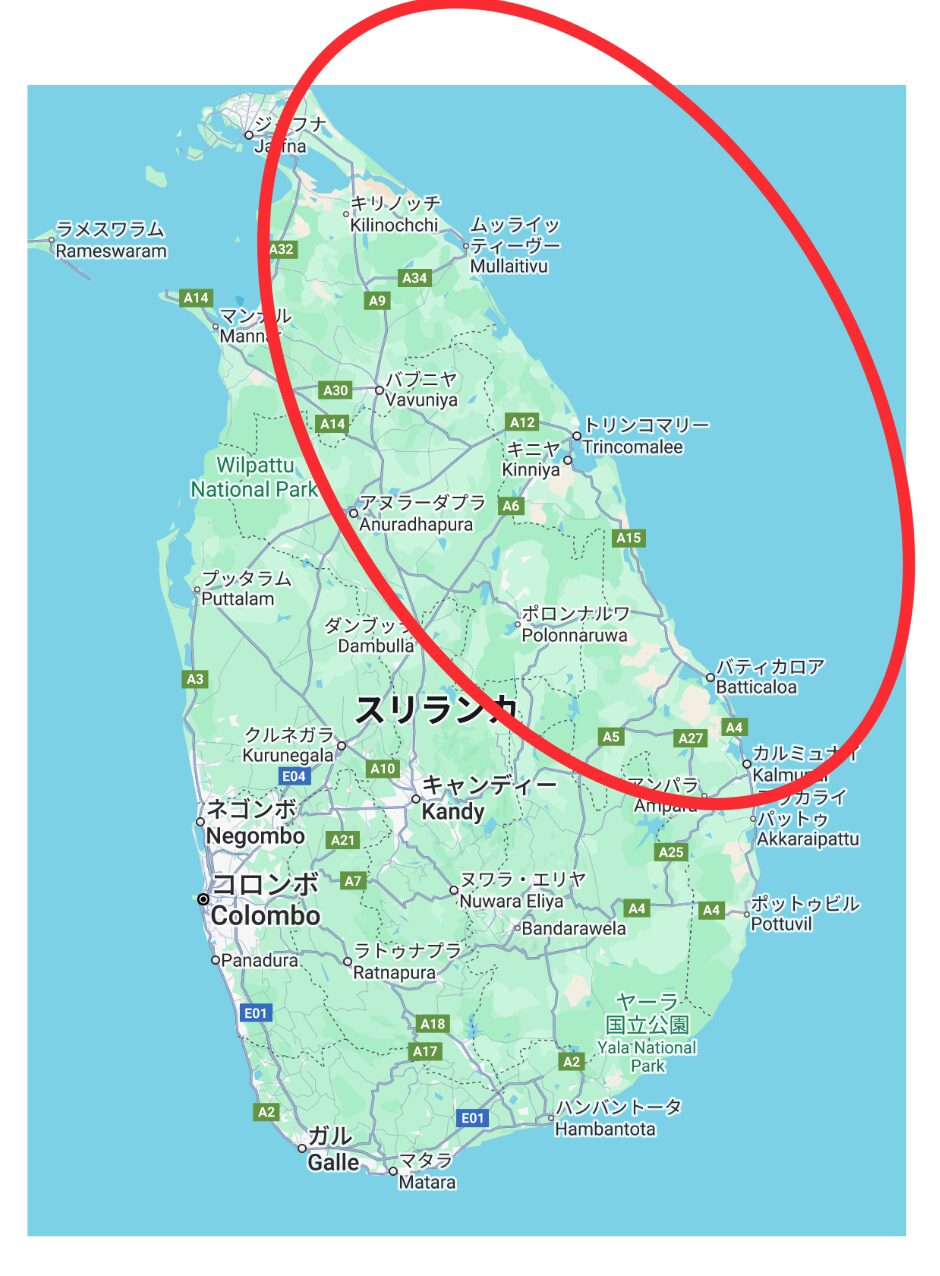
Major cities and tourist destinations
Jaffna (northernmost town)
Trincomalee (a port town on the east coast)
Niraveli
Batikarōa
Argan Bay (a famous surf spot in the east)
Polonnaruwa and Anuradhapura (ancient capital ruins in the North-Central Province; climate zone is the same arid region as this area) etc.
The northern and eastern coastal regions constitute what is known as Sri Lanka's 'dry zone'.corresponds to.This is an area with low annual rainfall and numerous large reservoirs (tanks) for irrigation.Culturally, northern Jaffna is part of the Tamil cultural sphere, presenting a distinct atmosphere from the south and making it a fascinating area.
The east coast retains untouched coral reefs.Hidden beach paradises such as Argan Bay, where world championships in snorkelling, diving and surfing are held, have seen their popularity rise in recent years.
Best season (dry season)
North to eastern regionsFrom around May, rainfall begins to decrease, and from June to Septemberis the peak of the dry season. ParticularlyJuly to August sees clear skies continuing, with calm seas ideal for marine sports on the east coast.At this time of year, Argan Bay also hosts a world-class surfing competition, drawing surfers from across the globe. Additionally, departing from Trincomalee,Whale watching (dolphins and whales) also operates from March to August.It is particularly popular during the summer holiday season in July and August. This period also allows for easier sightseeing of the northern and central ruins without being hampered by rain (※See the section 'World Heritage Tour' below for details).
Off-peak season
North and EastThe dry season lasts for a long periodTherefore, it is an area with a favourable tourist season lasting over six months. However, just before the rainy season begins,SeptemberAlso, before the onset of the northeast monsoon, the weather is relatively stable and suitable for sightseeing (as the rains in the southwest are just subsiding, making it a relatively easy time to travel throughout the country). On the other hand,Northern Jaffna is geographically less affected by the monsoon.This special area is said to experience minimal variation between its extreme wet and dry seasons. Even during the wet season, rainfall typically ceases after a short period, meaning Jaffna tourism can be enjoyed throughout the year with few major constraints. Indeed, some locals in Jaffna remark that "the only time it rains heavily is around November to December; the other months are mostly dry" (based on the author's field research).
Period requiring attention
November to JanuaryThe north and east are in the midst of the rainy season. Particularly from November to the first half of December, frequent heavy squalls occur due to the northeast monsoon, and some years see flooding, so caution is advised. Coastal areas experience rough seas,From December to February, swimming and surfing on the east coast are dangerous.Therefore, let us refrain. AlsoAprilThe northern and eastern regions experience their hottest period. In Jaffna, temperatures can reach nearly 40°C on some days, with the intense sunlight making the skin feel painfully hot. Outdoor sightseeing should be limited to mornings and evenings, with time spent indoors in air-conditioned spaces during the day to prevent heatstroke. Furthermore, around July and August, a major festival is held at Jaffna's Hindu temple (Nallu Kandaswamy Temple), causing the entire town to become crowded with pilgrims and local residents returning home. If your visit coincides with this period, arrange accommodation well in advance and plan your travel with ample time.
Central Highlands Area (Kandy, Nuwara Eliya, Highland Resorts)
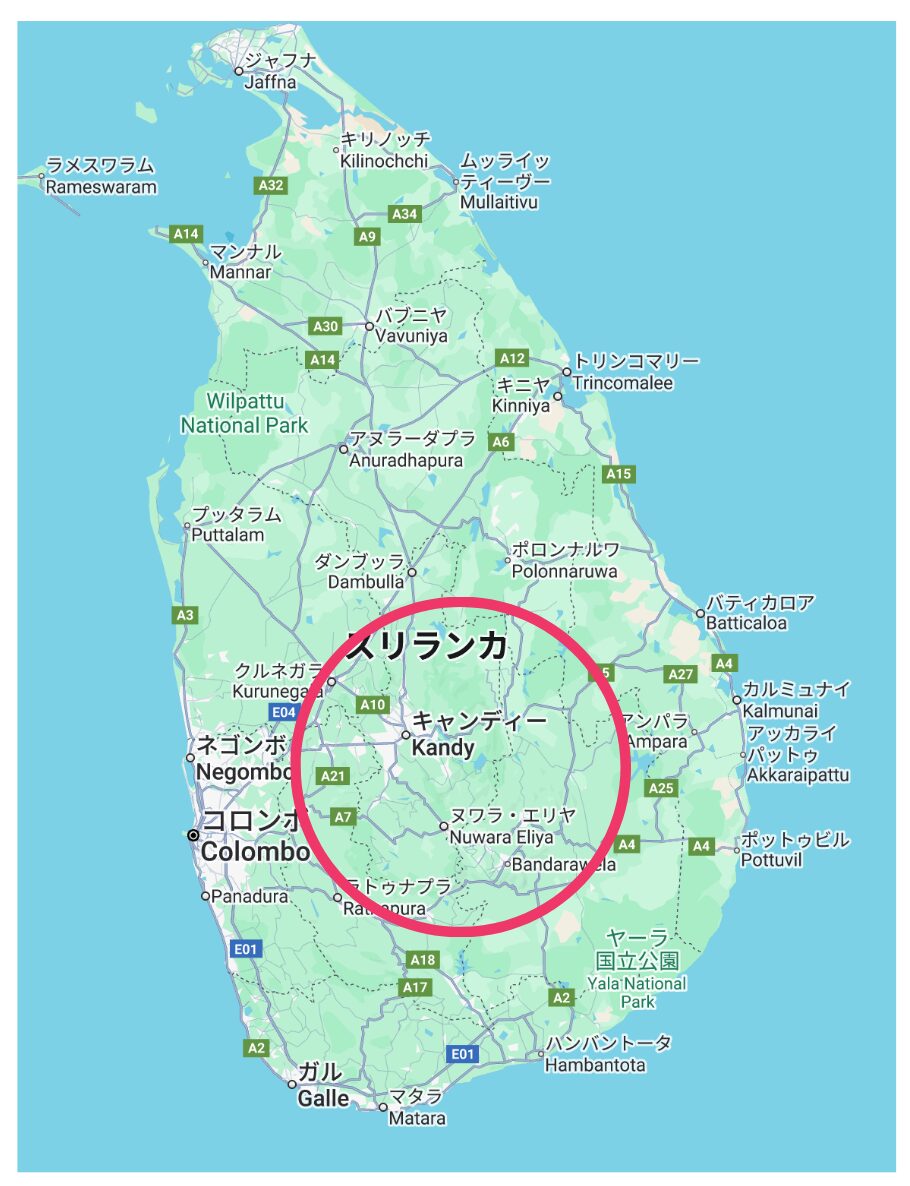
Major cities and tourist destinations
Candy (Buddhist holy site and ancient capital)
Nuwara Eliya (famous tea-growing region, highland resort)
Gill
Haptare
Horton Plains National Park
Sleeperda (Adam's Peak)
Sinharaja Forest Reserve (a World Heritage Site of tropical rainforest) and others.
The Central Highlands area isThe mountainous region of central Sri LankaThe altitude is high and temperatures are on the cooler side (the average temperature is around 16°C, with a climate akin to spring in Japan).
Nuwara Eliya, the 'Tea Capital', and Ella, renowned for its magnificent scenery, along with the World Heritage site Horton Plains (The End of the World)やNatural attractions such as the sacred site of Sripada (Adam's Peak) are scattered throughout the region. Kandy also boasts a wealth of cultural highlights, including the Temple of the Sacred Tooth Relic (a UNESCO World Heritage Site) and the Perahera Festival.
Best season (dry season)
The Central HighlandsDecember to MarchThis period falls within the relatively dry season with less rainfall. January to March in particular sees the lowest rainfall of the year, making trekking and journeys on the highland railway most comfortable. Even if rain falls, it is often a brief shower that soon passes, allowing for easier enjoyment of the mountain scenery. Kandy also experiences many sunny days during this period, making it pleasant to visit. Furthermore,The best time for climbing Adam's Peak before dawn (holy mountain pilgrimage) is around December to March.This is the ideal time for climbing, as the weather is stable and the starry skies make for favourable conditions. Furthermore, the leeches (blood-sucking leeches) that proliferate during the rainy season are fewer at this time, making it a safer period.
Off-peak season
May to JulyIt's actually a prime time to visit. Although this period falls within the southwest monsoon season, once the peak rainy season of May and June has passed,Rainfall begins to decrease around July.With fewer travellers from Europe and America, there is the advantage of easier access to reserved-seat tickets on the highland railway and popular hotel bookings. Indeed, despite being the summer holiday season, July sees relatively fewer tourists in Kandy and Ella, making it a hidden gem for leisurely enjoying the tranquil, fresh green highlands. ParticularlyThe view after the rain, with the tea fields lush and greenThis is the season for it. If the rain is light enough, you might just catch a glimpse of the spectacular scenery.
Period requiring attention
around JuneTyphoons and tropical depressions frequently form, and the weather on the highlands tends to be unsettled. In Nuwara Eliya and Horton Plains, sudden thunderstorms and fog can reduce visibility to nothing... such days do occur. Take great care when hiking or trekking. Furthermore,July to AugustThe Perahera Festival (the festival at the Temple of the Sacred Tooth Relic) takes place during the candy season, attracting tourists from both within and outside the country. As hotels in the city become fully booked, it is advisable to avoid this period unless specifically visiting for the festival.November to Decemberis in highland areasNight-time temperatures are dropping significantly, falling to around 10°C.Some days may be as cold as early winter in Japan, so do remember to bring warm clothing (many hotels lack heating). Conversely, the significant temperature difference between day and night means you should take care to manage your physical condition. Note that during the rainy season (particularly October to November), leeches become active during forest trekking, soLong sleeves and long trousers with socks tucked in to avoid exposing skinThat is the golden rule.
We have now examined the characteristics of each region. In the next chapter,By travel purpose (interest)We'll summarise the best seasons for each experience, highlighting why this particular time of year is ideal.
World Heritage sites, beaches, wildlife, relaxation…In line with your priority themePlease check it.
Best seasons by purpose: Ayurveda, surfing, World Heritage sites, safaris
Here we introduce the optimal seasons and points to note for each popular theme when travelling to Sri Lanka.
If you're going to go to the troubleExperience what you desire in the best possible conditionYou'll want to enjoy it, won't you? Let's pinpoint the best timing for each purpose.
The best season for experiencing Ayurveda
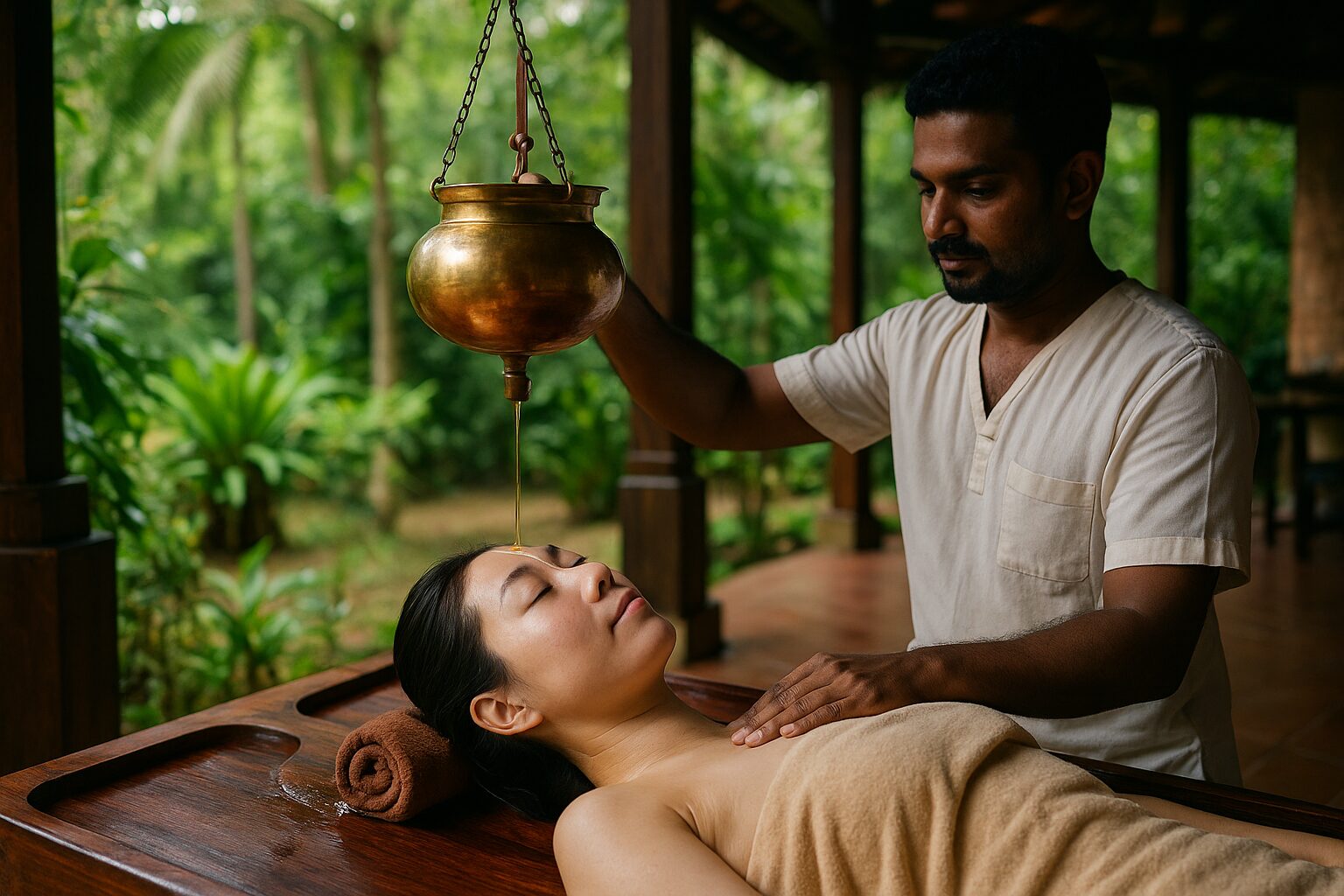
Sri Lanka is renowned as a destination for healing journeys where one can experience authentic Ayurveda. Many visitors wish to receive genuine treatments at its spas and resorts.
ActuallyTraditionally, the rainy season is considered most suitable for Ayurvedic treatments.Did you know that?
Since ancient times in India and Sri Lanka, the rainy season (Sanskrit: 'Varsha Ritu') has been considered the season most suitable for internal purification.
Due to the high humidity and cool temperaturesPores are easily opened, allowing the active ingredients in oils and herbs to penetrate the body readily.is.
The sound of the steady drizzle is said to calm the mind and enhance the detoxifying effect.
Consequently, many Ayurvedic facilities in Sri Lanka offer special programmes exclusively during the rainy season.
Moreover, the rainy season is the off-season for tourism, soMany facilities offer reduced ratesis another welcome feature.
Even on local blogs by Japanese staff, you'll find recommendations stating, "The rainy season is actually a prime time to visit as it's quieter and cheaper."
On the other hand,The dry season (particularly December to February) offers comfortable weather, making it an ideal time for sightseeing. With numerous festivals taking place across the country, you can fully enjoy the resort atmosphere.
However, as it is also peak season, popular Ayurvedic resorts tend to fill up quickly, so booking well in advance is essential.is.
For those wishing to enjoy a balanced mix of treatments and sightseeing, visiting during the dry season and staying at a beachfront hotel where you can enjoy massages in between activities is a perfectly refreshing way to unwind.
「Authentic Ayurveda for thorough physical and mental rejuvenationIf the aim is to follow tradition,Staying for an extended period during the rainy season (around June to September)It is recommended to do so.
On the other hand,I want to have my cake and eat it when it comes to both sightseeing and resort holidays.If so, why not visit during the comfortable dry season?
In any case, as the treatment will be physically demanding, please avoid overloading your itinerary during your trip.Ensure time to relax and unwindPlease do so.
The best season for surfing
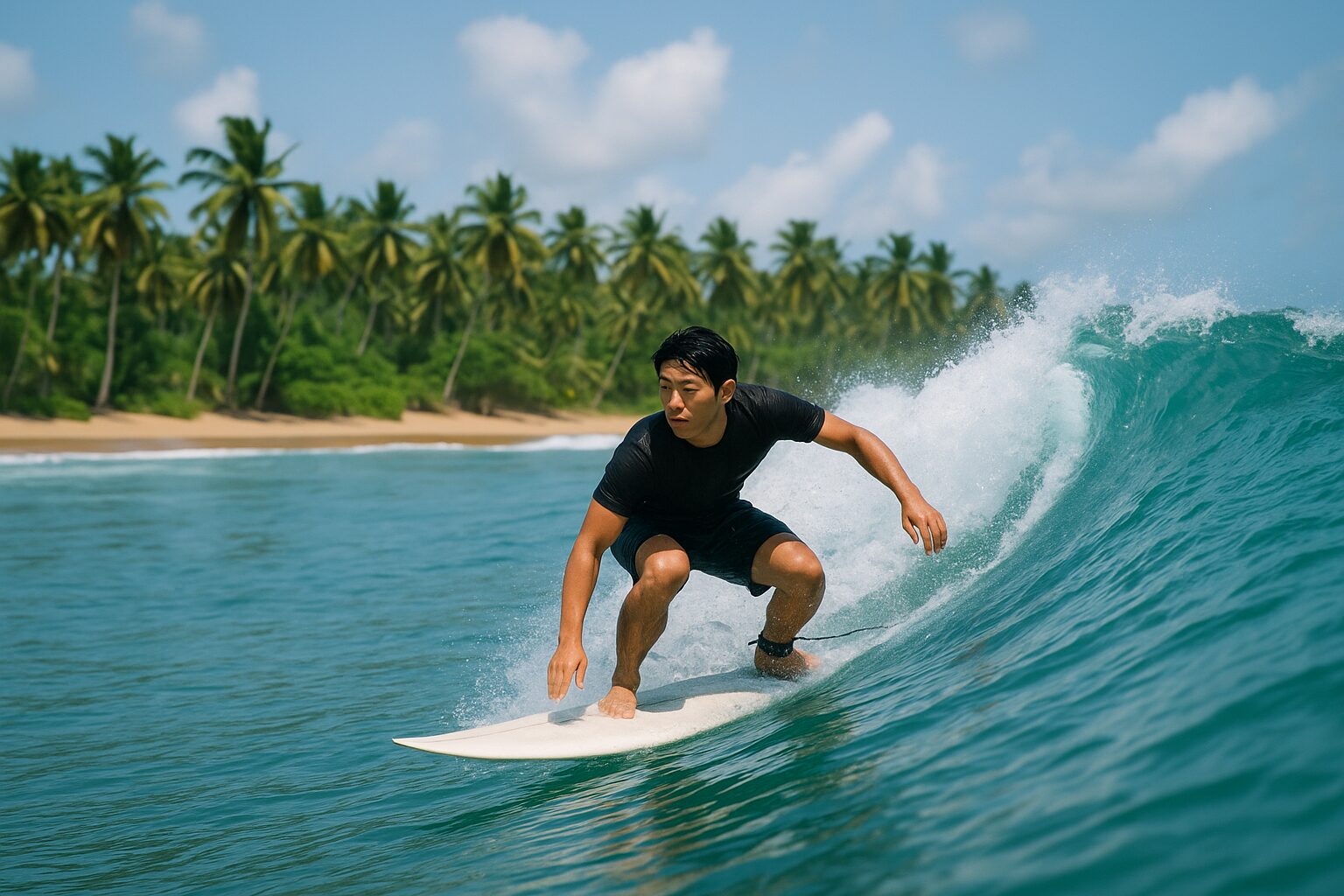
Surfing paradise isn't just Hawaii or Bali! In fact, Sri Lanka is a hidden gem where you can surf all year round.
Due to the island's small size, it is affected by the monsoon.The areas with good waves change with the seasons.is.
With breaks suited to every level from beginners to advanced surfers, it's an absolute treat for surfers.
Southwest (Hikkaduwa, Weligama, Mirissa, etc.)
The best season isOctober to around AprilespeciallyDecember to MarchThis is the prime season. Coinciding with the northeast monsoon, offshore winds blow along the west to south coasts, creating beautifully consistent waves. Surfers from around the world gather at Hikkaduwa's reef breaks and Weligama's beach breaks during this period. Famous spots cater to everyone from advanced surfers to beginners, and surf schools are well established. The sea temperature remains consistently warm at around 28°C throughout the year, making it warm enough to surf in just a rash guard.
East Coast (Argan Bay area)
The best season isMay to OctoberSo,June to AugustArgan Bay boasts some of the world's finest long-right waves. The south-westerly monsoon winds become offshore at Argan Bay, creating the 'miracle waves' during this season. While Argan Bay's main point is for advanced surfers, nearby spots like Peanut Farm and Easy Bay are accessible for beginners, and surf schools are available for peace of mind. During the season, international competitions and festivals are held, immersing the entire town in surf culture. The sea is also at its clearest during the dry season,Whilst waiting for the waves, a dolphin surfaces.Such scenes can be found. The surf scene on the east coast has an atmosphere reminiscent of Bali without the crowds, and the charm of the simple fishing village ambience is also appealing.
In this waySri Lanka offers year-round surfing, with the southwest being ideal in winter and the east in summer.is.
Even in areas experiencing the rainy season, it's not as though there are absolutely no waves at all, but the quality does deteriorate during the off-season due to wind direction and rough weather.
If you're going to go to the trouble of goingAim for the best season in each areaLet's go surfing to our hearts' content!
Boards are readily available for hire locally, so you can turn up empty-handed. After catching waves in the tropical sea, chilling on the beach with a coconut drink... what could be better?
The best time to visit World Heritage sites
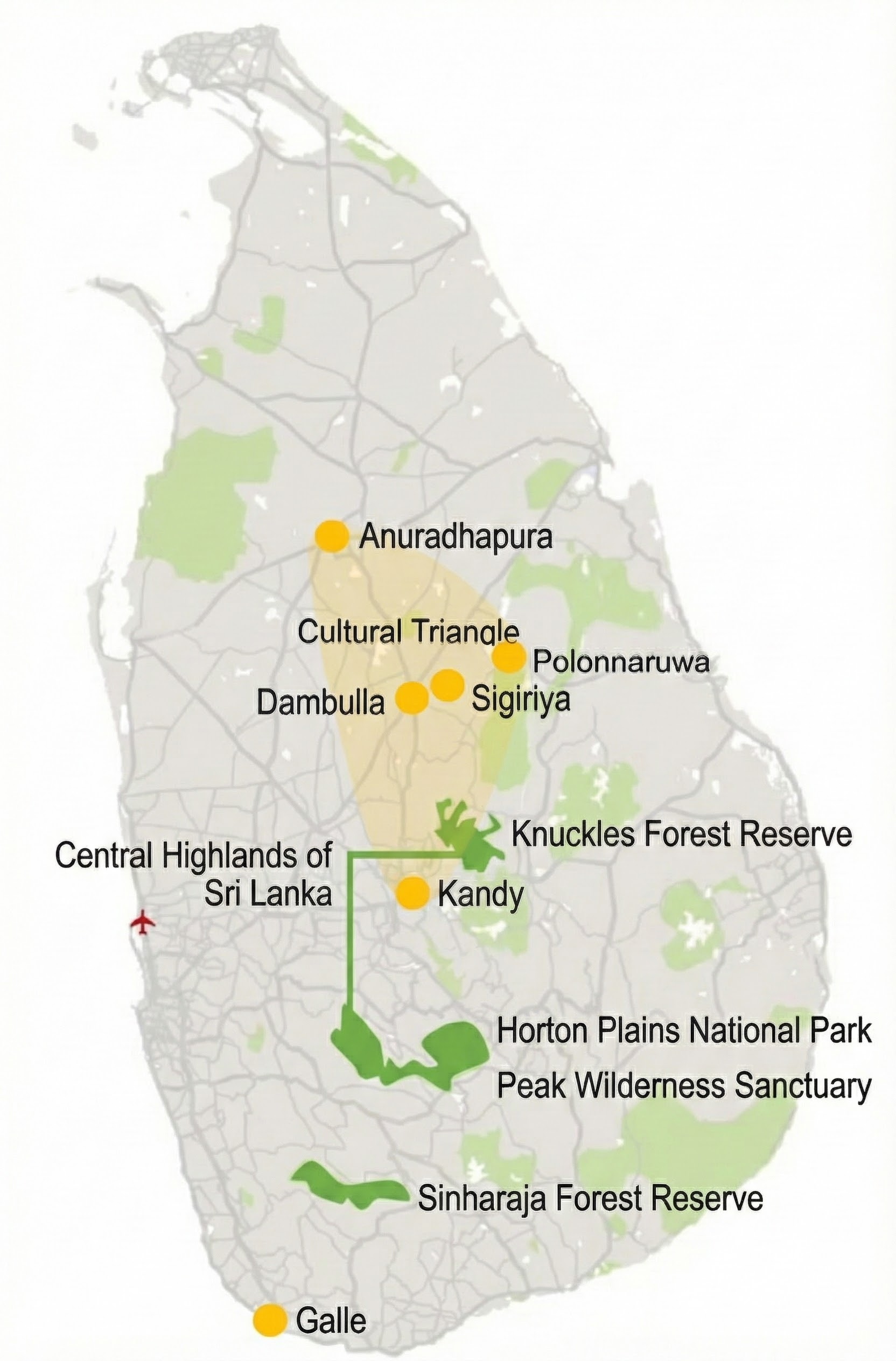
Sri Lanka boasts both cultural and natural attractions.Eight UNESCO World Heritage SitesThere is.
From the ruins of ancient Buddhist kingdoms to colonial-era streetscapes and mystical primeval forests, its diverse landscape has earned it the title of 'World Heritage Island'.
The best season for visiting World Heritage sites is,It varies depending on the climate zone of that location.Please note the following points. Let us organise the recommended times for each major World Heritage site.
Ancient capital ruins of the Northern and Central regions (Anuradhapura, Polonnaruwa, Sigiriya, etc.):
These archaeological sites in arid regionsThe dry season from June to September is the most favourable time for sightseeing and is recommended.It is. With little rain, the ground around the ruins remains dry and comfortable for walking. Furthermore,July and August also coincide with the Elephant Gathering season at nearby Minneriya National Park, where wild elephants congregate in large numbers, offering the added benefit of combining this with sightseeing at the ruins. Conversely, the rainy season from November to December sees the area around the ruins become muddy, with an increase in insects such as mosquitoes.It would be advisable to avoid this. However, in the central and northern regions, the dry season summer brings extremely intense sunlight and high temperatures. Climbing to the summit of ruins (such as Sigiriya Rock) should be done during the cooler morning or evening hours, with rest breaks during the day; heatstroke prevention measures are essential (even in the dry season, midday in April or September can be scorching, so caution is required).December to MarchAlthough temperatures have dropped slightly, making it a more pleasant time for sightseeing,From November to December, thunderstorms may occur due to the influence of the northeast monsoon.Please note the following points.
Buddhist temples and sacred sites (Kandy, Dambulla Cave Temple, etc.):
The Temple of the Sacred Tooth Relic in Kandy, as mentioned earlier,December to March is the best season with little rain.During the Perahera Festival season each year in July and August, despite the monsoon season, pilgrims and tourists flock from around the world, causing the city to become extremely crowded. Consequently,If it's not for the festival, I'd deliberately leave it out.It would be advisable to avoid the rainy season. The Dambulla Cave Temple (also located in the arid region of the North Central Province) is best visited during the dry season, from summer to early autumn (approximately June to October). During the rainy season, the stone steps become slippery and dangerous, so it is best to avoid visiting then.
Colonial-era architecture (Colombo Old Town, Galle Old Town, etc.):
The old town with its fortress (on the southern coast) is best explored on foot during the dry season from November to March.The rainy season in Goa has its own charm, but you must always carry rain gear to prepare for sudden downpours.ColomboSimilarly, a tour of the colonial architectureThe dry season (particularly around December to March) is comfortable.I suppose.
Natural Heritage Forests and Highlands (Sinharaja Forest Reserve, Peak Wilderness in the Central Highlands, etc.):
Sinharaja Forest (tropical rainforest in the southwest) is January to March is relatively dry and favourable for trekking.It is. After all, this is a rainforest that receives considerable rainfall to begin with, so a fair amount of rain is to be expected. Be prepared with a raincoat and waterproof footwear. The central highlands' Peak Wilderness (including the Sleepera Sanctuary) also December to March is the ideal period for mountain climbing.From April to November, heavy rainfall combined with large numbers of leeches (small blood-sucking leeches) necessitates full protective gear, including lightweight long-sleeved tops, long trousers, and gaiters.
The best time for safari (wildlife viewing)
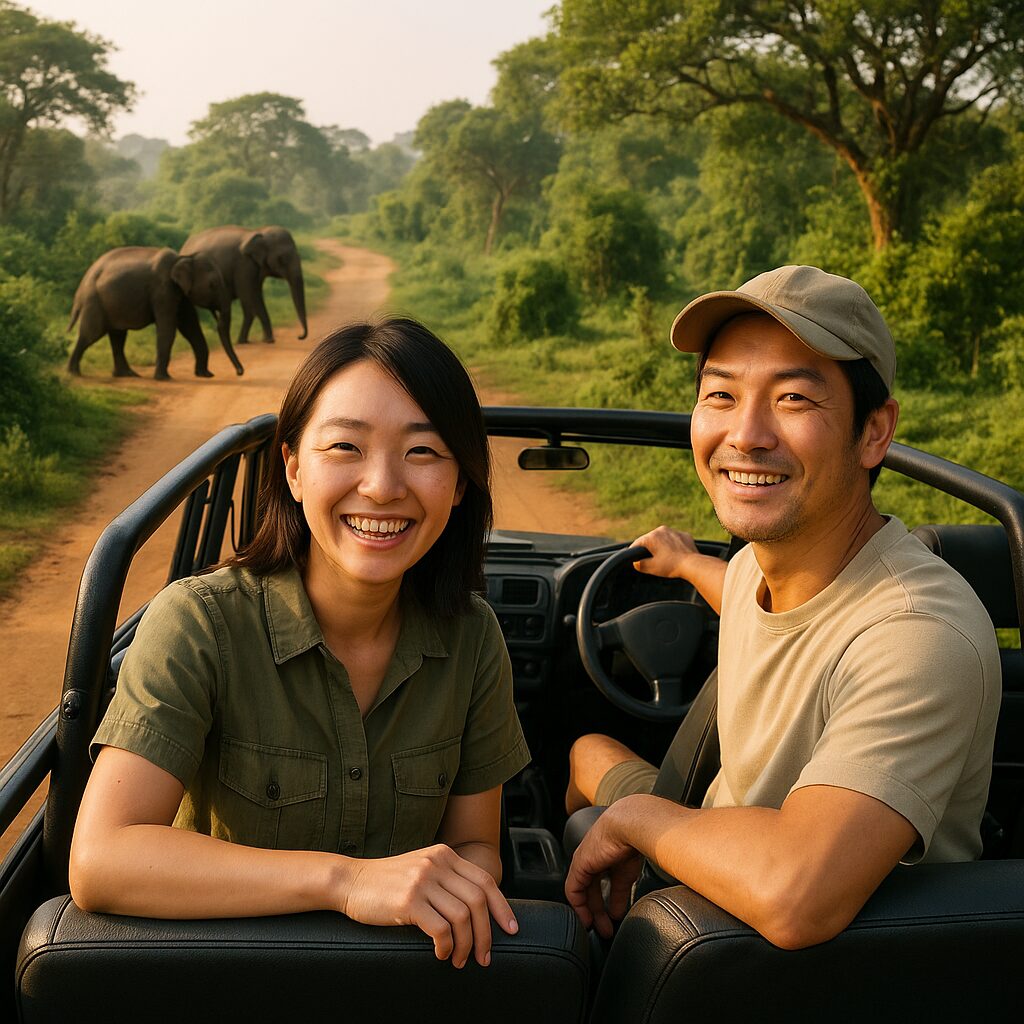
In Sri LankaOver 20 national parksThe real thrill lies in encountering a wide variety of wildlife, from elephants and leopards to peacocks and whales. So when is the best time to go to see the animals?
To cut to the chase, the dry season in each park is the best time for land animal safaris.During the rainy season, water is scattered everywhere, causing animals to disperse. However, in the dry season, water sources become limited, so animals gather in one place, making them easier to observe. For example,Yala National Park(in the case of the south-east),During the dry season around February to March, animals gather at watering holes, making it easier to spot leopards and elephants.It is known for this. Conversely, during the rainy season, the jungle becomes overgrown and visibility deteriorates, so it is advisable to avoid it if possible.
On the other hand,Minneriya National Park(in the northern and central regions)Over 100 wild elephants gathered along the lakeshore between July and September.A spectacular event unfolds. This is the renowned Elephant Gathering. During the dry season, as surrounding water sources dry up, elephants converge on Minneriya Lake – a truly awe-inspiring spectacle that draws wildlife enthusiasts from across the globe. Should you visit the Cultural Triangle (including Sigiriya) between July and August, we highly recommend combining your trip with this elephant safari.
Whale and dolphin watchingAs for the season, it varies by sea area. Whale watching off the southern coast (departing from Mirissa)December to AprilThe season, particularly from January to March, offers a high probability of encountering blue whales. Meanwhile, departures from Trincomalee in the east...March to SeptemberThe peak season is said to be around March to April and July to August. This means the off-seasons in the north and south complement each other perfectly.
🌟 Trivia: 「The period immediately after the rainy season ends is the prime time.There is also the unique perspective of ''. For example,around OctoberAs it is immediately after the rainy season, vegetation flourishes and animals become more active.The best time for a safariSome guides suggest this. Indeed, the forest after rain offers enjoyable observation, with new shoots emerging and wildlife becoming more active. Furthermore, from late October, whale watching tours commence in Mirissa. While there is the risk of unstable weather, visiting to capture that moment immediately after the rain when life is bursting forth may be a connoisseur's way to enjoy it.
One further point to note regarding Safari.Some national parks may have an annual closure period.(such as the aforementioned Yara).
If you have a specific park in mind, be sure to check the official information beforehand. Also, as you're dealing with wildlife, there's no guarantee you'll see anything, but your chances of an encounter increase by joining a skilled ranger or opting for the first safari of the morning. Aim for the best season and enjoy thrilling encounters with wildlife!
Sri Lanka Climate Quick Reference Chart by Season and Region
Finally,Seasonal weather by major area in Sri LankaI have compiled them into a list.
You can see at a glance when the dry season begins in each region, so please use this as a reference when considering your travel dates.
| Season (period) | Southern and Western Coast (e.g., Colombo) | Northern and Eastern Regions (e.g., Trincomalee) | Central Highlands (e.g., Nuwara Eliya) |
|---|---|---|---|
| December to March Northeast Monsoon Season |
Dry season (best) Less rain with mostly clear skies. Temperatures around 30°C, comfortably warm. The sea is calm, perfect for beach days. ★ January to February particularly recommended | The rainy season (off-peak) marks the height of the northeast monsoon. November and December in particular can see days of torrential rain. Jaffna experiences a shorter rainy season with less rainfall. | Dry season (best) Mostly clear and refreshing weather. Daytime temperatures around 20–25°C, with mornings and evenings cooling to around 15°C, making for chilly days. |
| around April Seasonal transition period / Summer season |
Summer season (Note) The hottest time of the year. Daily temperatures exceed 30°C with high humidity. While there may be occasional showers, it is generally scorching hot. Limit outdoor activities during the day. | The end of the rainy season sees rainfall gradually decrease, though localised thunderstorms remain possible, making conditions unstable. Temperatures are high and humid. | The onset of the rainy season brings increasing afternoon thunderstorms. Unstable weather. In mid-April, the town bustles with festivities celebrating the New Year (Sinhala-Tamil New Year) in Kandy. |
| May to August Southwest Monsoon Season |
Rainy season (off-peak): Southwest monsoon in full swing. May–June sees frequent torrential downpours. July–August brings slightly reduced rainfall, with short, intense squalls predominating. Fewer European and American visitors, making tourist spots less crowded. | Dry season (best) Continuous clear skies with hot but dry weather. Average temperature around 30°C. High sea transparency; excellent for marine sports on the east coast. ★ International surfing competition in Argan Bay from July to August. | The rainy season (off-peak) from May to July brings frequent rain and misty days. The forest grows lush and the greenery deepens. Around Ella, breathtaking views can sometimes be seen between showers. Kandy experiences intermittent light rain, making sightseeing possible. |
| September to November After the southwest monsoon ~ Start of the northeast monsoon |
The transition to the dry season sees rainfall subside in the southwest during September, with weather improving. October is a brief transitional period with an increase in afternoon showers. From late November onwards, clear skies become consistently stable. | The transition to the rainy season Until September, the lingering dry season makes it ideal for sightseeing. From mid-October onwards, rainfall increases, with the rainy season fully setting in by November, bringing frequent thunderstorms. | The latter half of the rainy season (October–November) brings frequent thunderstorms and unsettled weather. After the Perahera Festival (usually in August), tourist numbers dwindle and the plateau returns to tranquillity. Temperatures drop further in November, making a thick jacket essential. |
※The table above shows general trends. Weather conditions vary from year to year even within the same region, soBe sure to check the latest weather forecasts and local information.Please do so.
Summary
Sri Lanka is a country of boundless charm, where somewhere is always in its prime season.
Planning your trip specifically during the dry season ensures a comfortable journey with continuous fine weather, while deliberately choosing the rainy season to savour the quiet charm of the off-season is a more discerning way to enjoy it.
Please do refer to the information in this article,The best time and area to suit your travel prioritiesPlease try to find it.
Beneath the southern sun, golden beaches, emerald tea plantations, majestic Buddhist stupas and jungle wildlife await your arrival.
Savour the diverse expressions woven by the Sri Lankan landscape,The best memoriesDo make sure to bring it along. Have a good trip! 🐘🏄🗿☕️