What kind of country is Sri Lanka!? Before travelling, let's get to grips with its history, climate, attractions, specialities, and cost of living!
The official name of Sri Lanka is the Democratic Socialist Republic of Sri Lanka.
I've become utterly captivated by Sri Lanka, but what kind of country is Sri Lanka, really?
Today, I would like to explain this point.
I hope this gives you a rough idea of what kind of country Sri Lanka is.
- The History of Sri Lanka
- Geographically situated in South Asia with a tropical climate
- Things to bear in mind regarding clothing when travelling to Sri Lanka
- Which is the capital, Colombo or Sri Jayawardenepura Kotte?
- Sri Lanka is a major tourist destination boasting eight UNESCO World Heritage Sites.
- The local speciality is undoubtedly black tea.
- Ayurveda is also essential
- Sri Lanka's Economy and Prices
- Summary
The History of Sri Lanka
Sri Lanka gained independence from the United Kingdom on 4 February 1948, was renamed the Republic of Sri Lanka in 1972, and became the current Democratic Socialist Republic of Sri Lanka in 1978.
However, Sri Lanka possesses a well-established history even prior to the colonial era.
The detailed history is summarised above, but I shall outline the main points.
It began in 483 BC when Prince Vijaya, considered the ancestor of the Sinhalese people, landed in Sri Lanka and founded the Anuradhapura Kingdom.
Incidentally, Anuradhapura itself is currently listed as a World Heritage Site, making it well worth a visit.
Subsequently, in the 11th century, it was invaded by India and relocated to Polonnaruwa, which is also now a World Heritage Site.
It once built a history of prosperity, but by the 15th century it had become a tributary state of China, and a period of division into three kingdoms ensued.
【The Four Kingdoms】
- Candy Kingdom (1469–1815)
- Kingdom of Kotte (1371–1597)
- Jaffna Kingdom (1300s - 1620)
The subsequent history was a tragic one, beginning with Portuguese colonisation in 1505.
It was colonised successively by Portugal, the Netherlands, and Britain.
In 1815, the Kingdom of Kandy, the last dynasty, was overthrown by the British, thereby completely losing its status as an independent nation.
As mentioned earlier, its history as a colony continued until 1948.
Despite its painful history, the colonial influence is still strongly felt in Colombo and Galle in the southwest, where traditional and Western cultures blend to create a unique atmosphere.
It was not all plain sailing after independence; from 1983, civil war broke out with anti-government armed groups, and a long history of conflict ensued.
The civil war ended in 2009, and the country is now in a phase of full-scale political and economic development.
Geographically situated in South Asia with a tropical climate
First of all, where exactly is Sri Lanka located?
Let us examine what the climatic conditions are like.
Located in the southeast of India
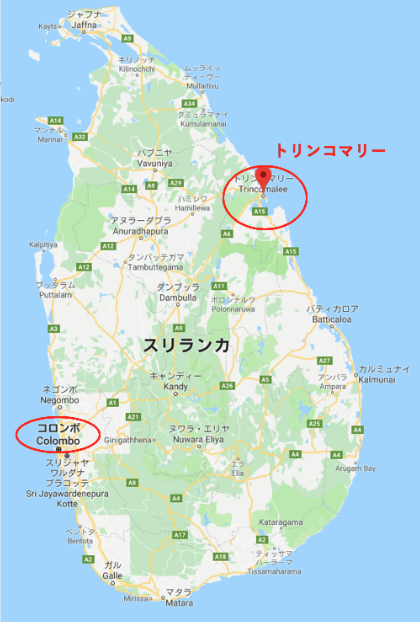
Sri Lanka is located to the south-east of India, as shown on the Google Map below.
Japan is situated in the Far East or East Asia, whereas Sri Lanka is included within the classification of South Asia.
Incidentally, its land area is 65,610 km², which is approximately 0.8 times that of Hokkaidō.
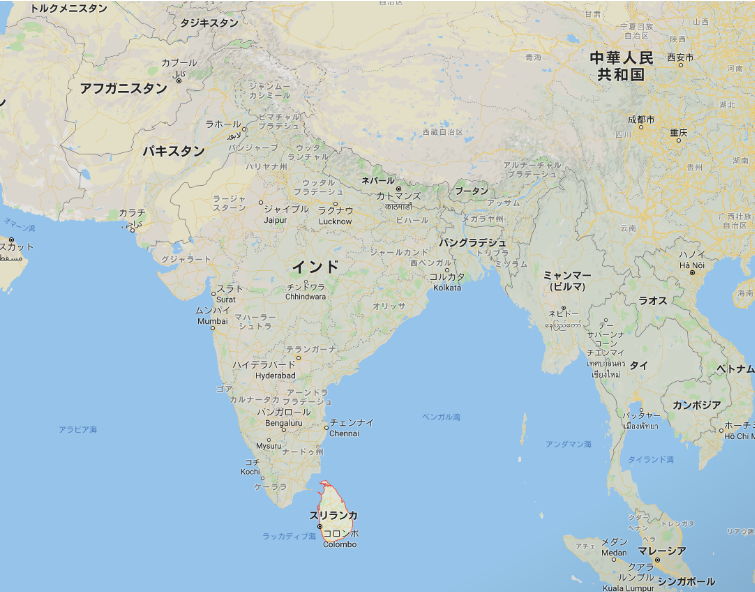
Singapore, situated directly east of Sri Lanka, lies very close to the equator.
Direct flights from Japan take 9 hours, with a time difference of -3.5 hours.
There are four direct flights per week from Japan, with the journey from Narita to Colombo taking nine hours.
However, direct flights are expensive, and by using connecting flights via Bangkok, Malaysia, or China, the price can be reduced to between one-half and one-third.
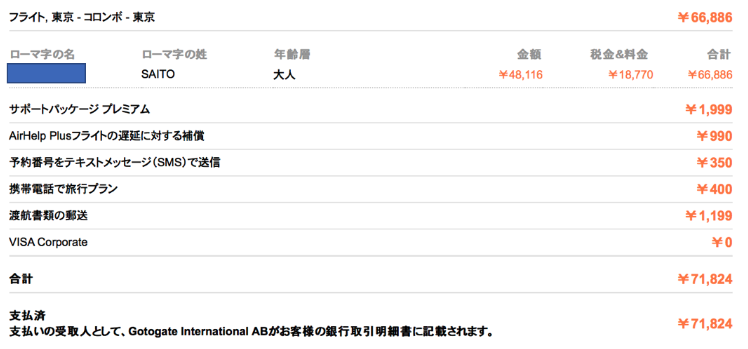
I was able to secure a return ticket for ¥70,000 by using China Eastern Airlines' flight via Shanghai.

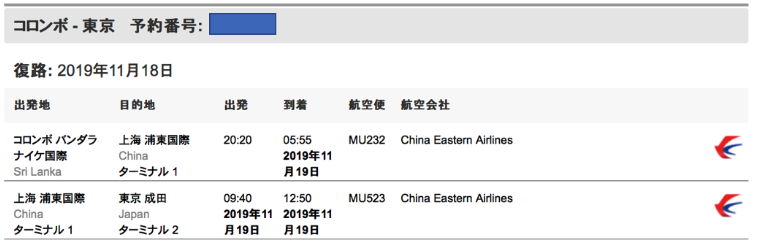
The price is approximately ¥70,000, making it an exceptionally good value.
Regarding the time difference, Japan is 3.5 hours ahead.
In other words, when it is 9 o'clock in the morning in Japan, it is 5:30 in the early morning in Sri Lanka.
Sri Lanka's climate is hot year-round, with a rainy season and a dry season.
Sri Lanka's climate, being close to the equator, is hot throughout the year, and there are no distinct seasons like those in Japan.
Let us compare the data for Colombo, the central city of Sri Lanka, and Trincomalee, a city in the northeast, with that of Tokyo.
Incidentally, the geographical relationship between the two is as follows.
The annual data for temperature and precipitation are as follows.
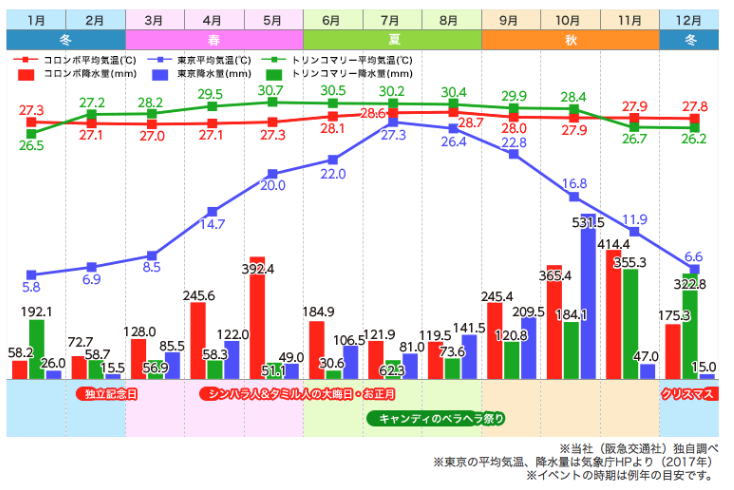
Temperatures consistently hover around 30 degrees, making it a veritable year-round summer climate.
As for my personal impressions from travelling there, the humidity isn't particularly high, so Japan's summers are overwhelmingly more gruelling.
For Japanese people accustomed to experiencing intense heat in summer, it is within the realm of expectation, given its proximity to the equator.
Both Colombo and Trincomalee experience reduced rainfall during the summer months.
Colombo experiences relatively high rainfall during early winter and spring.
Meanwhile, Trincomalee experiences higher rainfall during the winter months.
Things to bear in mind regarding clothing when travelling to Sri Lanka
Sri Lanka is hot all year round, so short sleeves and shorts are generally appropriate.
However, for religious reasons, particularly when visiting temples, long trousers are required.
If you do not bring long trousers, you will need to purchase a long scarf and wrap it around your waist.
When travelling to Sri Lanka, do remember to pack a pair of long trousers.
Moreover, in Candy (1,000 metres above sea level) and Nuwara Eliya (2,000 metres above sea level), evenings can sometimes turn chilly.
The author undertook a trip to Sri Lanka equipped with an ultralight down jacket.
Not only in high-altitude areas, but also on aeroplanes where the temperature is set very low, the ultra-light down jacket proved extremely useful as it was warm without being bulky.
Which is the capital, Colombo or Sri Jayawardenepura Kotte?
The capital of Japan is Tokyo, but where is the capital of Sri Lanka?
The most developed city, boasting the largest population and serving as the economic hub, is Colombo, as previously explained in the section on climate.
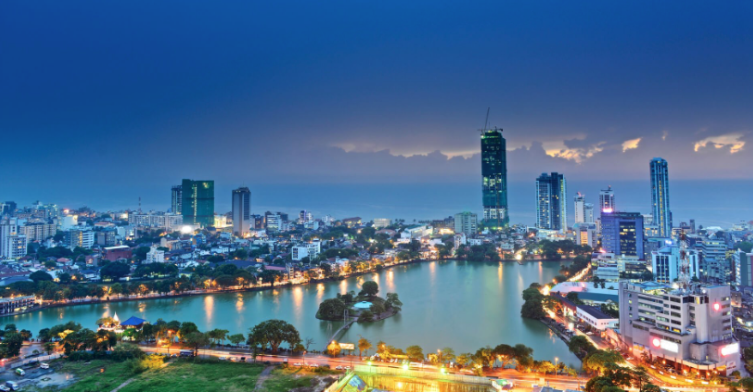
The origin of Colombo's name is the Sinhalese term 'Kola-amba-thota', meaning 'the grove of mango trees'.
Colombo City has a population of approximately 600,000, comparable to Tokyo's Suginami Ward, but when the metropolitan area is included, it forms a population exceeding 2 million.
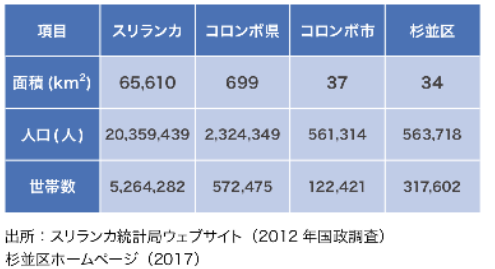
Colombo is the centre of population and economy, but Colombo is not the current capital; it is the former capital.
The capital is Sri Jayawardhanapura Kotte.
It's often featured on quiz shows as the name of a particularly long capital city, so it's probably more familiar than you might think.
The meaning of the breakdown is as follows.
Suri: Sacred
Jawawardhana: Second President
Plastic: Town
Kotte: The original town
Sri Jayawardenepura Kotte is the political capital.
Countries where the functions of politics and economics are separated include not only Sri Lanka, but also the United States and Australia.
It is not necessarily the case that the largest city is the capital, as is the case with Tokyo in Japan.
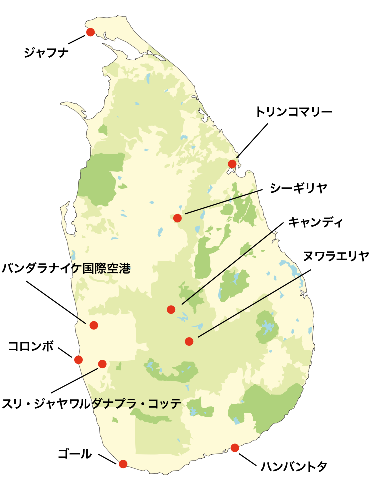
Incidentally, Colombo and Sri Jayawardenepura Kotte are geographically very close.
Sri Lanka is a major tourist destination boasting eight UNESCO World Heritage Sites.
Sri Lanka is a major tourist destination, boasting no fewer than eight UNESCO World Heritage Sites within its compact territory.
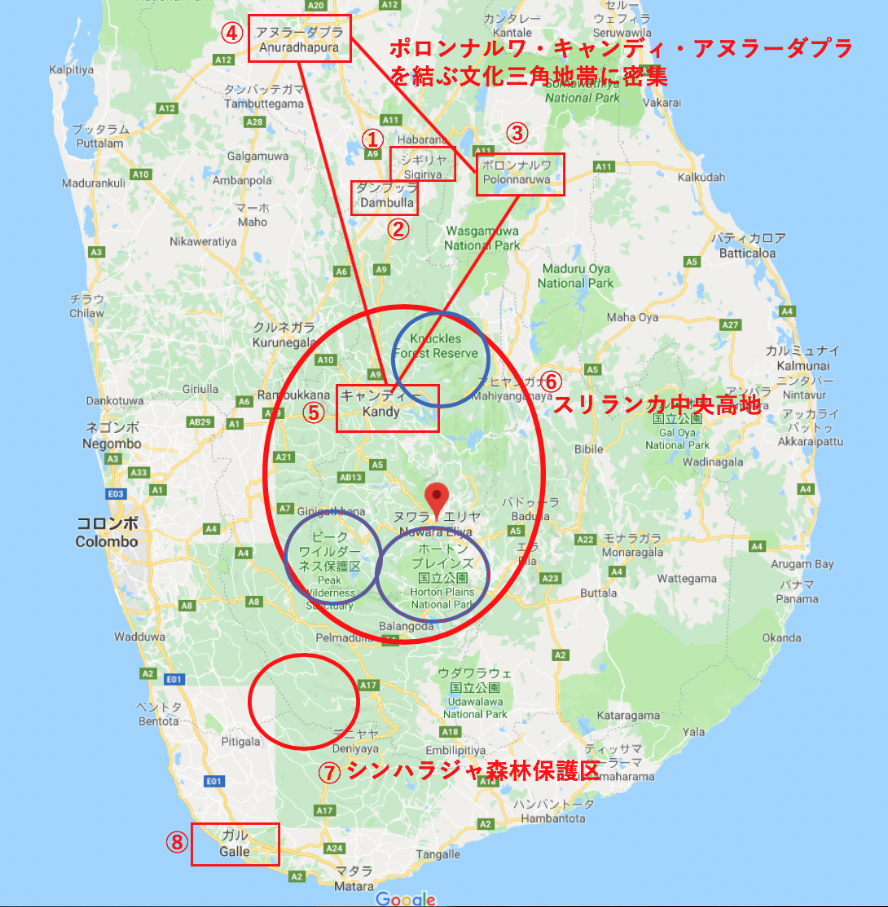
The cultural triangle, particularly in the areas where the ancient capitals of Anuradhapura, Polonnaruwa and Kandy were located, boasts a concentration of no fewer than five World Heritage Sites.
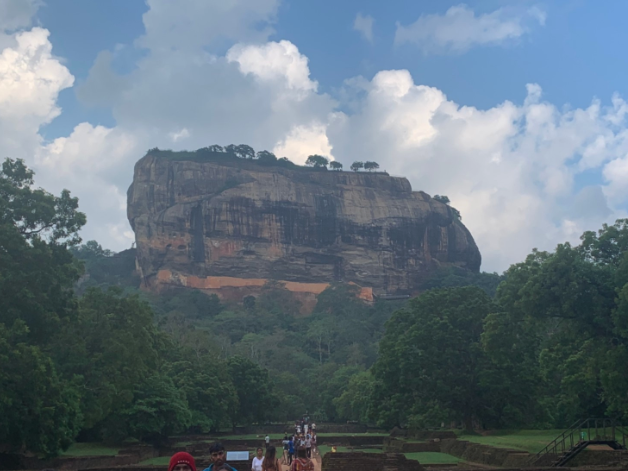
Sigiriya Rock, particularly renowned as the Machu Picchu of Asia, is extremely famous.
Sri Lanka's eight World Heritage Sites are as follows.
- Sigiriya Rock
- Anuradhapura
- Polonnaruwa
- Candy Buddha's Tooth Temple
- Dambulla Cave Temple
- Goal
- Central Highlands of Sri Lanka
- Sinharaja Forest Reserve
I opted for a leisurely 8-night, 9-day itinerary to cover everything.
However, even a four-night, five-day trip provides ample time to explore the entire cultural triangle.
For those wishing to enjoy an efficient trip to Sri Lanka, I recommend the Sri Lanka Taxi Service that I used.
For approximately ¥10,000 per vehicle per day, a dedicated driver will accompany you throughout your entire journey.
With the lowest price guarantee among domestic providers and a strong track record of usage, it also offers peace of mind.
If travelling as a couple, you can manage on around ¥5,000 per day; for three people, around ¥3,500 per day.
Incidentally, for example, a six-night, seven-day package holiday would cost around ¥200,000, but
If you book your own flights and use Sri Lanka Taxi Service, like I did, you can enjoy a trip to Sri Lanka for between ¥130,000 and ¥170,000.
Airfare: ¥70,000
Sri Lanka Taxi Service: ¥72,000 (¥36,000 for two people, ¥24,000 for three people)
Hotel: ¥35,000
Furthermore, as you can freely tailor your own itinerary, it offers advantages over package deals in terms of both price and flexibility.
We can even propose travel plans for you.
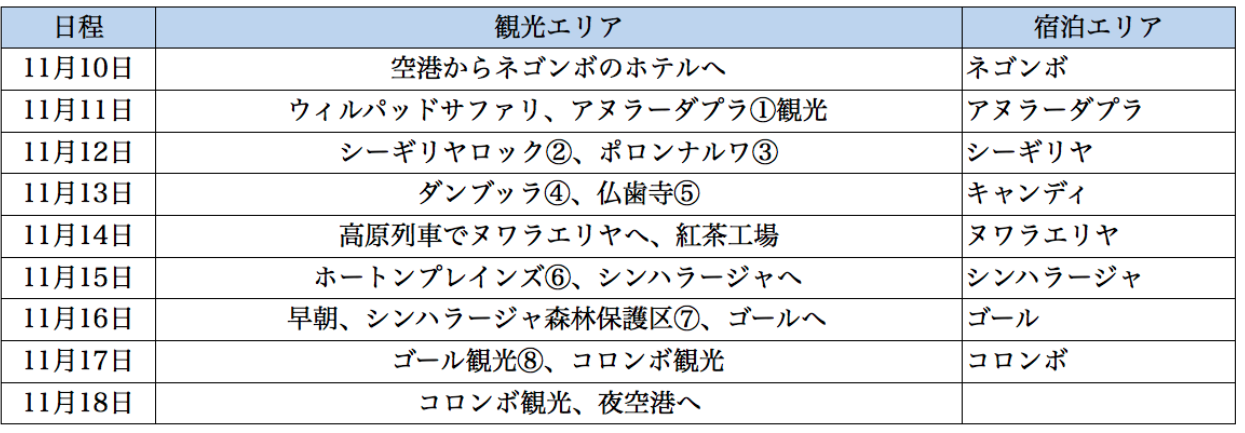
For example, for a full 8-night, 9-day trip to Sri Lanka, I was offered the following itinerary.
The service was highly trustworthy, with a very sincere approach to handling enquiries.
It would be no exaggeration to say that it was thanks to Sri Lanka Taxi Service that we were able to enjoy our trip to Sri Lanka without any trouble and with complete peace of mind.
For those not opting for a package tour, you might wish to consider this.
The local speciality is undoubtedly black tea.
Sri Lanka's most famous product is undoubtedly tea.
Despite being a small country in terms of production volume, it is renowned for its Ceylon tea and ranks as the world's second largest producer after India.
In Sri Lanka, visitors can experience tea picking and observe the manufacturing process at tea factories throughout the country.
Below, we provide detailed explanations of tea-producing regions and tea varieties, which we hope you will find useful!
We also provide information on other products and shops suitable for souvenirs!
→ What's recommended in Sri Lanka? 15 popular souvenirs! Plus where to buy them
Ayurveda is also essential
Alongside tea, Ayurveda is equally renowned.
Ayurveda is practised as a form of medicine in Sri Lanka.
Ayurvedic treatments that cost between ¥20,000 and ¥30,000 in Japan can be received for less than ¥10,000 in Sri Lanka.
I do hope you will experience it when you come to Sri Lanka.
Related:What is Ayurveda? Theory, History and Sri Lankan Experience Facilities
Sri Lanka's Economy and Prices
Now let us also examine the state of Sri Lanka's economy and prices.
When the economy is stable, public order improves, and the cost of living is important when travelling.
The economic standard is at the level of an annual income of ¥400,000.
The most effective indicator for measuring a country's economic level is GDP per capita.
Incidentally, Japan's per capita GDP stands at 38,000 USD.
That figure is consistent with an average annual income of ¥4 million.
The following compares the levels of GDP per capita in the emerging Asian economies of China, Thailand, India and Sri Lanka.
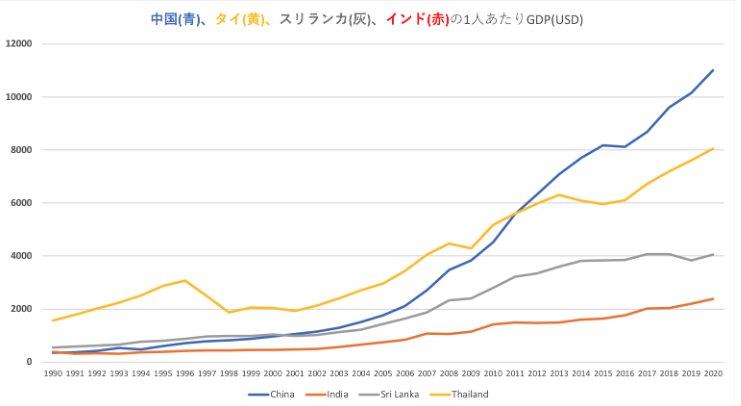
Sri Lanka's GDP per capita is approximately 4,000 USD, which translates to an annual income of around 400,000 yen.
That's about one-tenth of Japan's level, roughly twice that of India's, and half that of Thailand's.
I expect you're beginning to get the picture.
Incidentally, the university enrolment rate stands at 41 per thousand, which should give you an idea of the situation in Japan during the 1950s and 1960s.
The currency is the Sri Lankan rupee (LKR)
Before moving on to prices, let us discuss currency.
The currency of Sri Lanka is the Sri Lankan rupee (hereafter LKR).
As of September 2019, the LKRJPY exchange rate is 0.60 yen.
The following shows the movement of the LKRJPY rate over the past ten years.
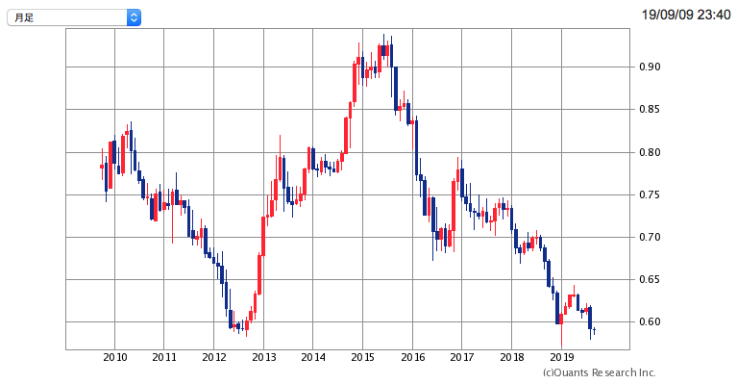
The current exchange rate is at its most favourable for Japanese travellers, as the yen is at its strongest.
Prices are very cheap, but accommodation costs are high.
Sri Lanka's economic level is one-tenth that of Japan, so prices are generally very low.
To list the meals clearly,
Traditional chicken curry: approximately 250 LKR (equivalent to 150 yen)
Samosa: approx. 40 LKR (approx. ¥25)
Water; approximately 70 LKR (equivalent to 40 yen)
Chai: Approximately 30 LKR (equivalent to 20 yen)
at an exceptionally low price level.
A taxi costs 2,500 LKR for one hour, which is equivalent to 1,500 yen. (It feels less of a bargain than meals.)
On the other hand, hotels are a prime example of something that is not cheap.
The cost of a hotel that would satisfy the average Japanese person is between ¥5,000 and ¥7,000.
Below are the 'recommended hotels' found on Expedia.
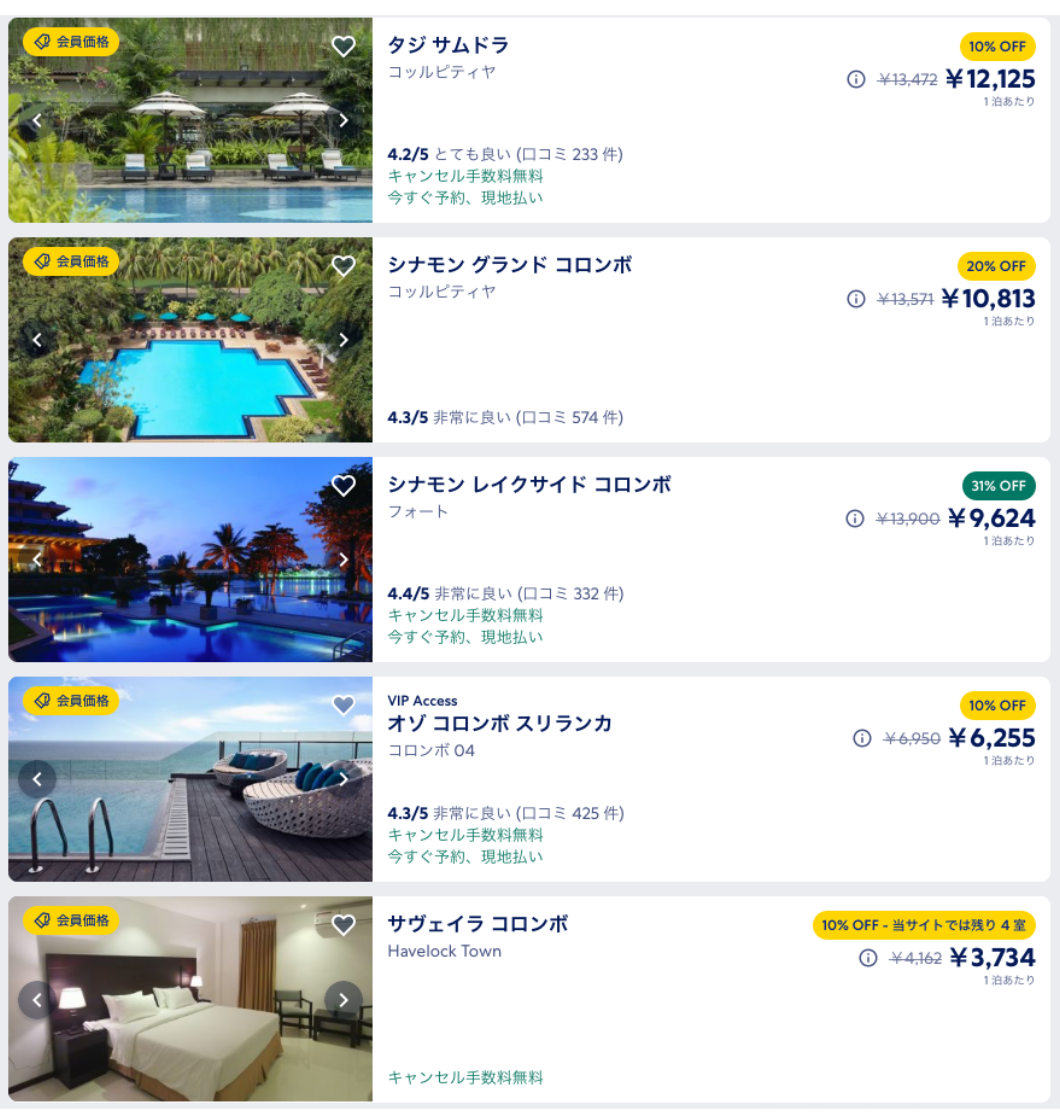
When staying at budget guesthouses costing around ¥1000, one should be aware that air conditioning may be absent and there could be issues with hygiene.
Simply sorting by price on Expedia allows you to find reasonably clean hotels with air conditioning for between ¥3,000 and ¥5,000.
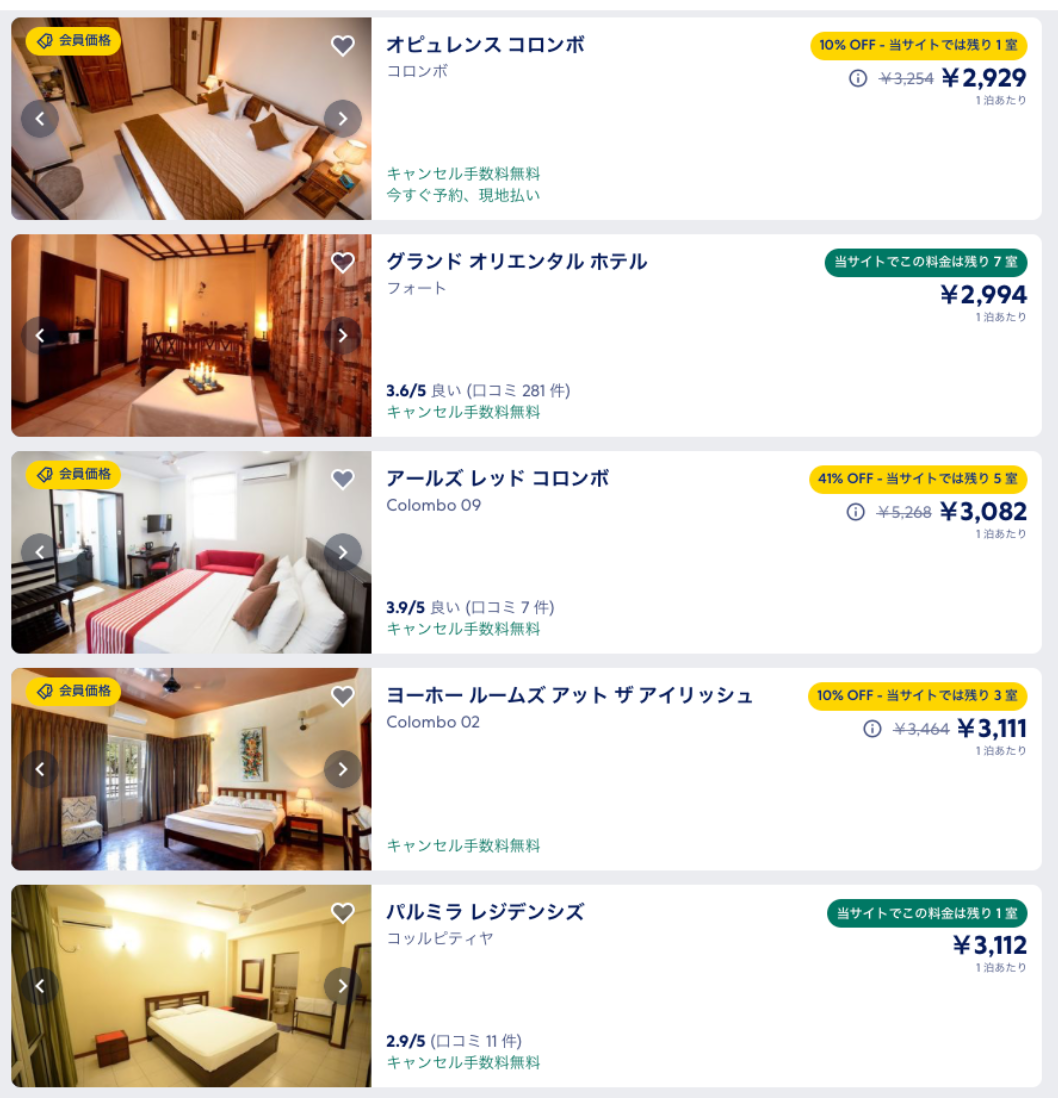
It's best to choose a hotel that suits your personal taste!
The following is a review of the hotel I actually stayed at during my trip to Sri Lanka, which I hope you will find useful.
Summary
Sri Lanka is a potential tourism powerhouse possessing numerous World Heritage Sites, born from the fusion of its unique culture and colonial heritage.
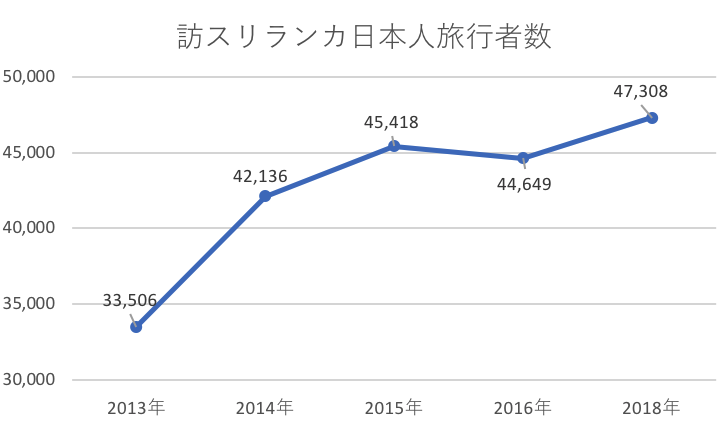
The number of travellers from Japan has also been steadily increasing in recent years and is on track to surpass 50,000.
I have travelled to 40 countries around the world, but Sri Lanka remains an undiscovered gem within Asia, brimming with charm precisely because it is not yet a major tourist destination.
Prices remain low and the exchange rate is favourable for Japanese tourists, so why not pay a visit?
That concludes 'What's Sri Lanka like!? Get your history, climate, attractions, economy and prices sorted before travelling!'