

The giant rock suddenly towering in the jungles of central Sri LankaSigiriya Rock」。
At its summit lie the ruins of a 1,500-year-old royal palace, surrounded by beautiful water gardens and enigmatic murals.
Often referred to as the “Palace in the Sky” due to its appearance resembling a castle floating in the air, it is one of Sri Lanka's foremost tourist attractions, frequently hailed as the 'Eighth Wonder of the World'.
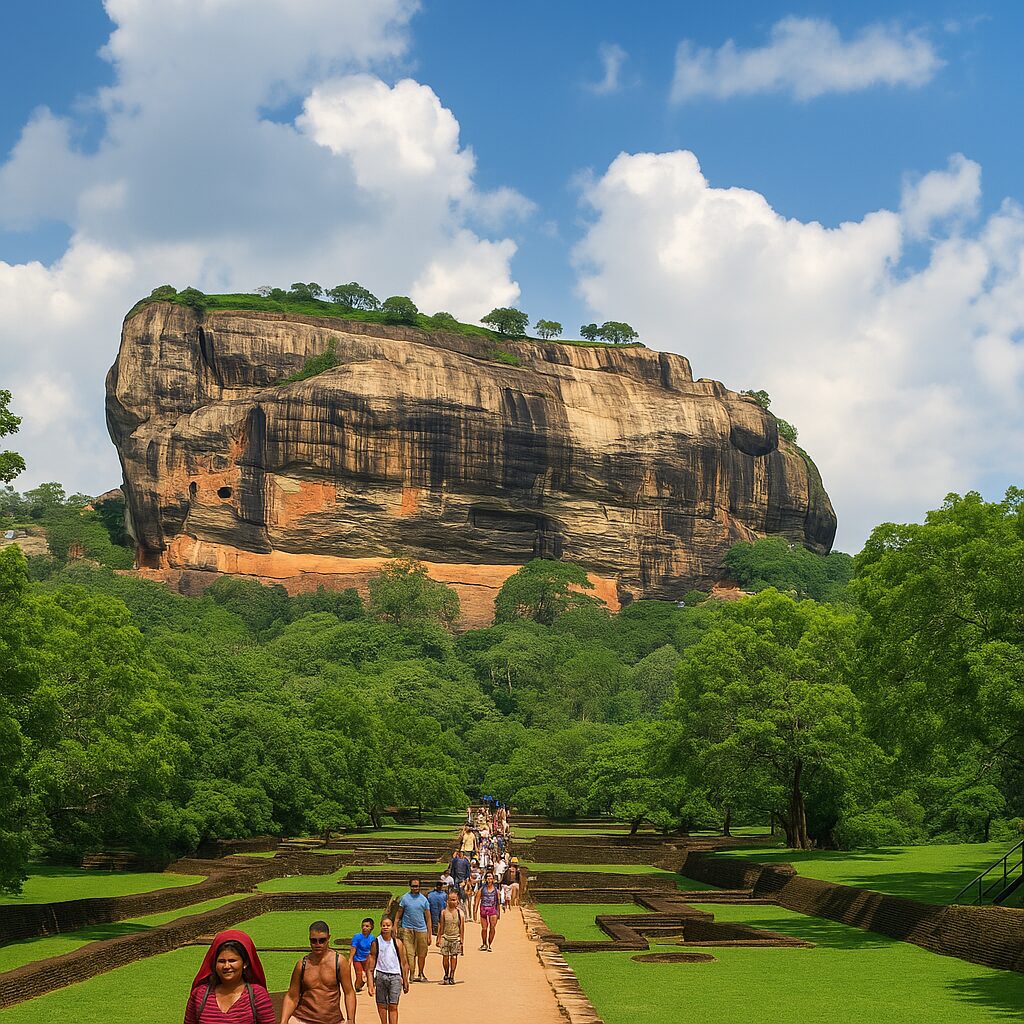
It is also listed as a UNESCO World Heritage Site and is undoubtedly a must-see spot when travelling in Sri Lanka.
Indeed, I had made it the main event of my trip to Sri Lanka.

However, Sigiriya Rock, which involves climbing 1,200 steps up a cliff face approximately 200 metres high, may cause some to worry: "I'm concerned about my stamina..." or "What if I'm afraid of heights?"
The access method also seems a bit complicated, doesn't it? But rest assured.
In this article,How to get to Sigiriya Rock (the most recommended taxi charter), must-see highlights, and addressing the question "Is it really scary?" along with historical mysteriesI'll explain it in detail in a casual manner.
This guide has been compiled from the perspective of Japanese tourists travelling independently, so reading it will ensure you are perfectly prepared for your visit to Sigiriya Rock.
Now then, let us delve straight into the allure of the ancient fortress in the heavens!
- What is Sigiriya Rock? Its Appeal and Basic Information
- How to get to Sigiriya Rock (Access) [Taxi charter recommended!]
- A Comprehensive Guide to Sigiriya Rock's Highlights
- Highlight ①: Elephant Gate
- Highlight ②: Natural rock arch
- Highlight ③: Mirror Wall
- Highlight ④: Sigiriya Lady (Fresco of the Beautiful Woman)
- Highlight ⑤: Remains of the Soldiers' Residential Area and the 'Attack Rock'
- Highlight ⑥: Lion Terrace (Lion Gate)
- Highlight 7: The Royal Palace Ruins at the Summit and Panoramic Views
- Highlight ⑧: The King's Throne and the Remains of the Great Hall of Dance
- Highlight 9: The King's Pool (Aquarium)
- Highlight 10: Cobra Gate
- Is Sigiriya Rock scary? Is it suitable for those with a fear of heights?
- Unravelling the History and Mysteries of Sigiriya Rock
- Summary: Key points for visiting Sigiriya Rock
What is Sigiriya Rock? Its Appeal and Basic Information
Sigiriya RockSigiriya Rock is a massive monolith located in the Matale District of central Sri Lanka.
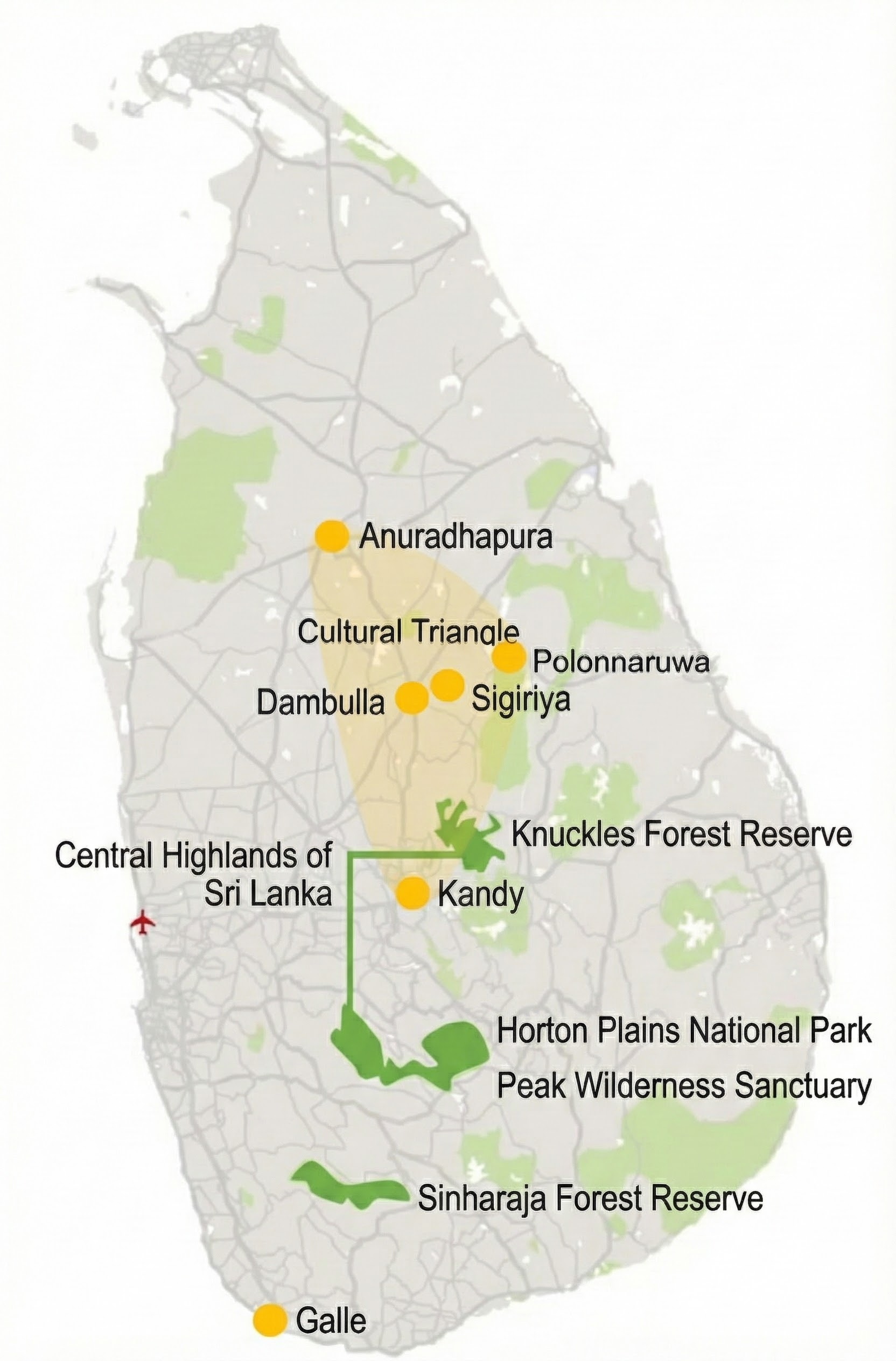
The height is approximately 180 to 200 metres above ground level, reaching an elevation of about 370 metres, and it is an elliptical columnar rock neck with steeply sloping sides on all sides.
During the Sinhala Kingdom era in the latter half of the 5th century, a palace was constructed atop this rock. Its ruins remain today, offering a 360-degree panoramic view from the summit.
Midway up the rock face, ancient frescoes depicting beautiful women are painted, while at the foot lie symmetrical water gardens and the remains of cave temples.
Due to its sophisticated urban planning and unique landscape, it was inscribed as a World Heritage Site in 1982 under the name 'Ancient City of Sigiriya'.
Sri Lanka boasts eight UNESCO World Heritage Sites, among which Sigiriya Rock is arguably the most popular tourist attraction.
Its charm lies above all in the utterly unique sight of a colossal rock suddenly appearing amidst the jungle, complete with an ancient royal palace.
You must climb 1,200 steps to reach the summit, but along the way there are plenty of sights to see: mysterious murals, walls polished like mirrors, and the remains of a colossal lion statue.
The former king's magnificent aerial palace and the surrounding謎The experience of ascending while pondering the myriad wonders bestows an unparalleled sense of wonder.
Furthermore, Sigiriya Rock is "Lion RockIt is also known as.
The origin of its name stems from the palace entrance, carved into the mountainside, which was constructed to resemble the form of a colossal lion.
Currently Lion'sjust the feetThough only the remains are left, it's thrilling to imagine that once a great lion stood with its mouth open upon the rocky mountain.
Trivia
From 2023, the opening time for Sigiriya Rock will be significantly earlier in the morning.5:30It is now possible to climb from the base. Consequently, depending on the season, it is possible to witness a beautiful sunrise from the summit (a torch is essential if climbing whilst it is still dark). Whilst Sri Lanka can be intensely hot during the day, the early morning and evening hours are cooler and less crowded, making them highly recommended for sightseeing.
Now then, let us proceed to examine in detail how to get to Sigiriya Rock.
How to get to Sigiriya Rock (Access) [Taxi charter recommended!]
Sigiriya Rock is situated in central Sri Lanka, some distance from the major cities. It lies approximately 170 kilometres (4 to 5 hours by car) from the capital, Colombo; about 90 kilometres (2.5 to 3 hours by car) from the Buddhist holy city of Kandy; and roughly 20 kilometres (30 minutes by car) from the nearest town, Dambulla. While accessible by public transport, this involves considerable time and effort.If efficiency is your priority, chartering a taxi is by far the best option.Below is a comparison of the main means of access.
| means of transport | Time required | Cost estimate | Advantages | Disadvantages |
|---|---|---|---|---|
| Long-distance coach | Approximately 5 to 6 hours (including transfers) |
Approximately 1,500 rupees (approximately 600 yen) |
The price is low | Complex routes and transfers, crowded carriages and lack of comfort |
| Rail + Bus | Approximately 5 hours (2–3 hours by train plus connecting travel) |
Approximately 1,000 rupees (approximately 400 yen) |
Train travel is relatively comfortable | There is no direct route, requiring a further bus or taxi journey from an intermediate station (e.g. Habarana). |
| Taxi charter (most common) |
Approximately 4 hours (Colombo) |
Per vehicle per day: approximately ¥10,000 to ¥12,000 | Enjoy hassle-free hotel transfers, safety and comfort, plus the freedom to explore tourist spots at your leisure. | More expensive than public transport (when travelling with fewer people) |
| Local tour | Depending on the itinerary (e.g. 8 to 10 hours round trip for a day trip) |
Depending on the tour content | Easy to arrange, with a guide for peace of mind | There may be instances where flexibility is limited and costs become relatively high. |
When travelling by public transport
It is possible to travel independently by connecting buses and trains.
For example, one route involves travelling from Colombo to Kandy by long-distance coach or train, then changing to a coach bound for Sigiriya.
Alternatively, you can take a bus from Colombo to Dambulla and connect to a local bus to Sigiriya in Dambulla.
The fare is cheap, butThere are few services or transfers are requiredThere are many unpredictable elements, such as time.
Moreover, the vehicle tends to become crowded, and travelling for extended periods on a local bus without air conditioning can be physically taxing.
A chartered taxi is most highly recommended.
As mentioned above, many overseas travellers use chartered taxis (chartering both vehicle and driver) to tour the Cultural Triangle, including Sigiriya.
With a chartered taxi, you can be picked up at the airport or your hotel and taken directly to your destination.
There is also the peace of mind that comes from being able to safely store luggage on board without any loss of time.
From experience,Approximately ¥10,000 per vehicle per dayIt can be used to a reasonable extent, and if shared among several people, the cost per person is surprisingly low.
The author also chartered a private driver for an eight-night, nine-day trip to Sri Lanka, comfortably touring major attractions including Sigiriya Rock.
The driver often doubles as a qualified guide, and it was a definite plus to hear historical commentary along the way.
For details on Lanka Me, which the author utilised, please refer to the following.

Take a tour departing from the destination
Upon arrival in Sri Lanka, you may also choose to join optional tours organised by local travel agencies.
Departing from Colombo or NegomboDay Trip to Sigiriya and Dambullaand so forth are being held.
You can leave the driving to us, and with Japanese-speaking guides available, even beginners can feel at ease.
However, the cost tends to be higher than chartering a taxi, and the freedom is reduced due to group travel arrangements.
If you wish to travel independently and sightsee at your own pace, thenTravelling by chartered car is convenientI suppose.
One point
Visiting Sigiriya Rock is best done with an early start. For example, if staying in Kandy, departing your hotel by taxi around 7 or 8 am will see you arrive at Sigiriya around 10 am. Climbing immediately allows you to descend before noon, avoiding the peak heat of the day. Alternatively, arriving later in the afternoon and climbing in the evening is possible, but be mindful of sunset times (the site closes around 6 pm). Plan carefully, considering both heat management and time constraints.
A Comprehensive Guide to Sigiriya Rock's Highlights
Sigiriya RockA treasure trove of sights from base to summitIt typically takes between 40 minutes and just over an hour to reach the summit, but it's best to proceed whilst stopping frequently to enjoy the scenic spots. Here, we'll explain the main attractions in order along the route.
Highlight ①: Elephant Gate

This is the remains of the entrance gate near the climbing point of the rocky mountain.
Sigiriya Rock once had three gates, one of which was this point known as the 'Elephant Gate'.
A large rock shaped like an elephant's profileIt stands like a gatepost, making it a unique photo spot.
At one's feet lay the pool (pond) of that time, which wasThe pool where the king's consorts bathedIt is said that King Kassapa (discussed later) had as many as five hundred queens, a fact that gives a glimpse of his extravagant lifestyle.
Highlight ②: Natural rock arch
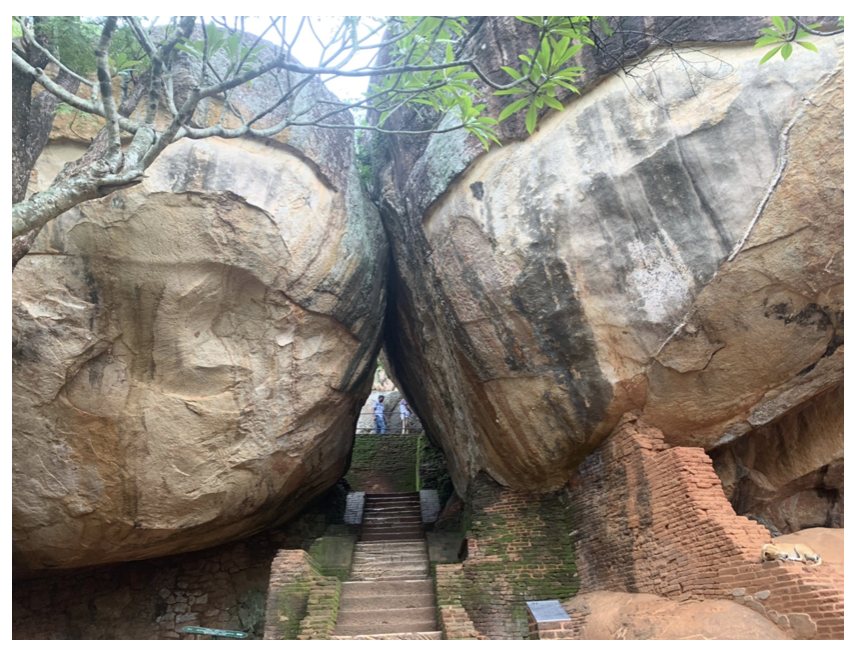
After climbing for a while,A natural tunnel formed by two massive rocks joined togetherpasses through.
This is a naturally collapsed rock formation that happened to stack into an arch shape.
This spot offers a sense of Sigiriya's wonder, with a perfectly balanced composition that seems almost meticulously calculated.
A similar natural arch can be found near the exit, but this first arch on the entrance side is more beautifully formed.
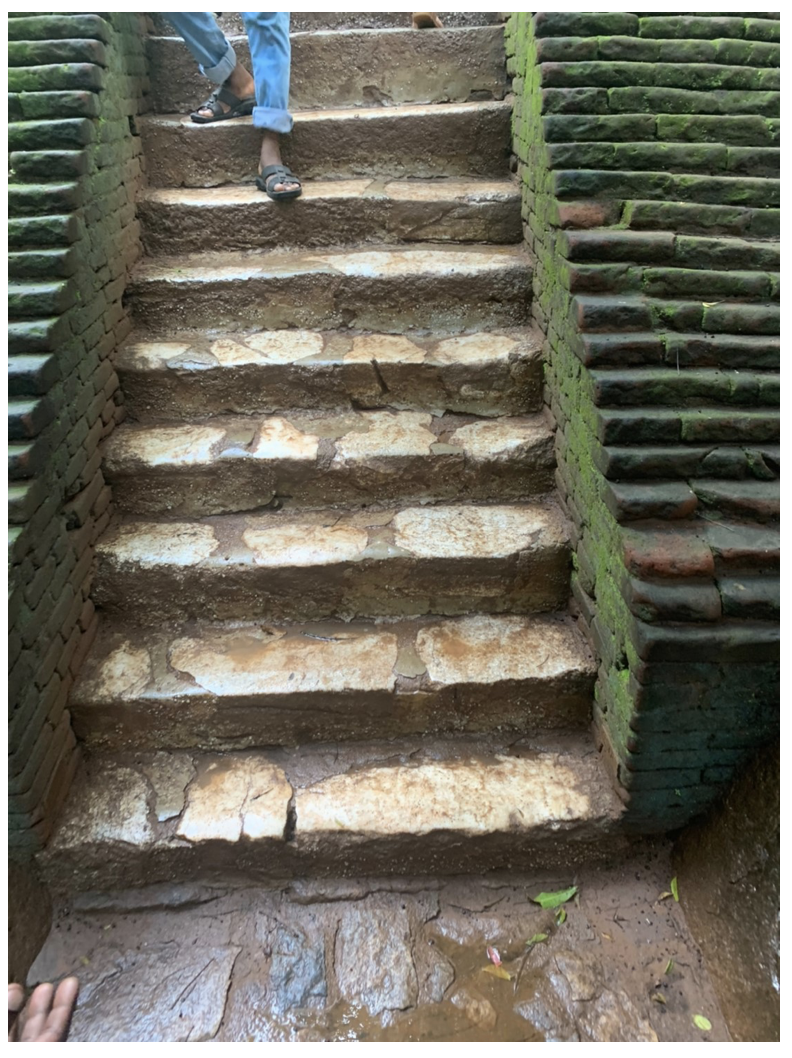
☆Staircase Trivia☆
The steps of Sigiriya Rock are constructed from pale stone for part of their length. This white stone is a material that does not overheat easily under direct sunlight, even in the intense tropical sun.Measures to prevent the stairs from becoming excessively hotI hear that's the case. One is struck by the meticulous care taken by the ancient designers.
Highlight ③: Mirror Wall
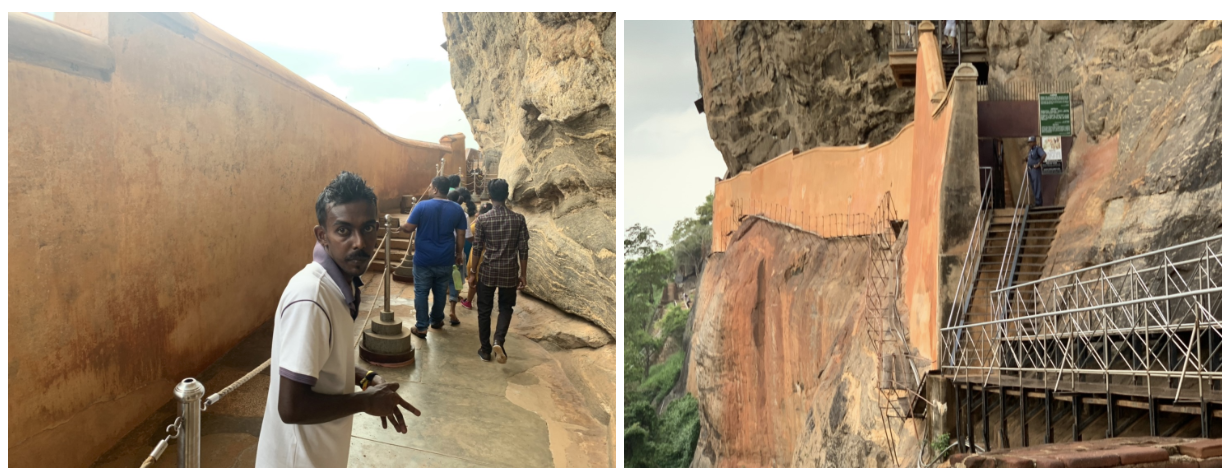
This wall, several metres high and built along the rock face, is called the 'Mirror Wall' because its surface has been polished to a mirror-like shine.
Appearing at the point where one has climbed approximately 300 steps, it catches the eye alongside the orange rock face. It is said that originally this wall surface itself was polished to such a shine that one could see one's reflection in it, but what is more intriguing are the marks left upon the wall.Ancient graffiti (poetry and prose).
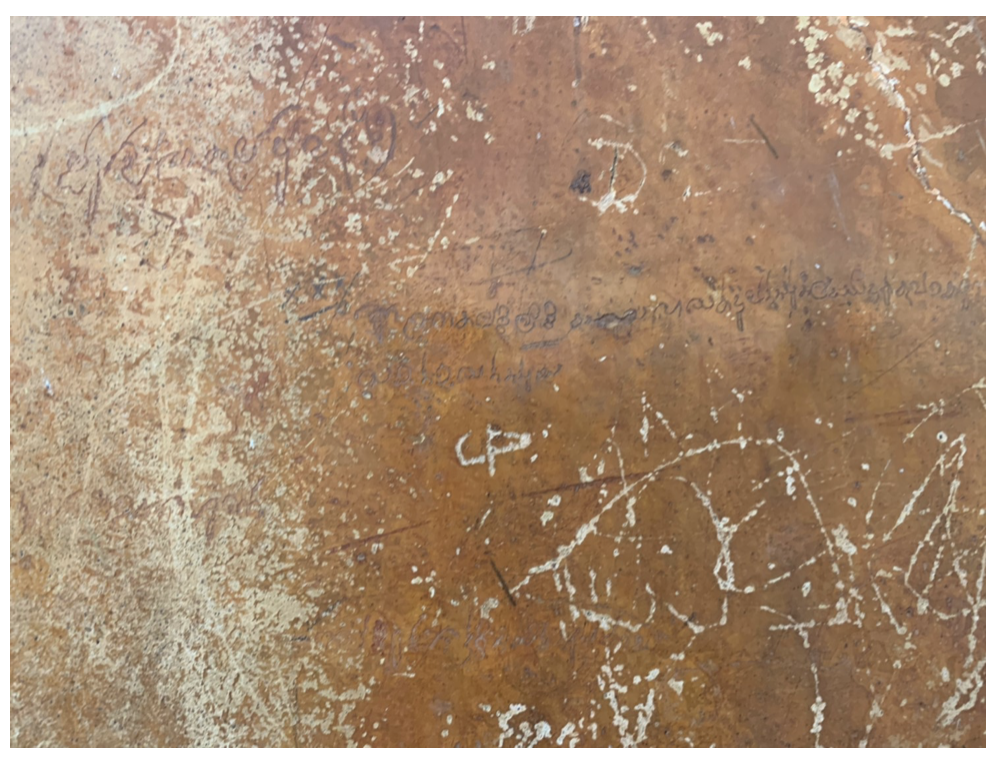
Numerous Sinhala poems left by people of that era are inscribed, recording content such as praise for Sigiriya.
For example, poems such as "I came, I saw, and was utterly captivated by the girls' heavenly beauty..." have been preserved, and these are thought to have been written by visitors around the 8th to 10th centuries.
Truly word-of-mouth from ancient travellersIndeed! Whilst graffiti on the mirrored wall is now prohibited to protect the murals, you can still make out the original inscriptions, so do take a closer look.
Highlight ④: Sigiriya Lady (Fresco of the Beautiful Woman)
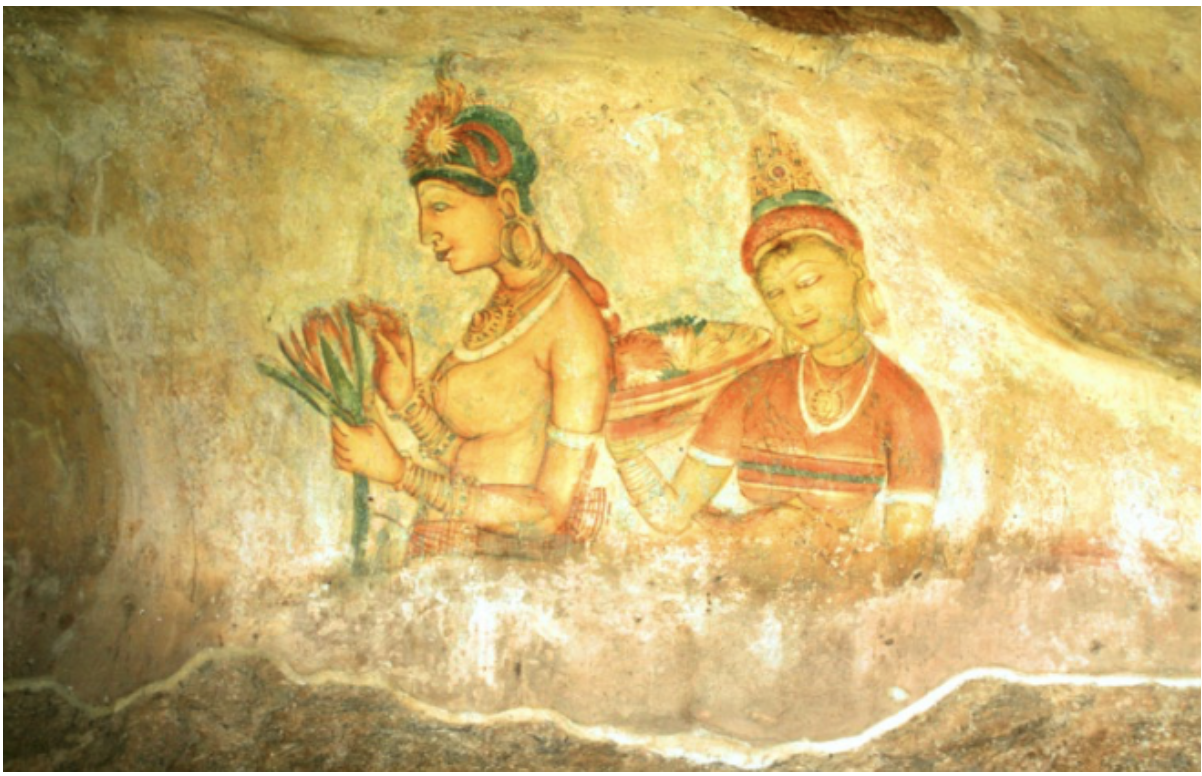
The greatest highlight of Sigiriya is arguably the frescoes painted on the rock face halfway up.The Mural of the Mysterious Beautiesis.
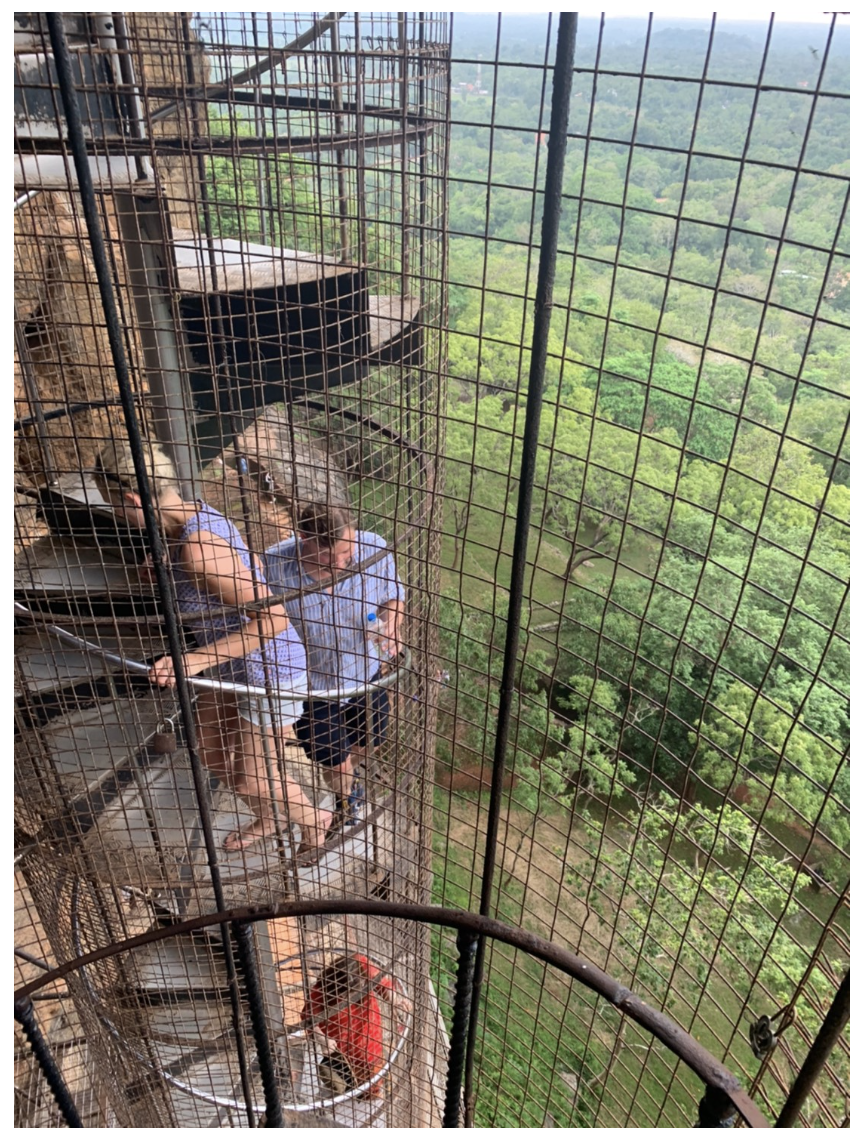
Stretching from mid-staircaseIron spiral staircaseOn the rock face above, there are depictions of some 17 to 18 female figures.
Women with voluptuous, half-naked upper bodies adorned with vivid ornaments are depicted as if floating within the clouds, and are known as the Sigiriya Ladies. Their expressions and colours are so strikingly beautiful and vivid that it is hard to believe they date back over 1500 years, captivating all who behold them.
This fresco, in fact,Once, as many as 500 women were depicted.It is said that, however, due to the passage of time and human destruction, only a very small portion can be confirmed today.
What on earthWho, for what purposeIt remains unclear exactly who painted this portrait of a beautiful woman.
Prominent theories include that they depict the consorts and attendants of King Kassapa or that they are images of celestial nymphs (apsaras) presiding over fertility and rainmaking, but the truth remains shrouded in mystery.
Photography is prohibited to prevent weathering of the murals, so please commit them to memory by imprinting them upon your eyes. After viewing this rock-cut section, you will descend the same spiral staircase to return to the original route.
Highlight ⑤: Remains of the Soldiers' Residential Area and the 'Attack Rock'
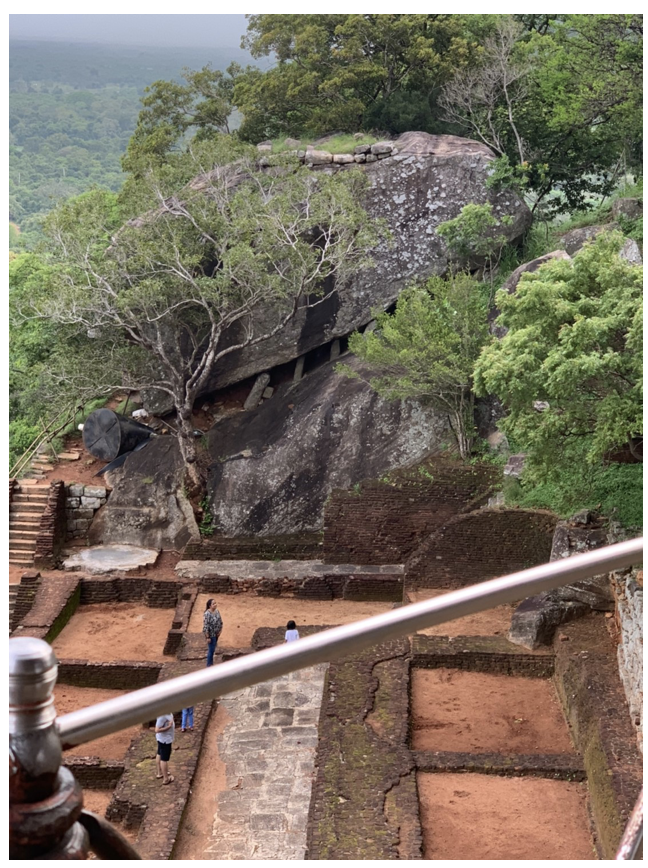
再び通常の階段に戻り進むと、平坦な広場に出ます。ここは宮殿を守る近衛兵たちの詰所や宿舎があったエリアです。
岩肌には部屋の基礎と思われる窪みなどが残っています。そして目を引くのが、広場の奥に鎮座する巨大な一枚岩。実はこれ、有事の際に敵めがけて落とすために意図的に残されていた“攻撃用の岩”と言われます。一見不安定に見えるこの巨岩ですが、絶妙なバランスで静止しています。
幸い戦乱で使われることは一度も無かったそうですが、城塞としての防御アイデアもうかがえる興味深いポイントです。
Highlight ⑥: Lion Terrace (Lion Gate)
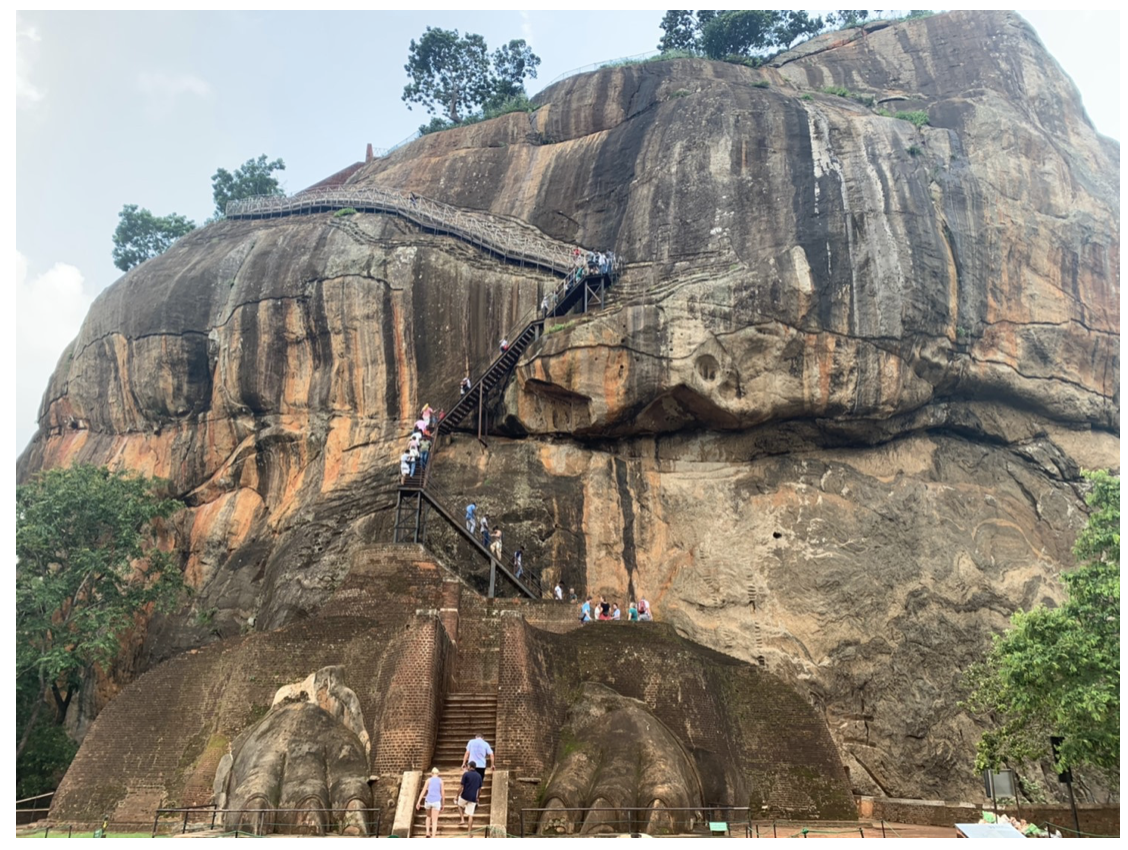
岩山の中腹、頂上への最後の登り口に広がる大テラスがライオンテラスです。ここには巨大なライオンの石像の前脚と爪が残っており、シーギリヤロックを象徴する写真スポットになっています。
古代、この石像は前脚だけでなく獅子の頭部まで備わっていて、訪問者はライオンの口の中に設けられた階段を通って宮殿へ入ったとされています。
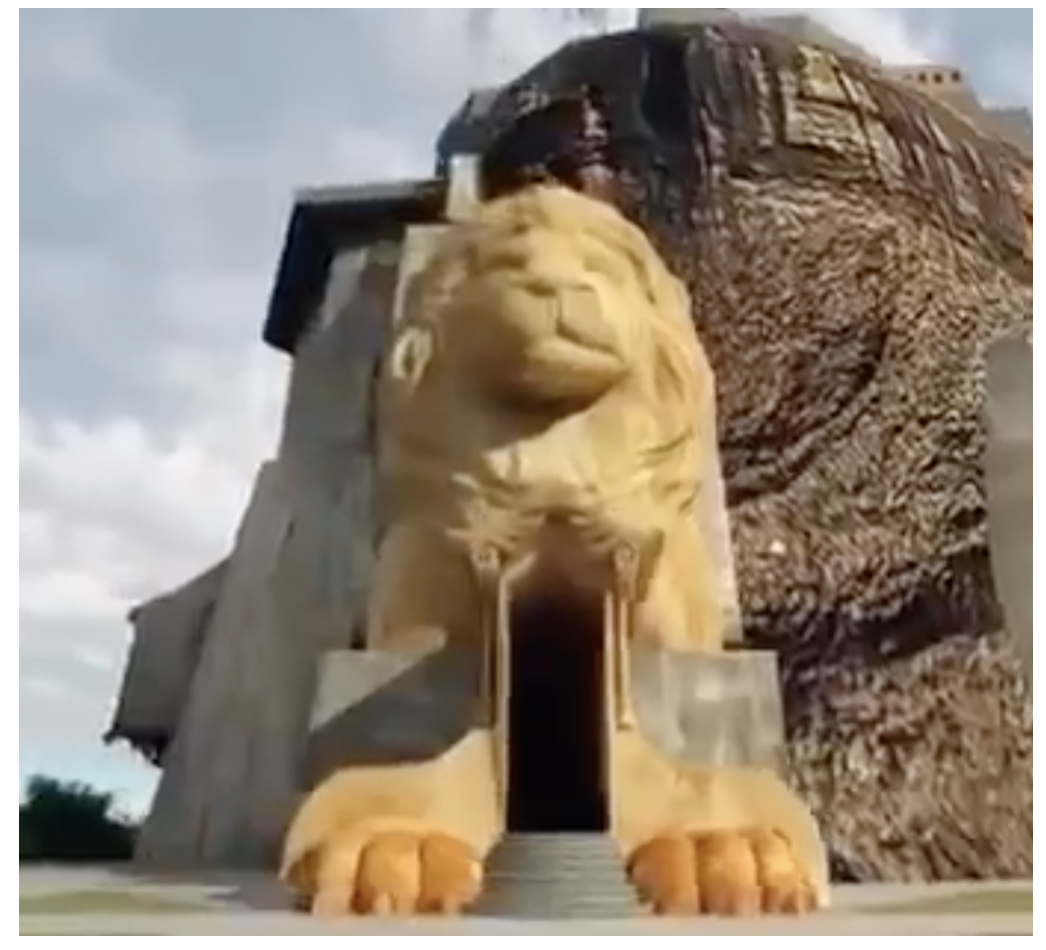
つまりカッサパ王は自らをライオンになぞらえ、敵対者に威圧感を与える要塞の門構えを作り上げたのです。このライオン像にちなみ「シーギリヤ(シンハ=ライオン、ギリヤ=喉)」という地名がついたとも言われています。
ライオンテラスは広くベンチもあるため、多くの観光客が一息つく場所でもあります。実はカッサパ王自身も、玉座に座るようになってからは頂上へは歩いて登らず、麓からライオンテラスまでは担架で運ばれ、そこから先だけ自分の足で歩いたと伝わります。ここから先はいよいよ王のみが踏みしめた“天空への階段”です。
Highlight 7: The Royal Palace Ruins at the Summit and Panoramic Views
ライオンテラスから先は最難関のラストスパート。岩肌に取り付けられた急勾配の鉄階段を登り切ると、ついに頂上の広大な王宮跡に到着します。
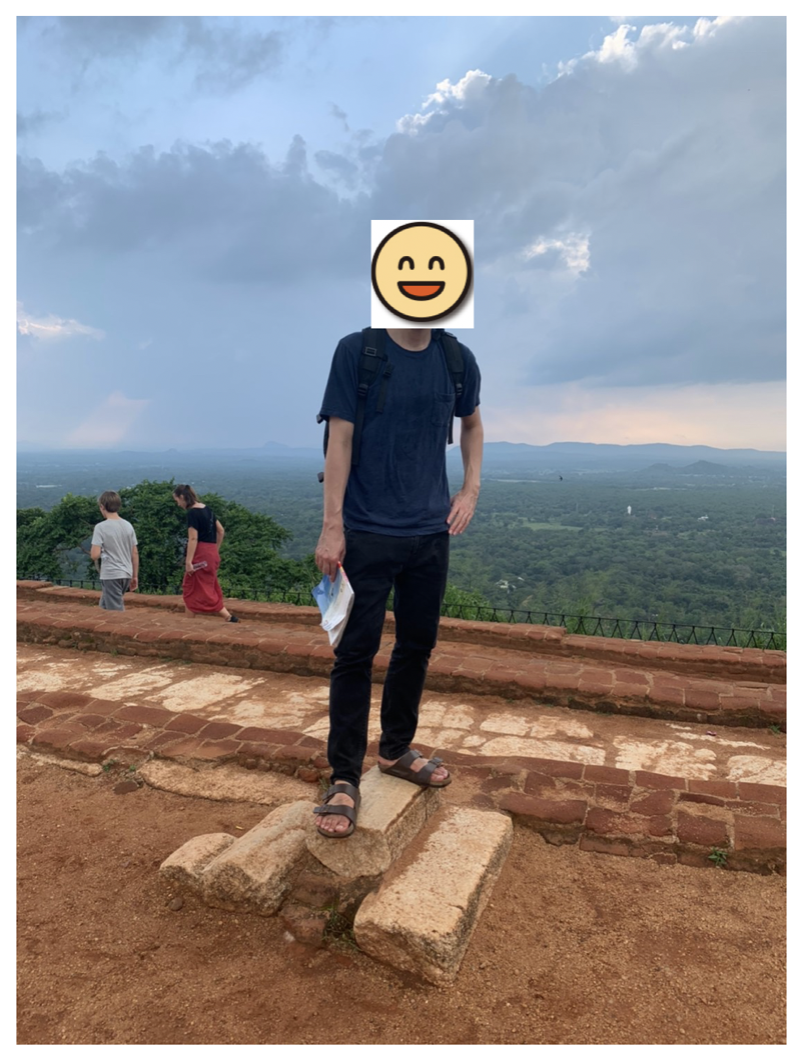
登頂所要は麓から約40分~1時間ほど。頂上は思いのほか広く、サッカー場くらいの平地が広がっています。
その中央付近に王宮の基礎石が残り、周囲にはかつての居室区画や水槽跡が点在します。断崖絶壁の上にこれだけの建造物を築いたことに驚嘆しますが、さらに感動的なのはそこからの絶景です。遮るものの無い高さ約200mの空中から見渡すスリランカの大地は、まさに王者の眺め。
遙か彼方まで続く緑のジャングルや点在する湖沼、遠くの山並みまで見晴らせます。写真では伝わらないスケール感がありますので、ぜひ自分の目で確かめてみてください。頂上では達成感と爽快な風を感じながら、ゆっくり景色を楽しみましょう。
Highlight ⑧: The King's Throne and the Remains of the Great Hall of Dance
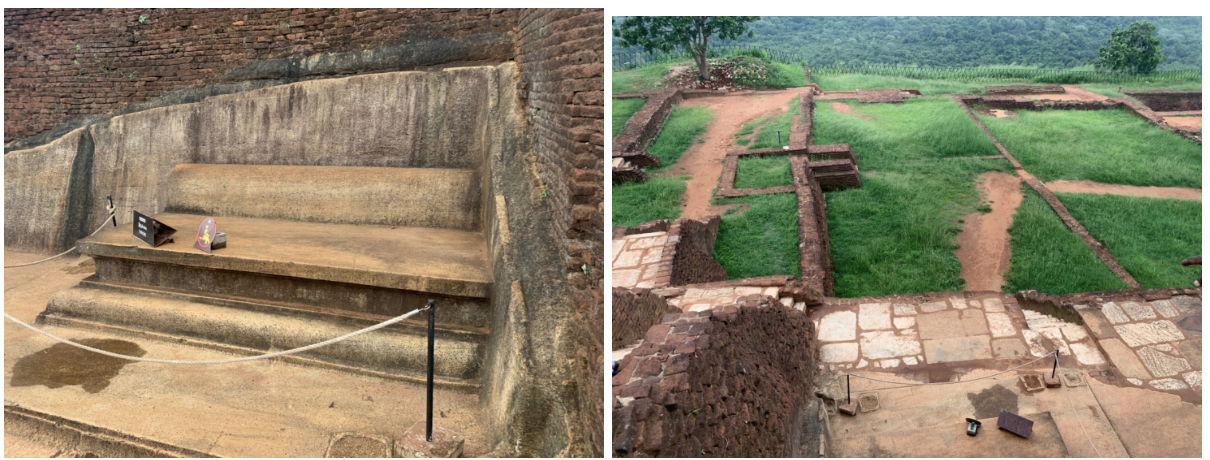
頂上エリアで見逃せないのが、岩を削って造られた石の玉座です。小高く盛り上がった場所にあり、王が腰掛けて遠方を見渡したとされるスポットです。
残念ながら今は座ることはできませんが、1500年前にこの地を治めた王の視界を追体験できます。
また玉座の周囲は「ダンスホール」あるいは夜の宴が催された広場と言われ、500人の美女たちがこの場で王を楽しませたという伝説もあります。想像が膨らむ歴史ロマンあふれる場所です。
Highlight 9: The King's Pool (Aquarium)
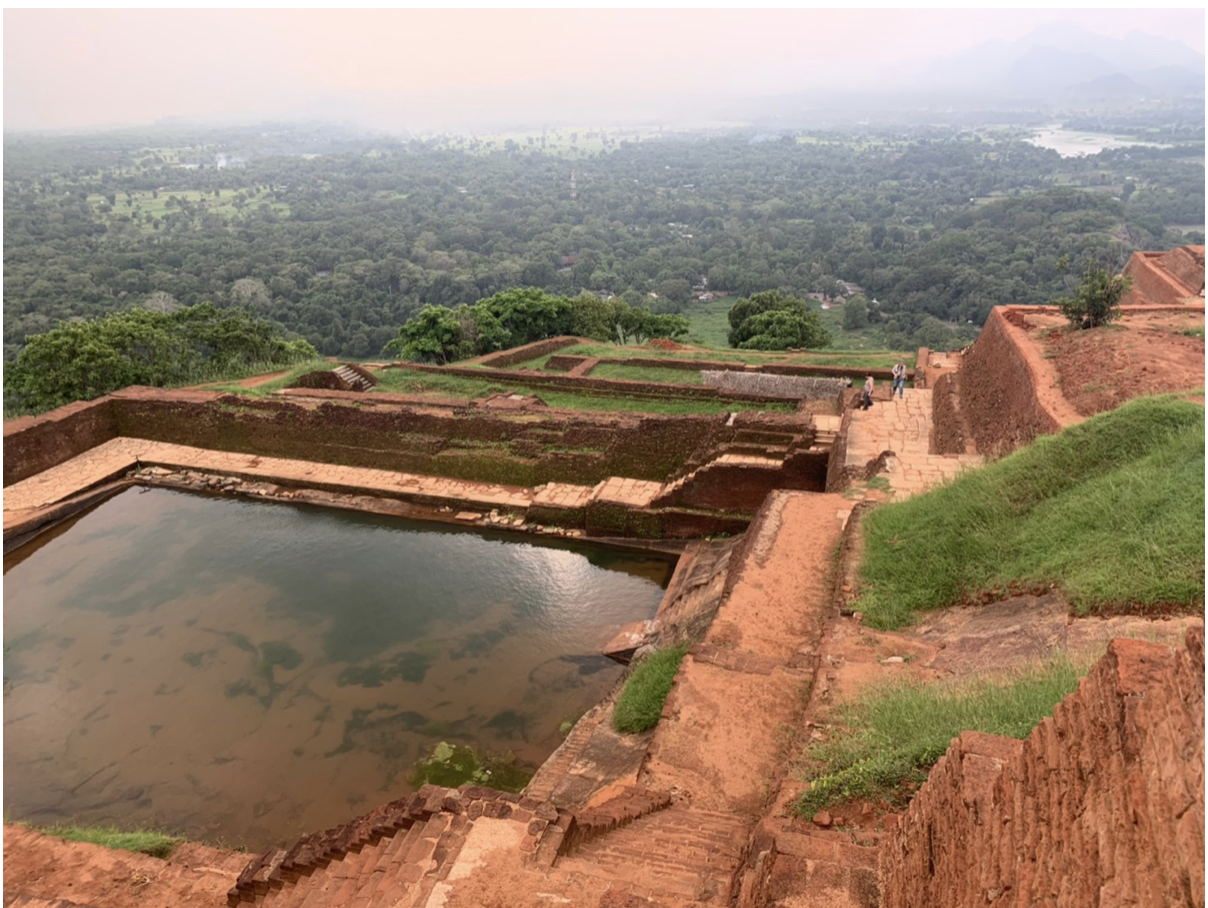
頂上の片隅には大きな四角い窪みがあります。これは王専用のプール(水浴用タンク)の跡です。
雨水を貯められるよう防水加工されており、当時ここで王族が水遊びを楽しんだと考えられます。
高さ180mの岩山の上にありながら、きちんと水を貯えられる構造になっているのは驚きです。
なお、麓の庭園には噴水付きの池が複数ありますが、これらは重力を利用した巧妙な水路システムによって貯水池から水が供給され、雨季には今でも噴水が自動で稼働するほど当時の水利工事は優れていたそうです。古代スリランカの高度な技術力に感心させられます。
Highlight 10: Cobra Gate
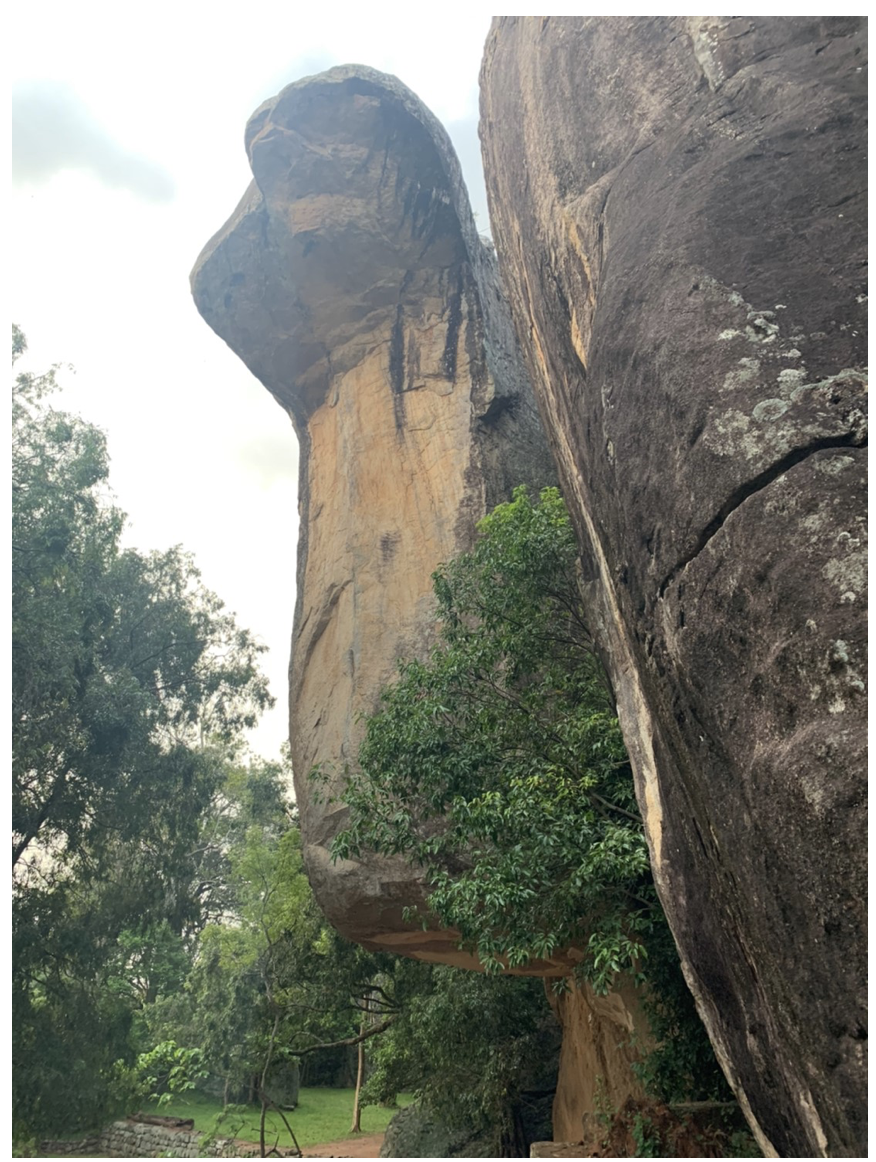
下山ルートの途中、出口付近に最後の門があります。
門の上部にある大岩の形状が蛇の頭(コブラ)がフードを広げたように見えることから「コブラの門」と呼ばれます。古代、シーギリヤロックには前述の象の門とこのコブラの門から入場し、内部を通ってライオンテラスに至る動線だったと考えられています。
現在観光客は一つの入口から入りますが、この出口側に残るコブラ型の岩も是非見上げてみてください。
以上が主な見所になります。順路にはほかにも大小様々な遺構が点在していますが、ここで紹介したポイントを押さえておけば十分満喫できるでしょう。
なお、麓にはシーギリヤ博物館も併設されています(入場料はシーギリヤロックのチケットに含まれています)。
日本の援助で2009年に建てられた博物館で、シーギリヤロックの歴史や発掘品、シーギリヤ・レディの複製画などが展示されています。
時間があればこちらも立ち寄ってみると理解が深まりますよ。
Is Sigiriya Rock scary? Is it suitable for those with a fear of heights?
さて、「シーギリヤロックが怖い」という噂を耳にすることがあります。
実際、高さ約200mの断崖に沿って細い階段を登るため、高所恐怖症の人にはかなりスリリングかもしれません。
特に終盤のライオンテラスから頂上へ伸びる鉄の階段は傾斜が急で足元の隙間から下が丸見えです。風が吹くと少し揺れる感じもあり、高い所が苦手な方は足がすくむ思いをするでしょう。
それでも大丈夫!対策と心構え
まず恐怖心への最大の対策は「上だけを見て登る」ことです。手すりが設置されていますので、しっかり掴んで前だけを見ながら一歩ずつ登れば、下を見なければ恐怖はかなり和らぎます。周りの景色を楽しむのは降りてからのお楽しみに取っておきましょう。また焦らず自分のペースで休み休み登ることも大切です。幸いライオンテラスという広めの休憩所がありますので、頂上まで行くのが厳しければ無理せずそこで待機する選択肢もあります。「怖い」と感じたら決して無理をしないこと。シーギリヤロックは頂上まで行かずとも、途中まででも十分雰囲気を味わえます。
安全面について
シーギリヤロックの階段や通路は観光客向けに整備されており、基本的には安全です。手すりや滑り止めも付いています。ただし足元は場所によって濡れていたり凹凸があるため、歩きやすい靴で登るのが望ましいです(サンダルでも可ですが、スニーカーが安心)。また頂上の崖際には囲いが無い場所もあるので、写真撮影に夢中で縁に近づきすぎないよう注意しましょう。
動物・虫に注意
高所よりも実際怖いのは野生のスズメバチかもしれません。シーギリヤロック周辺にはハチが生息しており、特に暑期にはライオンテラス付近に巨大な巣ができて大量発生することがあります。まれに観光客が刺激してしまいハチが大群で襲ってくる事故も報告されています。そのため現地では「静かに行動する」「ハチの巣に近づかない」など注意喚起のサインが出ています。万一ハチが飛来してきたら慌てず低姿勢でその場を離れるようにしましょう。管理局が防護ネットを用意している場合もあります。実際には滅多に遭遇しませんが、夏場は最悪ハチのために登頂禁止となる日もあるとのこと。こうした自然要因も頭に入れておくと良いでしょう。
結論として、高所恐怖症でも工夫すれば十分登れますし、恐れる価値の無いほど素晴らしい体験が待っています。
無理は禁物ですが、ぜひ可能な範囲でチャレンジしてみてください。登り切った先の達成感は格別ですよ!
Unravelling the History and Mysteries of Sigiriya Rock
この壮大な岩山にまつわる歴史物語も、シーギリヤロック観光の醍醐味です。シーギリヤには血塗られた王位争いと短い繁栄、そして多くの謎が秘められています。
時は5世紀末、シンハラ王朝(アヌラーダプラ朝)の王子だったカッサパ1世(カーシャパ王子とも)が、ある野望を抱きます。
王位継承に不利な立場だった彼は、ついに実の父である王ダートゥセーナを殺害し、異母弟モッガラーナ(正当な継承者)をインドへ追放して、自ら王位を奪い取りました。父王殺しという大罪を犯したカッサパ王は仏教徒として罪の意識に苛まれつつも、自らの新たな都を築くことを決意します。
彼が選んだ場所こそ、幼少期に訪れて心惹かれていたというシーギリヤの岩山でした。
即位後、カッサパ王はわずか7年という驚異的な工期で岩山の上に華麗なる宮殿を完成させ、シーギリヤへ遷都します。周囲には緻密に設計された都市と庭園を築き、まさに難攻不落の要塞都市を作り上げました。シーギリヤは宮殿であると同時に城塞でもあり、王はそこで約18年間統治を行います。
しかし、王の栄華は長く続きませんでした。国外に逃れた弟モッガラーナが復讐の軍勢を率いて戻ってきたのです。紀元495年、シーギリヤの麓で両者の決戦が繰り広げられました。当初優勢だったカッサパ王でしたが、自軍が誤解から混乱し見放されてしまいます。
孤立無援となった王は自ら剣を喉に突き立て自害し果てたと伝えられます。カッサパ王の死によりシーギリヤは陥落し、追放されていた弟モッガラーナが新王となりました。
モッガラーナ王は王都を元のアヌラーダプラへ戻し、シーギリヤの地は仏教僧の修行の場として寄進されます。
以後、シーギリヤは再び静寂な僧院都市となり、13世紀頃まで僧侶たちに利用されましたが、その後放棄され密林の中に埋もれていきました。
シーギリヤが歴史の表舞台に姿を現すのは、それから実に約1400年後、19世紀末のイギリス人探検家による再発見の時です。
熱帯雨林に覆われた岩山で色鮮やかな美女壁画が偶然目に留まり、それがきっかけで本格的な発掘調査が行われました。当時の壁画の美しさに誰もが驚嘆し、「こんな秘境にこんな文明があったとは!」とセンセーションを巻き起こしたといいます。
現在、シーギリヤロックは世界遺産かつスリランカ観光の目玉として、多くの人々を惹きつけています。
しかし、多くの謎が残されたままでもあります。先述の美女壁画の正体しかり、「なぜカッサパ王は岩山の上に都を築いたのか?」、「庭園の高度な設計はどのように伝承されたのか?」、「巨大な岩をどのように切り出し運んだのか?」等々、歴史学・考古学の観点でも興味は尽きません。
一説では、カッサパ王の築いたシーギリヤは単なる要塞ではなく、当時台頭していた新興仏教(大乗仏教)と古来の仏教(上座部仏教)の宗教的対立の舞台でもあったという分析もあります。真相は研究者によって諸説ありますが、こうした「解明されていない謎」こそがシーギリヤロックのロマンを一層かき立てていると言えるでしょう。
最後にもう一つ。シーギリヤロックはその独特の価値から、「世界第8番目の不思議」とも称されています。
世界七不思議に次ぐ驚異的建造物という意味で、かのタージマハルや万里の長城と肩を並べる評価を受けることもあるのです。カッサパ王の狂気と情熱、そして古代スリランカ人の知恵が生んだこの空中都市は、まさに奇跡の遺産と言えるでしょう。
Summary: Key points for visiting Sigiriya Rock
To summarise the key points of this session:
- 行き方:個人旅行なら断然タクシーチャーターがおすすめ。時間短縮・安全快適で、1日1万円程度と意外に手頃。公共バス・鉄道は安いものの所要が長く上級者向けです。
- ベストタイミング:見学は早朝または夕方が◎。朝5:30開門なので日の出登頂も可能。真昼は酷暑と混雑になるため避けましょう。
- 見所:象の門やライオンの門など登攀ルート上に見所多数。特に中腹の美女壁画「シーギリヤ・レディ」は必見ですが撮影不可なので要目視。頂上からの絶景も圧巻です。
- 所要時間・服装:往復で約2時間見ておけば十分。1,200段の階段を登るため、動きやすい服装・滑りにくい靴で挑みましょう。岩場なのでサンダルよりスニーカー推奨。
- 高所対策:「怖い」と感じる箇所もありますが、手すりを持ち焦らず一歩ずつ進めばOK。無理なら途中で待つ勇気も大事です。蜂対策に夏場は静かに行動するなど注意を。
シーギリヤロックは多少体力は使いますが、特別な登山技術が必要なわけではなく、しっかり準備すれば誰でも楽しめる場所is.
高所が苦手な方も、多くの旅行者が登頂している実績がありますので過度に恐れる必要はありません。
何より、頂上で得られる達成感と眼下の絶景は、苦労を吹き飛ばす素晴らしさです。
スリランカ旅行のハイライトとして、ぜひシーギリヤロックの魅力を存分に味わってきてくださいね。
きっと一生の思い出になることでしょう。安全第一で、良い旅を!