The following five World Heritage Sites within the Cultural Triangle of Sri Lanka share a closely intertwined history.
- Sigiriya Rock
- Candy
- Polonnaruwa
- Anuradhapura
- Dambulla Cave Temple
Understanding the historical background deepens one's appreciation of each World Heritage site, allowing for a greater sense of wonder.
Even those who studied world history at secondary school are unlikely to have studied Sri Lankan history.
Today, I would like to explore the history of tradition and invasions from other nations in chronological order.
Ancient to Medieval Sri Lanka under the Sinhalese Kingdoms
The history of Sri Lanka began with the Sinhalese dynasty.
However, having repeatedly suffered invasions by the neighbouring great power, the Indian dynasty, it relocated its capital numerous times before finally disintegrating.
The five World Heritage sites clustered within the present-day Cultural Triangle all trace the rise and fall of the Sinhala Kingdom up to the medieval period.
| decade | Event |
| BC543 | Prince Vijaya, considered the ancestor of the Sinhalese people, landed in Sri Lanka from southern India. He subsequently married and established the Sinhalese dynasty. |
| 377 BC | the royal capitalAnuradhapuraunder construction →As the first capital, it is now a World Heritage Site. |
| BC247 | Mahinda, son of Ashoka, king of the Maurya dynasty of India Thus Buddhism was transmitted to Sri Lanka. Subsequently, a branch of the Bodhi tree from Bodh Gaya was planted in Abhiraṭapura. |
| 1st century | Dambulla Cave Templewill be held |
| 4th century | The Buddha's tooth relic was brought and enshrined at Anuradhapura. |
| 5th century | Sigiriya RockA palace was constructed. Although the dynasty moved to Sigiriya, it was returned to Anuradhapura after a mere eleven years. |
| 10th century | The Chola dynasty, expanding its influence in South India, conquered Anuradhapura. The Sinhalese dynasty abandoned its capital city. |
| 1017 | The capital of the Sinhalese KingdomPolonnaruwamove to. After that, The Sinhala Kingdom flourished through trade and agriculture, reaching its golden age during the reign of Parakrama Bahu I. |
| 1255 | The end of the Pallava era in South India with the rise to power of the Pandya dynasty. |
| mid-14th century | CandyThe town will be built. |
| 1412 | The Kingdom of Kotte was established |
| 1469 | The Candy Kingdom was established |
| 1470 | The Kingdom of Jaffna gained independence. An era dawned in which three kingdoms stood side by side: the Kingdom of Jaffna in the north, the Kingdom of Kandy in the central highlands, and the Kingdom of Kotte in the southwest. |
Portuguese colonial era
From the Middle Ages onwards, a bitter and protracted period of subjugation by the European powers would continue.
First came the colonial era under Portugal.
The fortress of Goa, now a World Heritage Site, was constructed during the Portuguese colonial era.
| decade | Event |
| 1505 | The son of the Portuguese Governor of Goa, Lourenço de Almeida, drifted ashore in Sri Lanka, which led to the Kingdom of Kotte and Portugal concluding a treaty of friendship. |
| 1518 | The Kingdom of Kotte clashed with Portugal and was repelled. Thereafter, Portugal commenced the conquest of the entire island of Sri Lanka, with the exception of the Kingdom of Kandy. |
| 1588 | GoalA fortress is built |
| 1592 | The capital was established at Kandy, and the Sacred Tooth Relic was transported there. |
| 1603 | The Temple of the Sacred Tooth Relic is established. |
| 1611 | Portugal occupied Kandy. The Kingdom of Kandy requested support from the Dutch East India Company to expel the Portuguese. |
| 1638 | Portugal and the Netherlands clash |
The colonial era under the Netherlands and Britain
Following Portugal, the Netherlands and subsequently the British Empire would colonise Sri Lanka.
In the 19th century, the Kingdom of Kandy, the last Sinhalese dynasty, was overthrown.
However, it was during this period that the British Empire commenced the cultivation of Ceylon tea, which would come to underpin the economy of present-day Sri Lanka.
| decade | Event |
| 1658 | Dutch forces captured Colombo. The island, centred on its coastal areas, The majority became Dutch territory. Thereafter, for 140 years, all regions except the Kingdom of Kandy came under Dutch rule. |
| 1697 | The Temple of the Sacred Tooth Relic in Kandy is being rebuilt |
| 1795 | The British expeditionary force was dispatched following the French occupation of the Netherlands. To be dispatched to Sri Lanka. |
| 1798 | The United Kingdom occupied all regions except the Candy Kingdom. |
| 1802 | The Treaty of Amiens was concluded, formally bringing it under British rule. |
| 1815 | Protectorate status under the Candey Treaty. The de facto collapse of the last Sinhalese dynasty. |
| 1818 | The entire island of Sri Lanka becomes a direct colony of the British Empire. |
| 1867 | Commercial tea cultivation begins. → The Beginnings of Ceylon Tea |
| 1931 | A new constitution was promulgated, granting islanders autonomy within certain limits. Establish a National Council to push for the restoration of universal suffrage. |
From Independence to the Present Day
It was in 2009 that Sri Lanka, where conflict persisted even after independence, regained peace.
Since then, it has achieved remarkable economic growth through the realisation of peace.
Large-scale projects such as resort development and infrastructure improvements are currently underway, propelling the area's rapid advancement as a tourist destination and attracting increasing numbers of visitors from Japan.
| decade | Event |
| 1948 | Within the Commonwealth of Nations, the British monarch serves as head of state. The Dominion of Ceylon within the Commonwealth of Nations gained independence |
| 1951 | Following the conclusion of the Treaty of San Francisco,Establish diplomatic relations with Japan earlier than any other country in the world. |
| 1956 | Mr Bandaranaike, founder of the Sri Lanka Freedom Party Promising a 'Sinhala-friendly policy', they won a landslide victory in the election. This provoked a backlash from the Tamil community. |
| 1972 | Transition to a republic. Declared independence under the name 'Republic of Sri Lanka'. Enacted a new constitution establishing Sinhala as the official language. Declared special status for Buddhism, the religion professed by the majority of the Sinhalese people. |
| 1978 | Transition to a presidential system. The country's name is changed to the 'Democratic Socialist Republic of Sri Lanka'. |
| 1983 | Tamil Eelam Liberation Tigers (LTTE) The civil war between them escalated into full-scale conflict. |
| 2009 | LTTE Chairman Prabhakaran confirmed dead in combat. The government declared an end to the civil war, easing tensions within the country. |
| 2015 | Withdrew from the Sri Lanka Freedom Party, which was the ruling party at the time, during the presidential election Mr Sirisena was elected and assumed the office of President. A United National Party (UNP) government was established, with party leader Mr Wickramasinghe becoming Prime Minister for a third term. |
| 2015 | The UNP has won. It has formed a grand coalition with the second-largest party, the SLFP. |
It was Sri Lanka that saved defeated Japan.
Why did Japan establish diplomatic relations with Sri Lanka first, as shown in the earlier chronology?
It expresses our profound gratitude to Sri Lanka, for which we Japanese cannot thank them enough.
Did you know that after the Second World War, there was actually a proposal for Japan to be divided and governed by the victorious nations?
At the 1951 San Francisco Peace Conference, a proposal for the partition and administration of Japan by the United States, the United Kingdom, the Soviet Union, and China was put forward.
How dreadful.
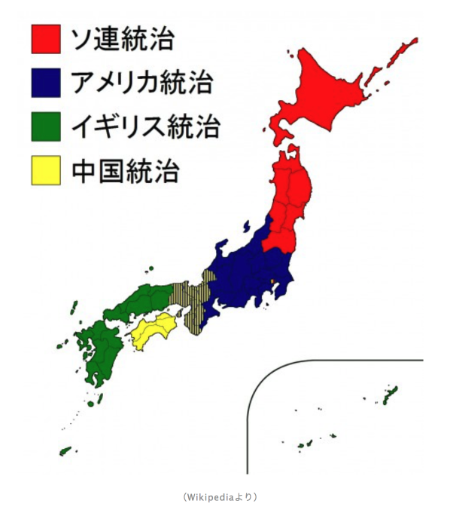
It was the speech delivered by former Sri Lankan President Jayawardena at the San Francisco Peace Conference that became Japan's saviour.
The following is quoted from the Japanese Embassy in Sri Lanka.
The late President Jayawardena attended the 1951 San Francisco Peace Conference as the representative of Ceylon (then Minister of the Treasury),
Hatred ceases only by hatred, and is overcome by love.Hatred ceases not by hatred, but by love)」
He delivered a speech quoting the Buddha's words, clearly renouncing claims for reparations from Japan and appealing for our nation to be accepted as a member of the international community.
This speech is said to have swayed even some of the victorious nations that had been demanding severe sanctions against our country at the time,
It is remembered as one symbolic event that paved the way for our nation's subsequent return to the international community.
Furthermore, the following description also appears on the Prime Minister's Office website.
As you are all well aware, it was the then Ceylon Finance Minister, Jayawardena, who delivered the speech defending Japan's sovereignty at the 1951 San Francisco Peace Conference.
The form of Japan as a nation today owes much to the significant impetus provided by that speech.
Let us bear in mind that it is thanks to distant Sri Lanka that Japan's national polity has been preserved to this day.
Summary
Sri Lanka, which has endured continuous aggression from India and European colonial powers from its founding to the present day.
Yet, even amidst a history of invasions, it sublimated its Buddhist culture, leaving behind numerous World Heritage sites for the present day.
We Japanese must not forget our close ties with post-war Japan and our gratitude towards Sri Lanka.
Following the end of the civil war in 2009, the country has embarked on substantial economic development and infrastructure improvements, steadily establishing its position as a major tourist destination.
Why not pay a visit to Sri Lanka, a country that has bestowed such great kindness upon us and is home to World Heritage sites?