Sri Lanka is an island nation in South Asia known as the 'Pearl of the Indian Ocean'.
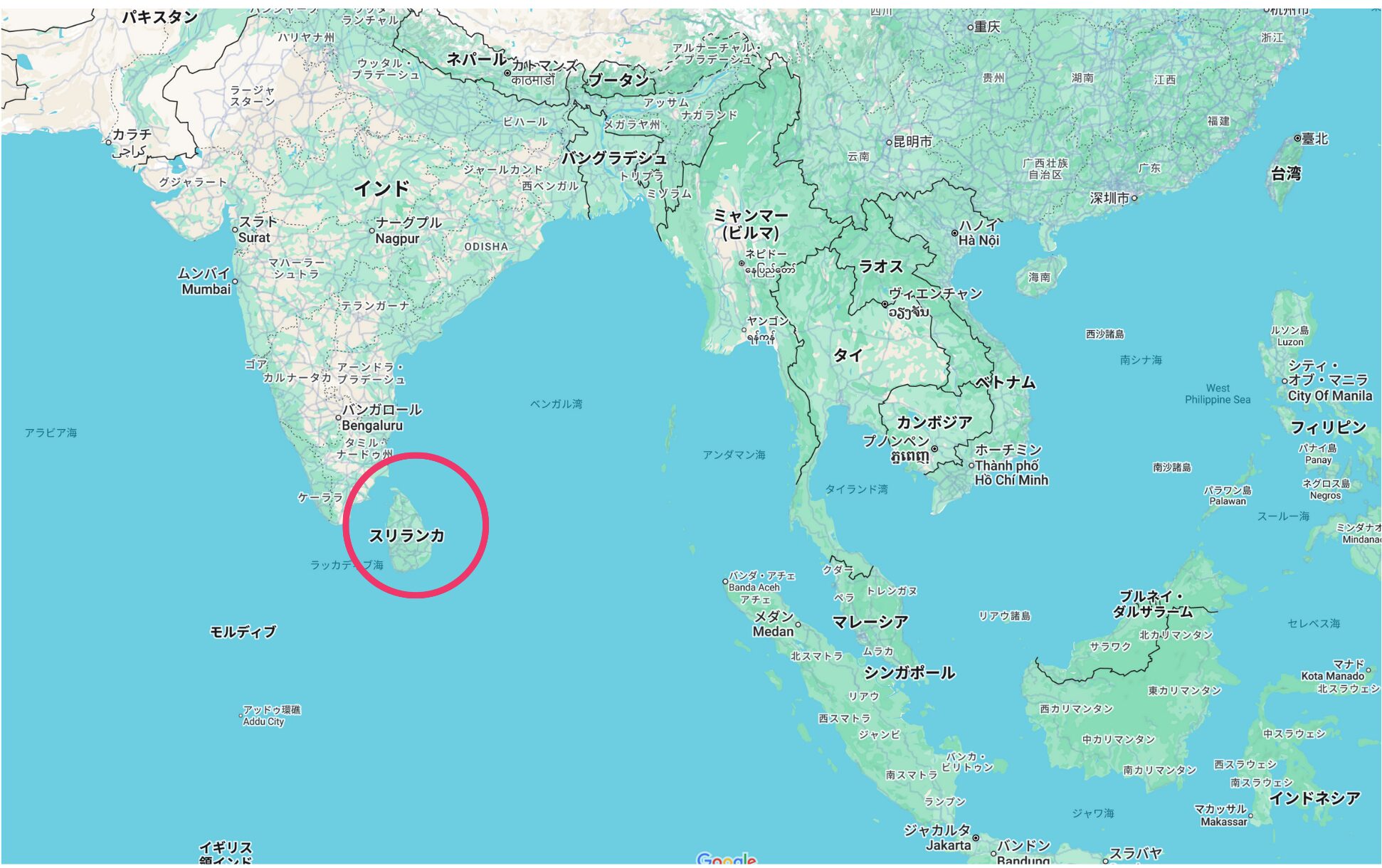
Located just below the Indian subcontinent, close to the equator, it covers an area of approximately 66,000 square kilometres, roughly 80 per cent the size of Hokkaido.
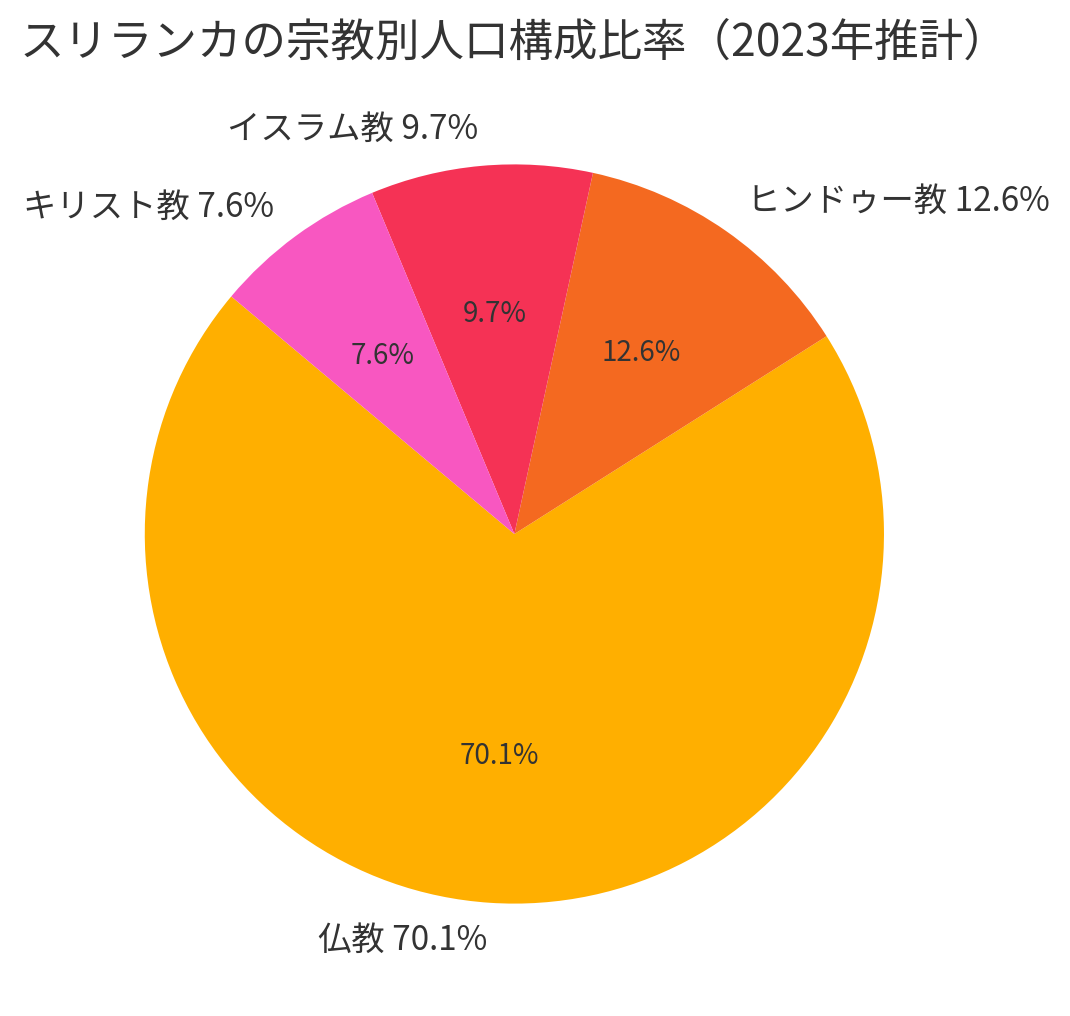
The population is approximately 22 million, the majority of whom are Buddhist (approximately 70%) Sinhalese.
It is a multi-ethnic nation where Tamil Hindus, Muslims and Christians also reside, with Sinhala and Tamil as official languages, and English is widely understood.
The capital is Sri Jayawardenapura Kotte, but the largest city is the former capital, Colombo, which serves as the political and economic centre.
A tourist destination rich in natural beauty and cultural heritage.
Tropical Sri Lanka boasts a richly varied natural landscape stretching from highlands to coastline, dotted with historical heritage sites inscribed as World Heritage Sites and national parks.
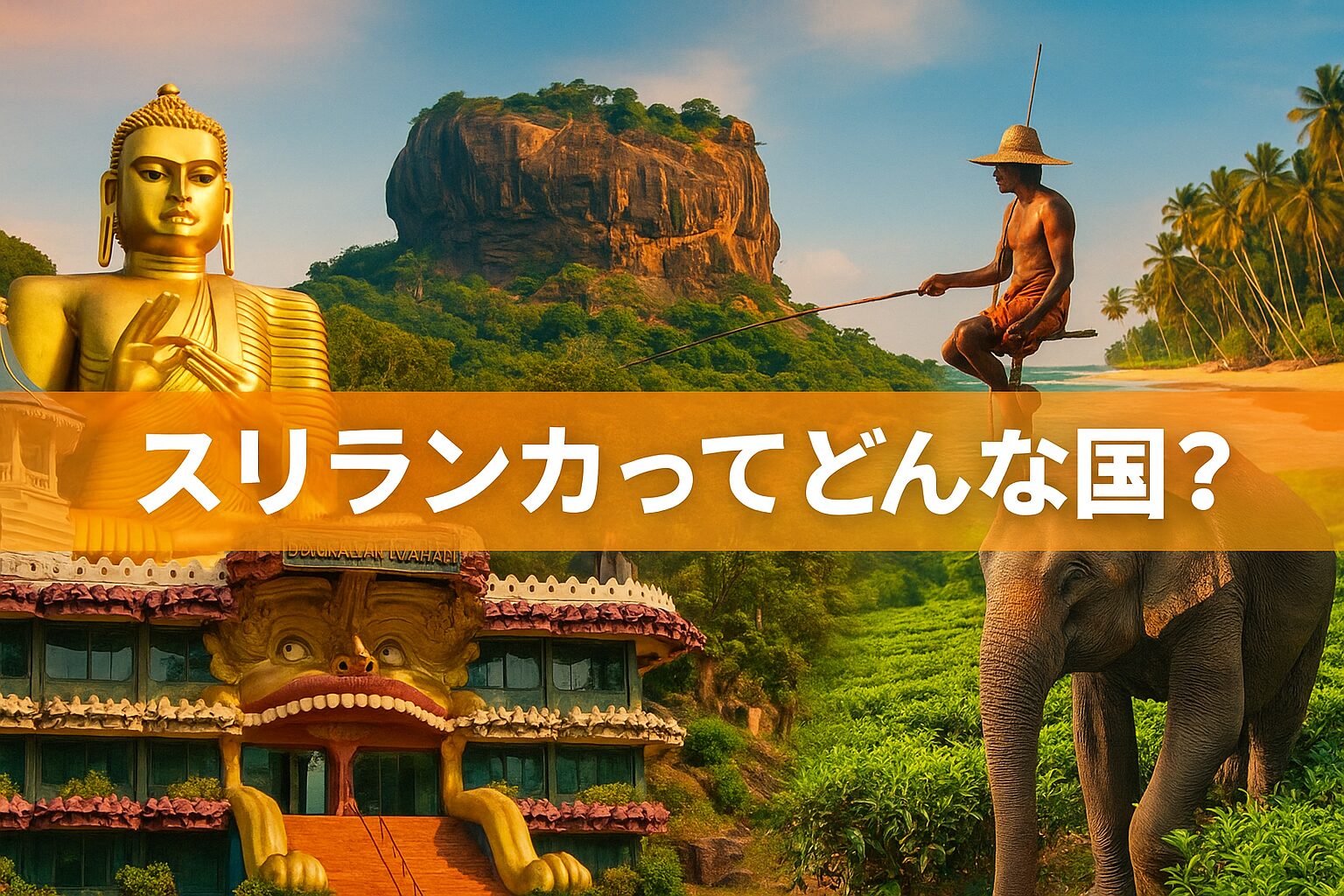
From ancient ruins and mysterious rock fortresses to tea plantations and majestic mountains, beautiful beaches and coral reefs, this captivating destination packs a wealth of attractions into its compact territory.
Renowned as a premier tea-producing region, its high-quality tea—known in Japan under the brand name 'Ceylon Tea'—is an absolute must-try.
The culinary culture is also wonderfully varied, with spicy curries and fresh seafood making gourmet dining a major highlight of the trip.
The gentle national character characteristic of a Buddhist nation. In Sri Lanka, where over 70% of the population practise Theravada Buddhism, people are said to be gentle and kind.
Indeed, a spirit of greeting one another with a smile and offering mutual assistance is deeply ingrained, even upon first meeting, and this hospitality should be felt by visiting travellers.
Buddhist culture permeates daily life, with the full moon day (Poya Day) observed as a national holiday each month. Visiting temples, one can witness the sight of people praying devoutly.
Please note that on full moon days, the sale of alcoholic beverages is prohibited nationwide for religious reasons, so travellers who enjoy a drink should take care (hotel bars may also be closed).
A country with surprisingly deep ties to Japan.
Sri Lanka is known for advocating Japan's waiver of reparations at the San Francisco Peace Conference (1951) following the Second World War, thereby supporting Japan's recovery.
Mr Jayawardena, representing Sri Lanka, quoted the Buddha's words: "Hatred is not abated by hatred, but only by love," appealing for magnanimity from the victorious nations.
This historic speech enabled Japan to avoid economic burdens and embark upon its subsequent miraculous recovery.
For these reasons, Japan and Sri Lanka have enjoyed friendly relations since ancient times.
Even today, ODA (Official Development Assistance) from Japan and corporate expansion remain robust, and shops displaying Japanese signage and Japanese cars are frequently seen throughout Colombo.
Travelling while feeling the bond between the two countries will surely create special memories.
Below, we provide a comprehensive guide covering all the essential points you should know before travelling to Sri Lanka. This includes basic information about the country, its major tourist attractions, climate and best seasons, safety and hygiene conditions, how to get there from Japan, tips for getting around locally, and model itineraries.
- Geography and Basic Information (Location, Climate, Seasons)
- Tourist Attractions and World Heritage Sites: Sri Lanka, Packed with Highlights
- Sri Lankan Tea and Gourmet: A Bountiful Selection of Food and Souvenirs
- Public Order and Hygiene Conditions and Safety Measures
- Access from Japan and Visa Information
- Advice on Getting By Locally (Communication, Etiquette, Money, etc.)
- Model Itinerary: First-Time Sri Lanka 8-Day Trip
- Summary
Geography and Basic Information (Location, Climate, Seasons)
Where is the tropical island nation of Sri Lanka?
Sri Lanka is an island nation situated in the Indian Ocean, off the south-eastern coast of the Indian subcontinent.
To the north, it is separated from India by the Palk Strait and Mannar Bay, and to the southwest, it shares a maritime border with the Maldives.
Located in a tropical region close to the equator, it has a hot and humid climate throughout the year.
However, the central region features mountainous terrain reaching elevations of around 2,000 metres, and this plateau forms a boundary where the monsoon rains bring distinct rainy seasons to different areas.is a characteristic feature.
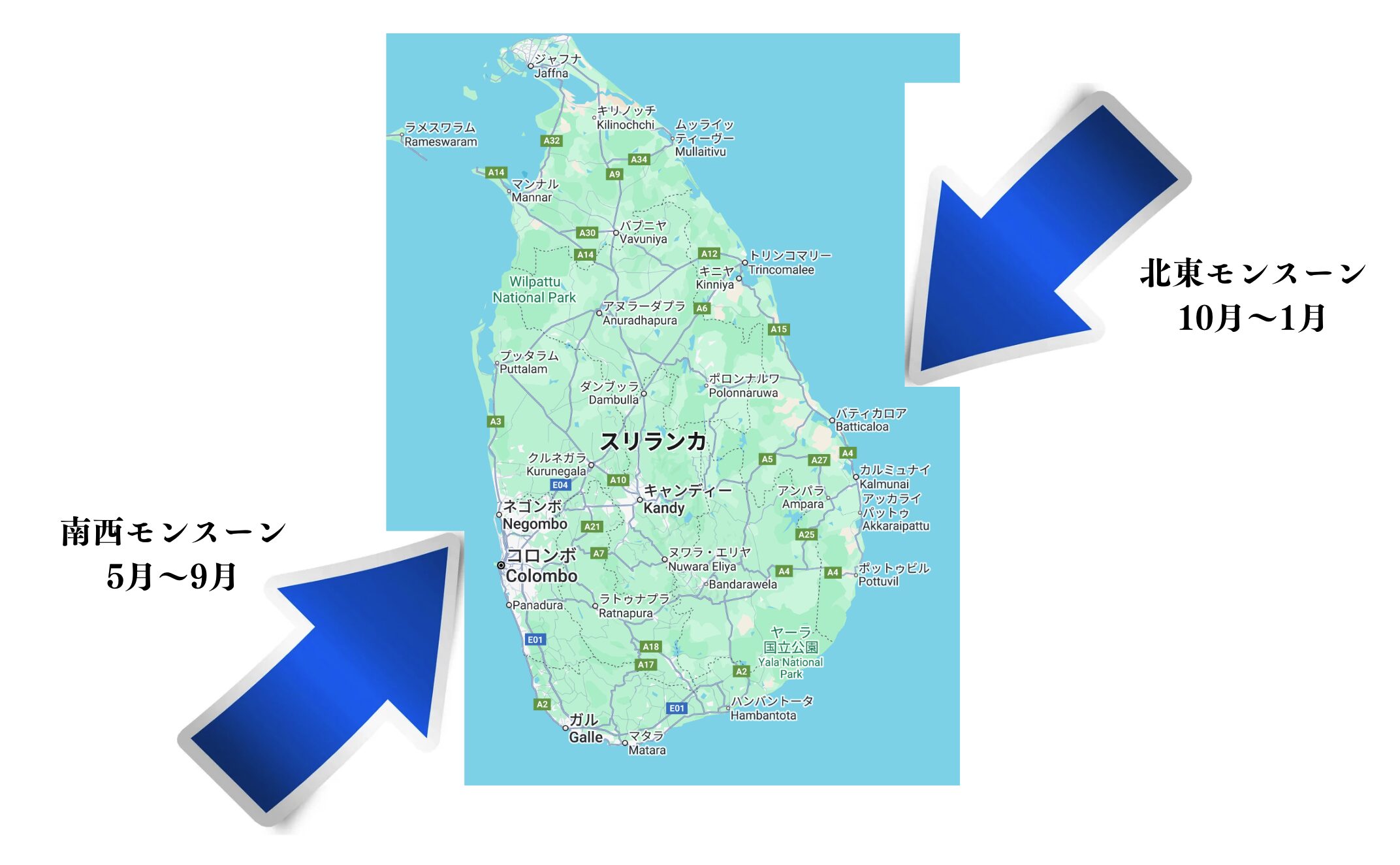
Specifically, from May to September, the southwestern monsoon brings the rainy season to the southwestern regions (including Colombo and Galle along the western to southern coast), while the northeast and east coast experience the dry season.
Conversely, from October to around January, the northeast monsoon brings a rainy season to the north and east, while the southwest experiences a dry season.
Consequently, it is often said that "whenever you go, somewhere in the country is in its prime season," making it a delightfully easy destination to plan a trip to regardless of the time of year.
When is the best season?
Given the above climatic characteristics, the best season is generally around December to March when the weather is stable nationwide.it is said.
The period corresponding to Japan's winter to spring holidays sees many tourists visiting. Particularly in the southern regions and on the west coast, beach resorts enter the dry season, offering numerous days of clear skies perfect for enjoying the sea.

However, please note that this period is a popular season, so tourist attractions and hotels tend to be crowded.
On the other hand,If you're aiming for the east coast beaches, May to September is the time.The dry season is recommended (as the south-west experiences heavy rainfall during this period).
The highland areas in the mountainous regions remain relatively cool throughout the year, with mornings and evenings sometimes turning chilly.
Even during the rainy season, it is rare for it to pour down all day; instead, it often follows a pattern of heavy, squall-like rain falling for several hours before stopping.
Therefore, even if you happen to be visiting during the rainy season, carrying a folding umbrella should not cause too much disruption to your sightseeing.
During the monsoon season, road flooding and rail service suspensions may occur, so it is advisable to check the weather forecast and allow for extra time in your schedule.
Guidelines for Temperature and Clothing
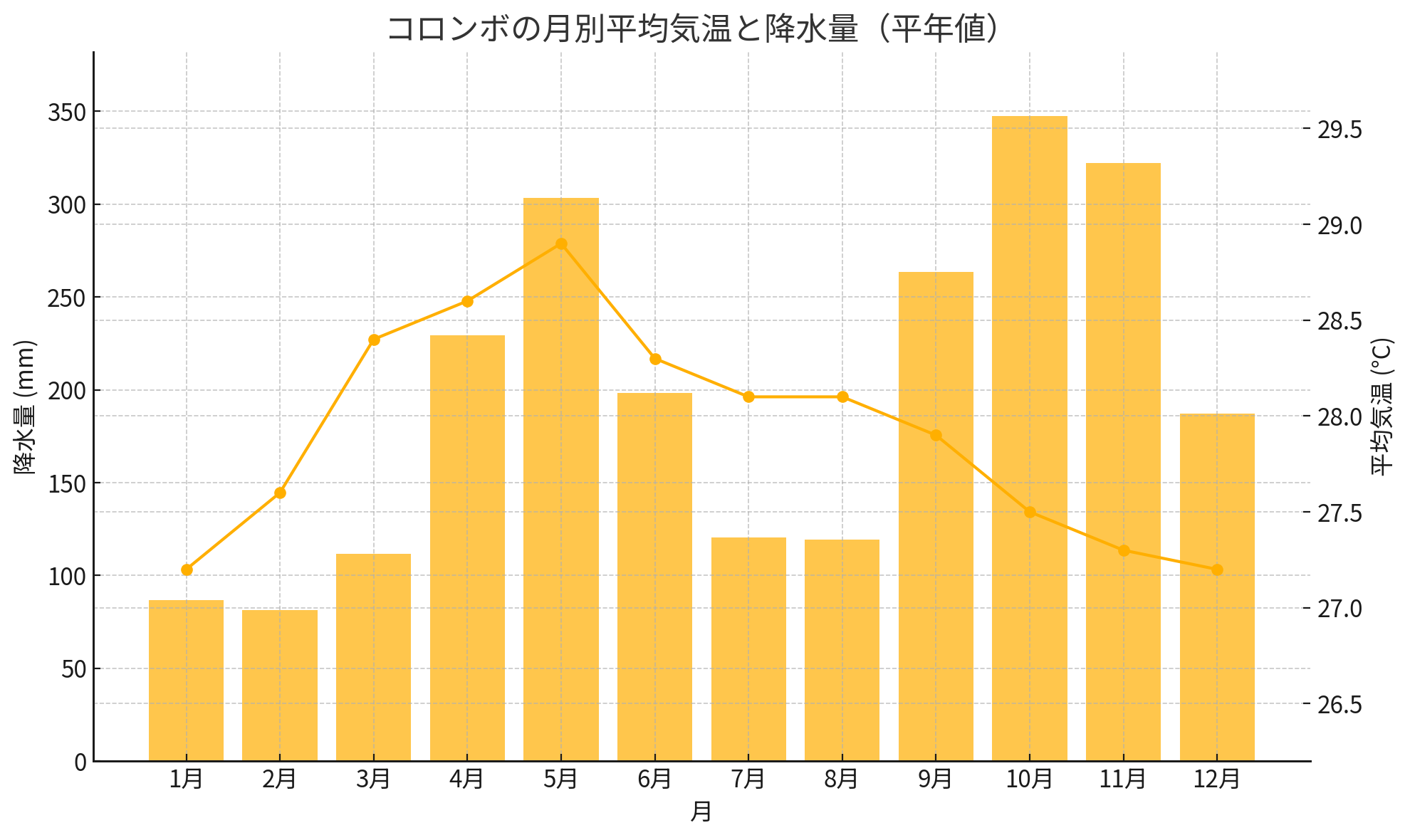
The annual average temperature in the lowlands is around 26 to 28 degrees Celsius, with the heat persisting like midsummer.
Particularly from March to April, temperatures rise most significantly, with inland areas sometimes exceeding 35°C during the day.
The coastal areas are somewhat more bearable thanks to the sea breeze, but the sun's rays are still intense, so sunscreen, a hat, and sunglassesis essential.
Meanwhile, in higher-altitude locations such as the Central Highlands town of Nuwara Eliya, temperatures drop to the low 10°C range in the mornings and evenings.
The temperature difference between day and night is significant, soLightweight jackets or long sleevesIt is reassuring to have one ready.
Also for temple visitsScarves and wraps to cover the skinIt's useful to have one on hand.
Tourist Attractions and World Heritage Sites: Sri Lanka, Packed with Highlights
In Sri LankaEight UNESCO World Heritage Sites(Six cultural heritage sites and two natural heritage sites) are present, offering a range of attractions to suit everyone from history buffs to nature lovers.
Here we introduce the main attractions by area.
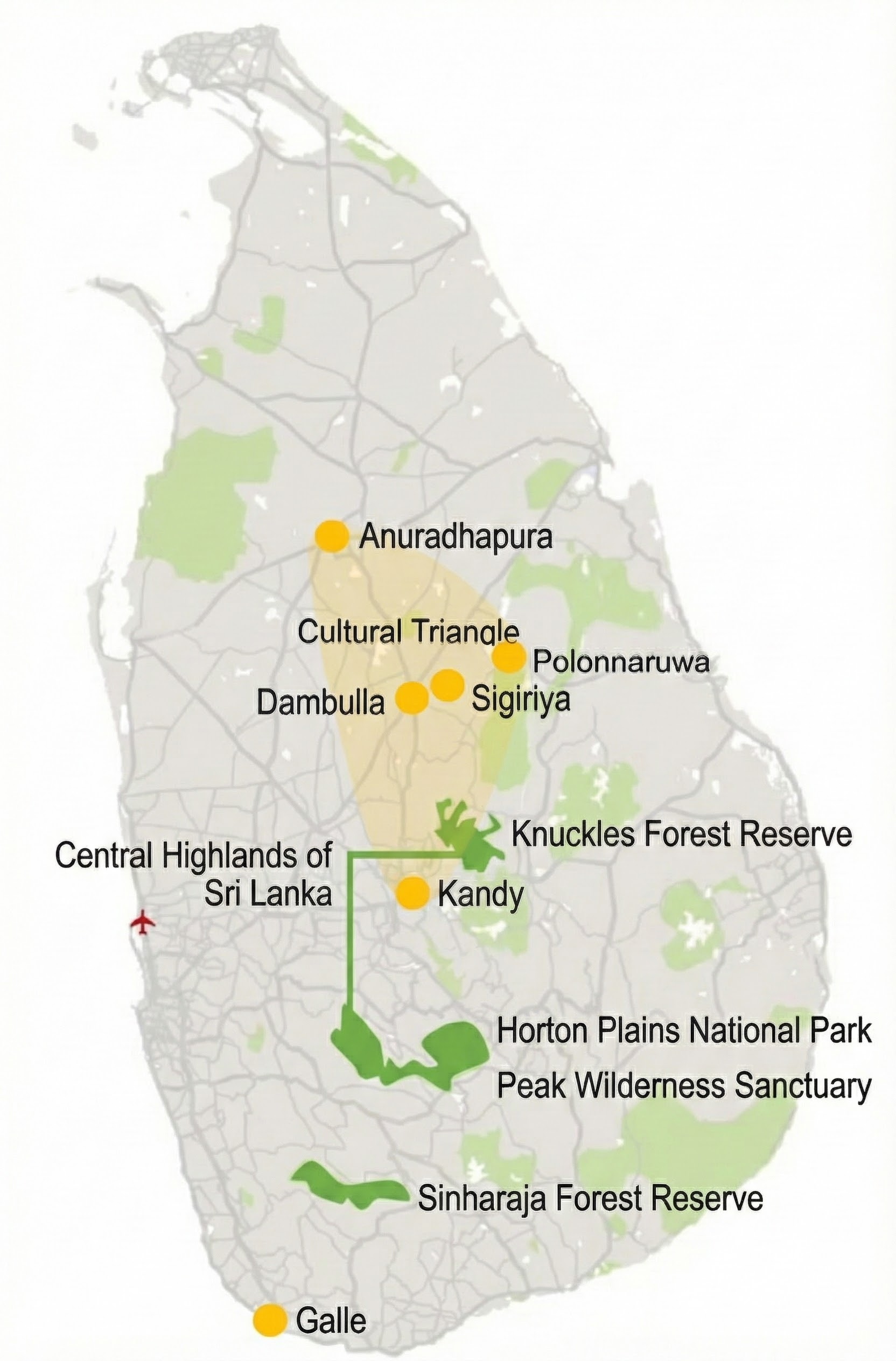
Cultural Triangle Zone (Central to Northern Inland)
This area, where the capitals of Sri Lanka's ancient kingdoms were located, is home to a concentration of World Heritage Sites including Anuradhapura, Polonnaruwa, Sigiriya, Dambulla, and Kandy.
Particularly renowned is the so-called 'Floating Palace'Sigiriya Rock」です。
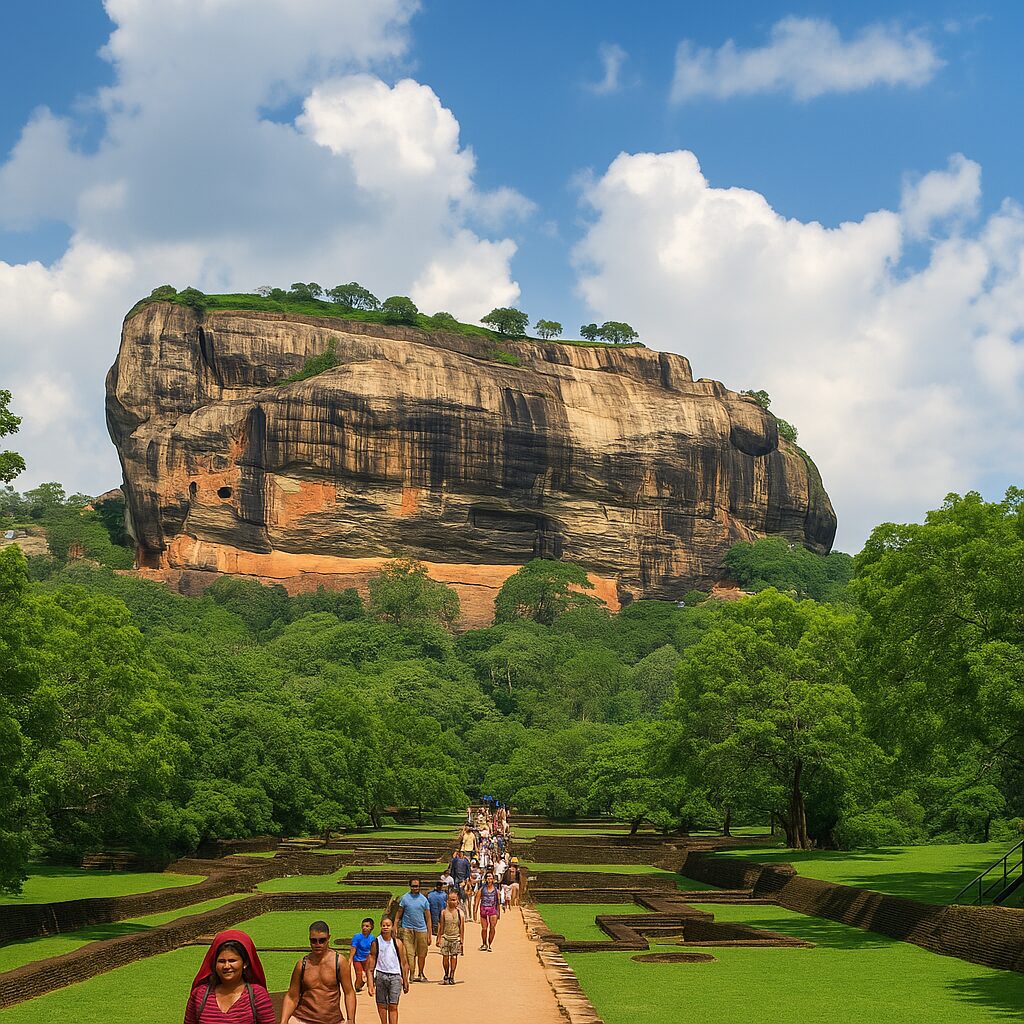

Perched atop a colossal monolithic rock, the ruins of a 5th-century royal fortress stand, boasting numerous attractions including the fresco of a beautiful lady (Sigiriya Lady) painted on the rock face and the lion-shaped stone staircase entrance.
Reaching the summit first thing in the morning allows you to avoid the crowds and enjoy the breathtaking views over the jungle-clad landscape all to yourself.
Candy was the capital of the last dynasty and a Buddhist holy site.Dhammaramkaya Temple (Buddha's Tooth Relic Temple)There is.

At the temple enshrining the Buddha's tooth relic, the grand Buddhist festival known as the Perahera is held every summer, where one can also witness the elephant procession.
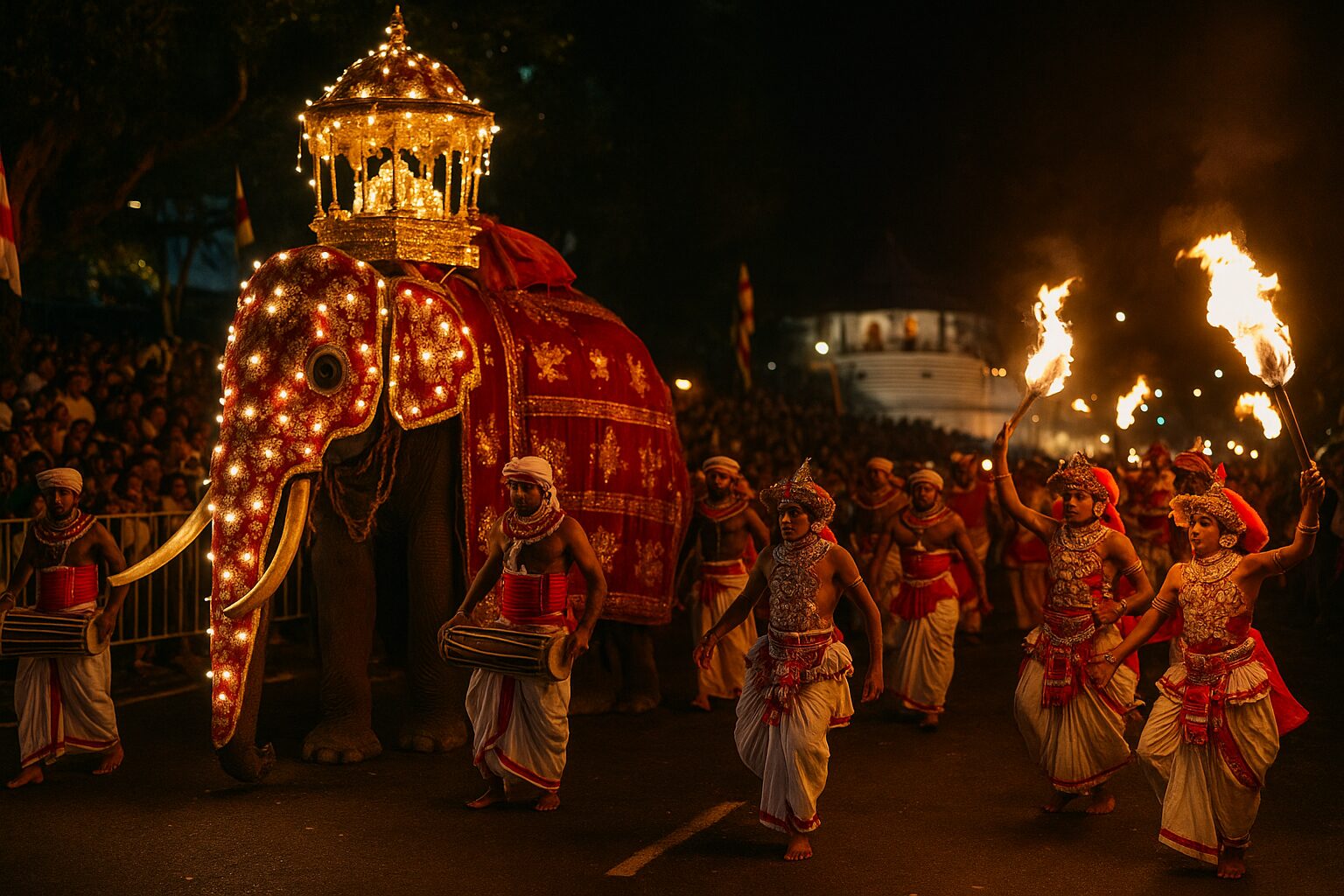
Anuradhapura and Polonnaruwa are both ancient capital sites from the dynastic era, where remaining stupas and palace ruins evoke memories of their former prosperity.
DambullaThe cave temple, renowned for its golden Buddha statue, is a must-see, featuring countless stone Buddhas and vibrant murals painted within the caves.
→ Discover the allure of Anuradhapura, the birthplace of Sri Lankan history! This guide explains the charm of this top tourist destination, including how to get there and recommended hotels.
→ Discover the allure of Polonnaruwa, one of Sri Lanka's World Heritage Sites! Explore the ancient capital's ruins.
South-West Coast Area
A two- to three-hour drive from the capital Colombo lies the port town of Galle, which retains vestiges of the Dutch colonial era.There is.

The old town and fortress are designated as a World Heritage Site, and the streetscape of cobbled lanes and Dutch-style buildings offers a European atmosphere whilst in the tropics.
This area boasts many stylish cafés and gift shops, making it a delightful place to stroll around. However, as the town itself is quite small, it can easily be enjoyed on a day trip.
Along the coast near the goal, people sit perched on tall poles to fish.You can witness the traditional fishing method known as stilt fishing.
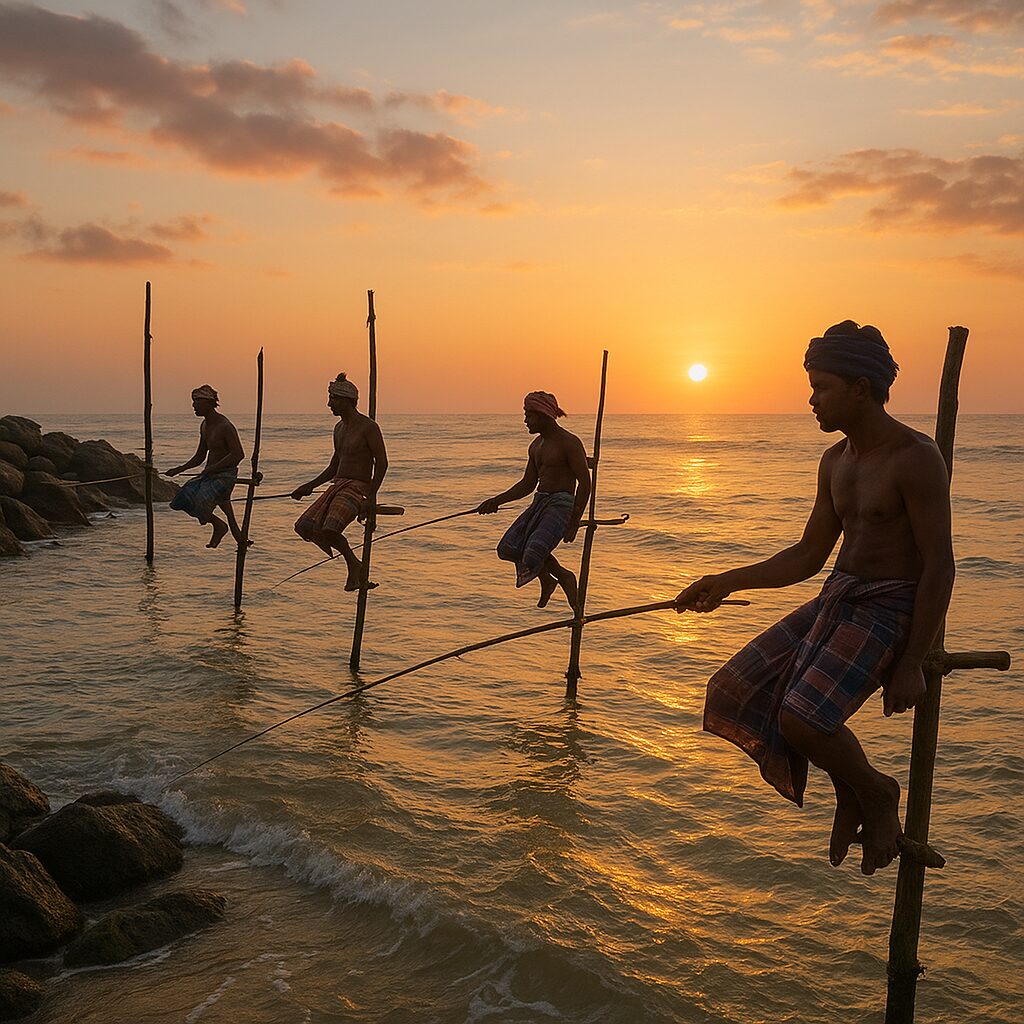
Whilst increasingly commercialised for tourism in recent years, the sight of fishermen casting their lines from stakes driven into the shallow waters against the backdrop of the setting sun remains picturesque and stands as one of Sri Lanka's most iconic scenes.
They are known for their distinctive style of fishing, perched on a stake at the water's edge with a long rod.
Central Highlands Area (Southern Inland)
The mountainous region of south-central Sri Lanka is a renowned tea-producing area.
A summer resort also known as 'Little England'Nuwara EliyaAcross the rolling hills, green tea fields stretch out, offering a refreshing landscape to enjoy.
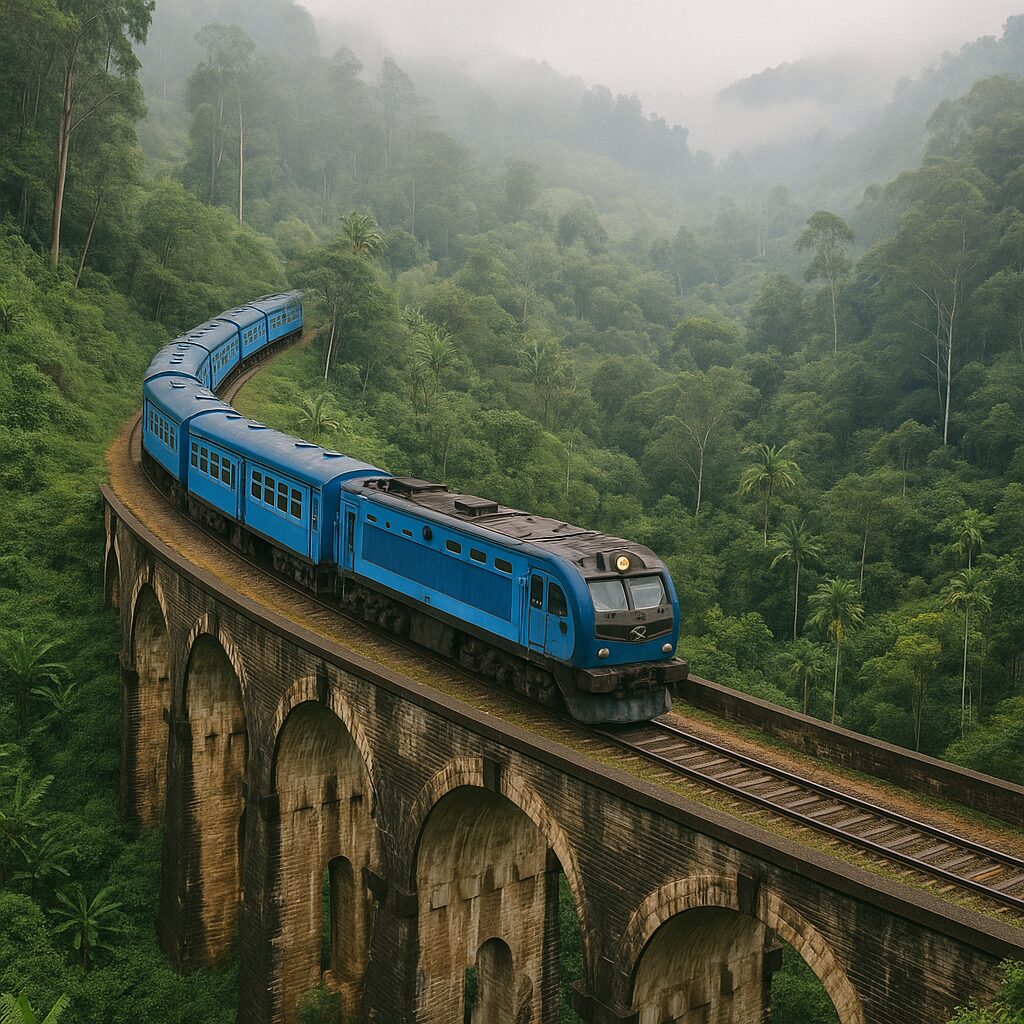
Visiting tea plantations to tour tea factories and experience tea tasting is also popular. Highland townGillIt is recommended to travel by train from Candy.
The mountain railway to Ella, often hailed as Sri Lanka's most scenic route, offers a leisurely journey where you can savour the travel experience whilst gazing at dense forests and tea plantations in the valleys, seemingly close enough to touch if you reached out the window.
Near Eura, there is an arch bridge.Nine Arch Bridge and the small hill Little Adam's PeakPhotogenic spots are dotted throughout.
If you rise early and go, you will likely encounter a mist-shrouded, fantastical landscape.
Wildlife and Nature Parks
Sri Lanka boasts numerous national parks, large and small, and is also a treasure trove of wildlife.
Particularly popular is the south-eastern region.Yala National ParkAnd when you join a jeep safari, you're highly likely to encounter wild elephants, crocodiles, peacocks, and herds of deer.
With a bit of luck, you might even encounter a leopard (Sri Lankan leopard). The dry season (roughly June to September) is ideal for observation, as animals tend to gather near water sources.
Moreover, in the vicinity of Sigiriya,Minneriya National ParkThen, around August to September each year, the phenomenon known as the 'Elephant Gathering' can be observed, where hundreds of wild elephants congregate.
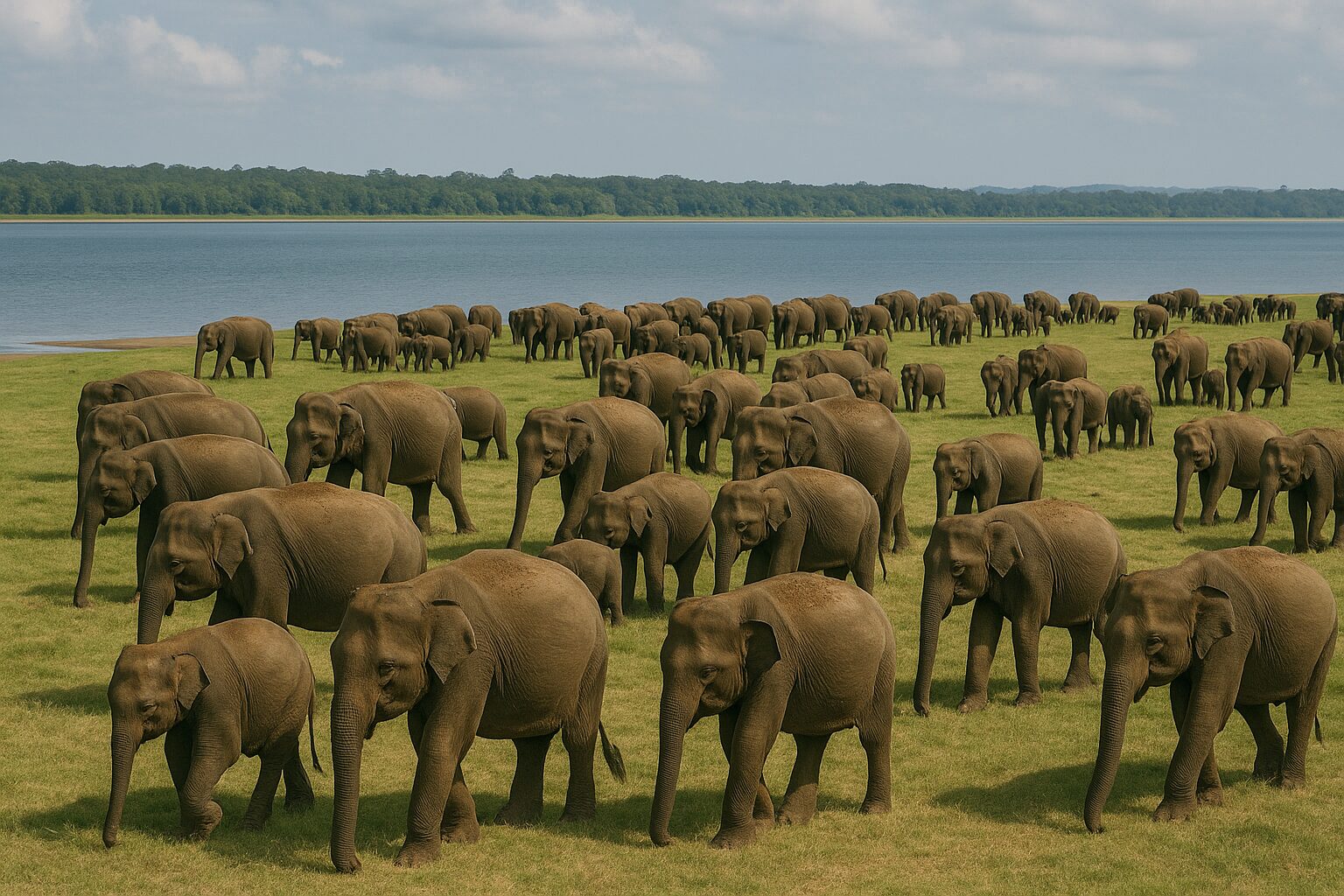
An irresistible sight for elephant lovers. In addition to this, the World Heritage site...Sinharaja Forest ReserveIn Sri Lanka's Central Highlands (such as Horton Plains National Park), visitors can enjoy precious tropical rainforest ecosystems and highland grassland landscapes, making it ideal for birdwatching and trekking.
Beach resort
Sri Lanka is also a hidden gem for surfing and marine sports.
West Coast resortBentotaor southernMillissaThe beach and facilities are well-equipped, making it an area enjoyable for beginners.
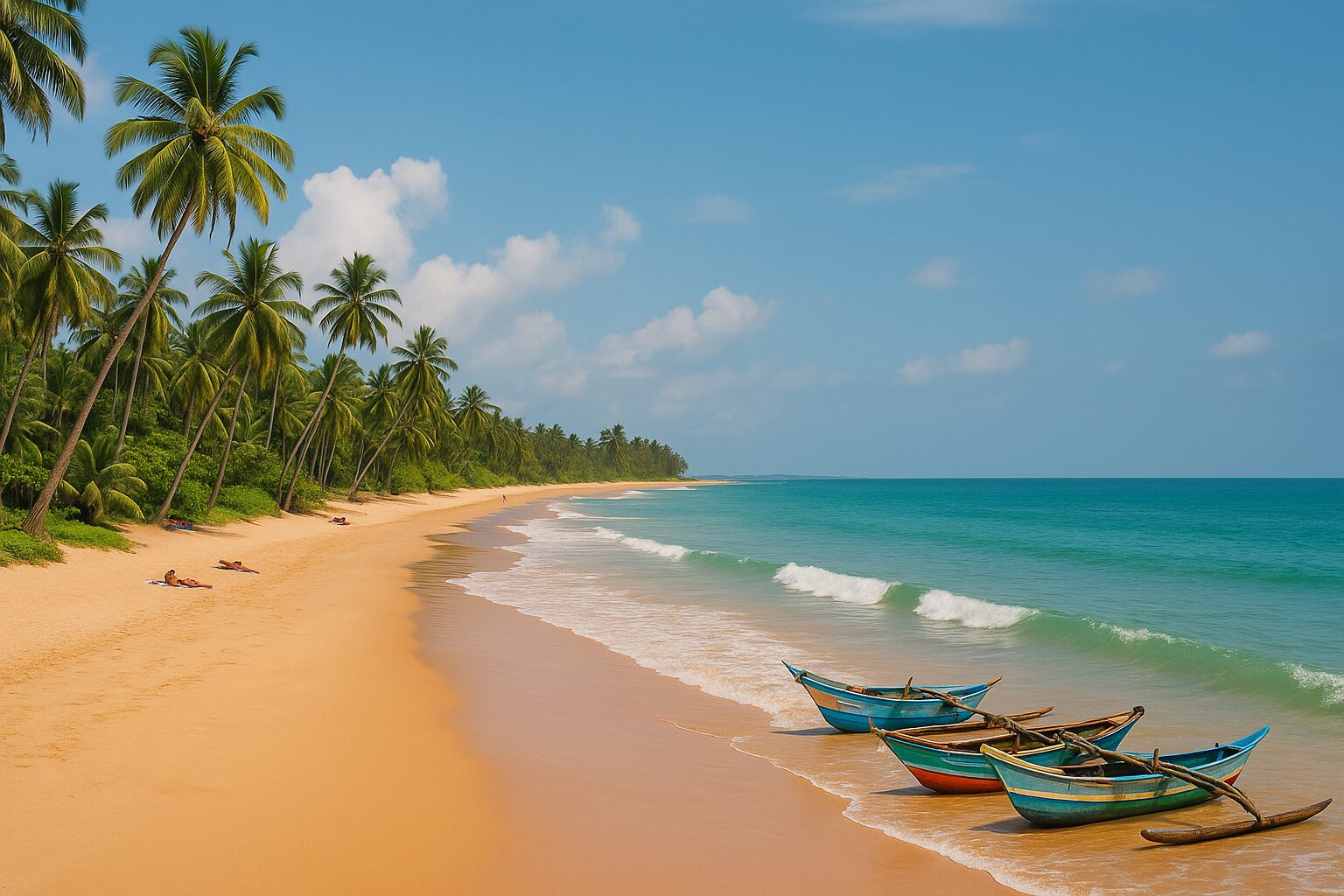
Whale watching tours are also operated in Millissa from December to April, and the area is renowned for sightings of blue whales and dolphins.
On the east coast sideTrincomaleeIt is popular, and during the dry season from May to September, crystal-clear seas and white-sand beaches stretch out, with resort hotels opening one after another.
Snorkelling and diving are also popular, and you'll likely encounter beautiful coral reefs and schools of tropical fish.
Among beaches easily accessible from the capital Colombo, those near the airportNegomboAbout an hour south by trainMount Laviniaetc.
If your itinerary allows, do take a day to savour the blue sea and the tropical sun.
Sri Lankan Tea and Gourmet: A Bountiful Selection of Food and Souvenirs
Sri Lankan tea
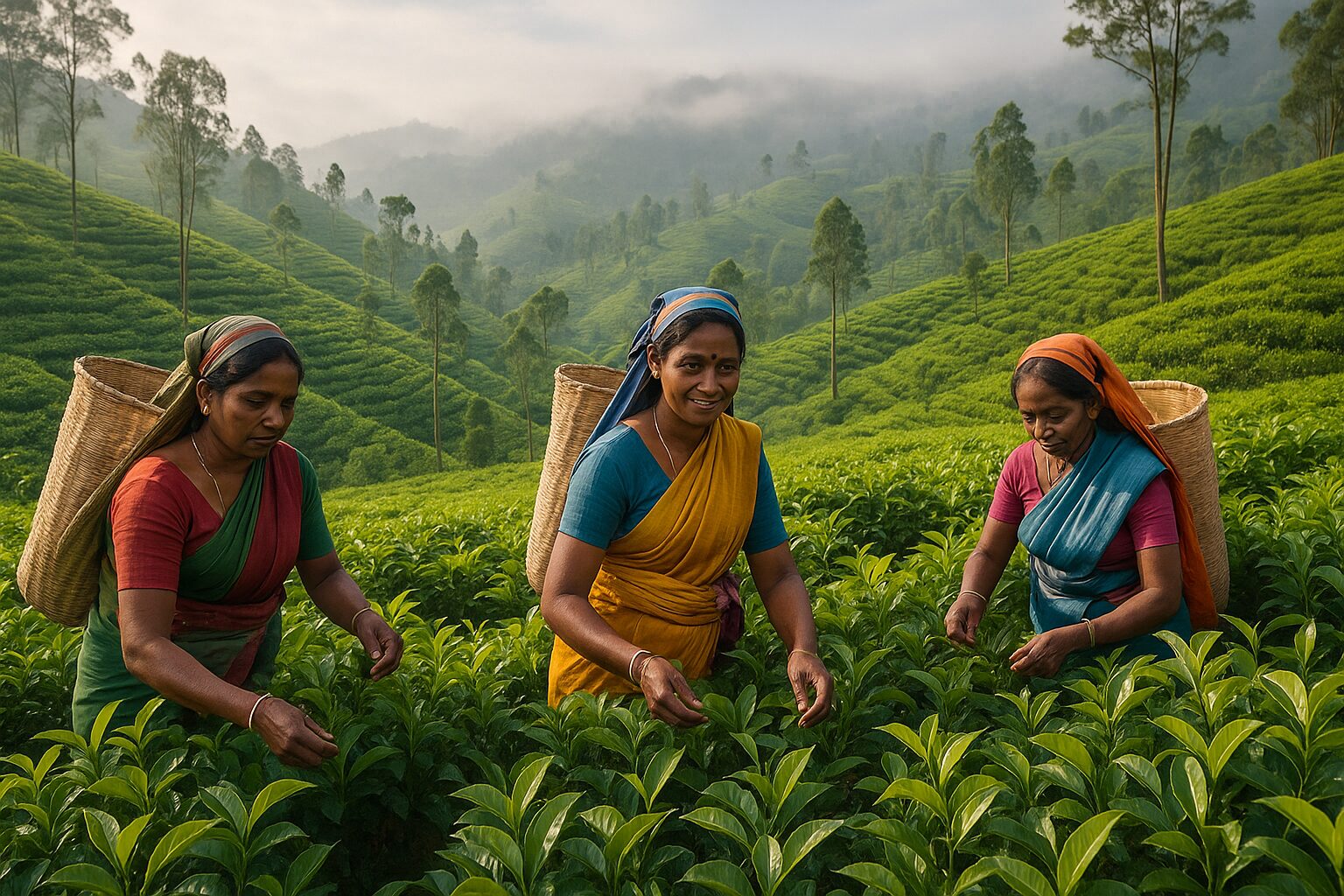
Savour the full range of Ceylon tea origins. In Sri Lanka, one of the world's foremost tea-producing nations, delicious tea can be enjoyed at affordable prices.
The tea industry, which has continued since the British colonial era, remains thriving today, producing Ceylon teas with distinct flavours according to altitude and region.

Highland varieties such as Uva, Dimbula, and Nuwara Eliya; lowland varieties including Kandy and Ruhuna; and the rarer white tea, Silver Tips, among others.
Why not seek out your favourite cup of tea locally? When visiting tea plantations, we also recommend trying your hand at tea picking and purchasing fresh tea leaves directly from the factory.
For souvenirs, alongside the classic loose-leaf tea tins, tea bags, flavoured teas, and spice-infused chai blends are also popular choices.
Let's savour Sri Lankan cuisine
"Curry all the time?" Not at all—Sri Lankan dining is wonderfully varied.
The staple food is rice, and the common style is to serve a variety of small portions of curry dishes made with different ingredients such as vegetables, beans, seafood, and meat, all served together with rice (known as 'rice and curry').
Due to its proximity to South India, there is some Indian influence, but Sri Lanka also boasts a wide variety of its own unique dishes.
For example, thin noodle-like rice flour dough steamedString HopperCrack an egg onto a rice flour crêpe and fry it.Egg HopperSliced roti (thin flatbread) and vegetables or meat are boldly stir-fried together on a hotplate.CotturottiUnique local foods such as these are definitely worth trying.
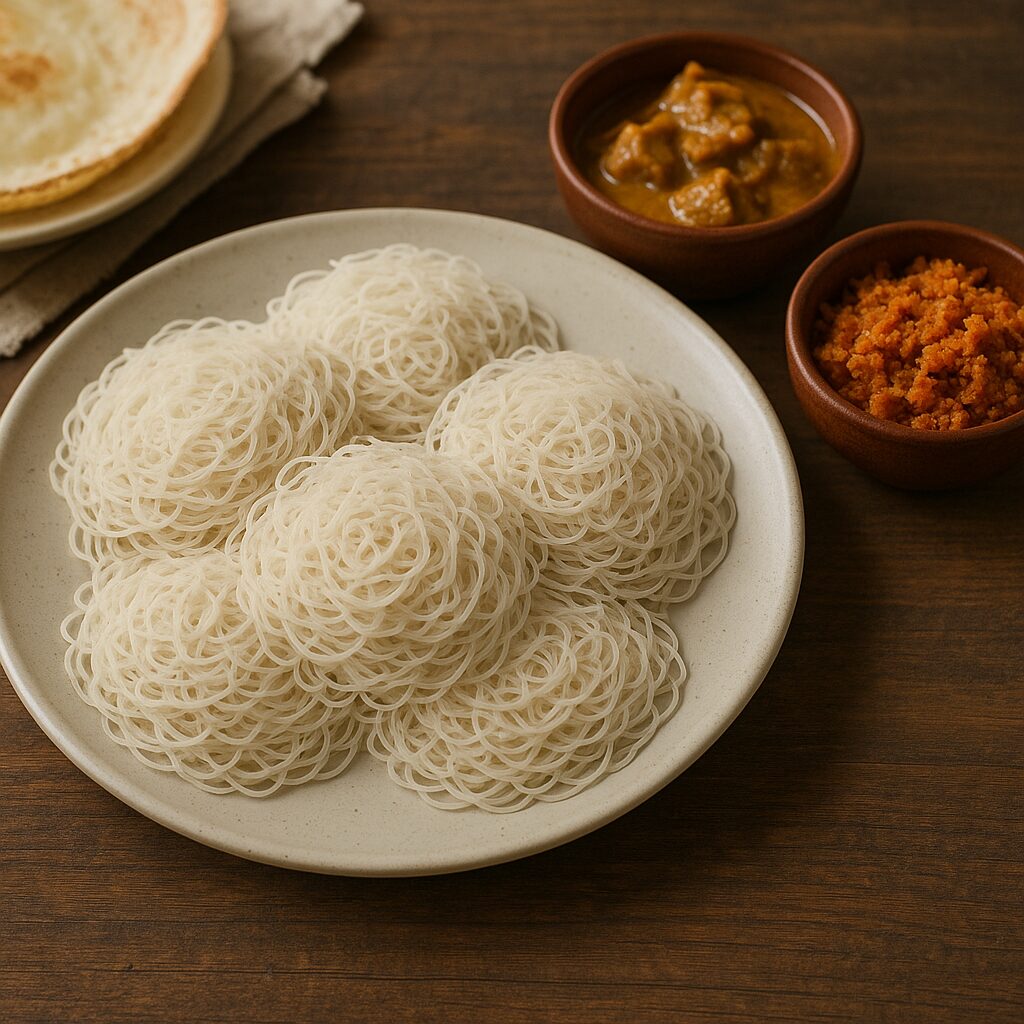
All feature well-balanced spices, though the heat level can often be adjusted to your preference at the restaurant. Along the coast, seafood curries made with fresh prawns and crab are also truly exquisite.
Surprisingly, a by-product of tea production is syrup-preserved tea leaves.Tea PicklesThey are also served as accompaniments to tea or as palate cleansers.
All sorts of gourmet information
Prices and dining options. Sri Lanka's cost of living is said to be around one-third to one-quarter that of Japan, making eating out reasonably priced. A curry set meal at a local eatery costs around 600 to 1,200 Sri Lankan rupees (approximately ¥240 to ¥480) per serving, which is very cheap, and the flavours are often simple yet delicious. Even mid-range restaurants catering to tourists offer meals for 2,000 to 3,500 rupees (approximately ¥800 to ¥1,400) per person, where you can enjoy everything from authentic spiced curries to Western cuisine. However, outside of urban areas, the quality of Western food is generally lower and often overpriced, so during your stay, be sure to actively seek out and savour the local cuisine.Do take a look. Tropical fruits such as mangoes, pineapples, bananas and coconuts are plentiful and inexpensive, so the fresh juices and cut fruit from the stalls are well worth trying.
Shopping & SouvenirsYou can acquire unique items.
Tea is a must-buy, but there are other things too.Spice、gemstone、Miscellaneous goodsWe recommend the carved wooden masks (Colonial and traditional styles), batik-dyed garments, Ayurvedic soaps and oils, and beautiful elephant-motif accessories.
Colombo city centre offers everything from modern shopping malls to local markets, with places like ODEL and Mall of Colombo being particularly convenient for souvenir shopping.
At markets without fixed prices or small independent shops, do enjoy a bit of haggling.
Public Order and Hygiene Conditions and Safety Measures
The basic security situation is stable, but one must remain vigilant. Following the end of its civil war, Sri Lanka has seen no large-scale terrorist attacks and its security situation has improved significantly.
However, even in recent years, protest demonstrations have occurred in response to political and economic turmoil.
In 2022, protests against the government erupted frequently across the country against the backdrop of fuel and essential goods shortages caused by the economic crisis.
Although the situation has calmed down since 2023, there remains a possibility of sudden demonstrations occurring in response to tax increases or policy changes in the future.
While travelling, keep an eye on local news and avoid large gatherings or demonstrations.
Furthermore, in April 2019, simultaneous bomb attacks occurred in multiple cities including Colombo; however, the risk of organised terrorism is currently considered low.
Nevertheless, it remains vital to remain vigilant in areas frequented by tourists and religious sites, and to promptly leave should you encounter any suspicious circumstances.
As an everyday crimepickpocketing, bag snatching, and fraudhas been reported.
Particularly among tactics targeting tourists, one may encounter instances such as being charged inflated fares for detours by taxi (specifically three-wheeled tuk-tuks), being demanded exorbitant tips by individuals posing as guides, or being taken to jewellery shops and persistently pressured into making purchases.
As countermeasures, ensure you adhere to basic precautions: negotiate fares before boarding a tuk-tuk or choose vehicles with meters, do not follow strangers, and avoid wearing expensive jewellery. Furthermore, for female travellers...sexual harassment and sexual offencesThere are also cases where the number is not zero.
Please take care to wear modest clothing, avoid walking alone at night, and do not readily trust men you meet locally, taking every precaution to protect yourself.

In terms of hygiene, be mindful of water and insects. In Sri Lanka, the water and sewage systems are not as well-developed as in Japan,Do not drink tap water straight from the tap.Please.
Purchase bottled water or ensure it is thoroughly boiled using the hotel's provided kettle.
Drinks containing ice should also be avoided as they carry risks. While street food is generally safe if cooked through, those with sensitive stomachs would be better off avoiding it.
Whilst Japanese restaurants catering to Japanese tastes are increasing in the capital, it is recommended to try local cuisine whilst you're here.
mosquito-borneDengue feverThese occur year-round and may be prevalent depending on the time of travel.
As vaccinations are not available, please take precautions against being bitten by using insect repellent spray, wearing long sleeves and long trousers, and carrying mosquito coils.
Rabies may also be transmitted from dogs and monkeys,Never touch stray dogs or wild monkeys.This is an ironclad rule.
If you are bitten, immediately wash the wound thoroughly with plenty of water and seek medical attention to receive the vaccine.
Regarding medical institutions and sanitation conditions: Private general hospitals are present in major cities, and the doctors are generally considered to be reasonably competent.
However, as medical standards in rural areas may be inadequate, those with pre-existing conditions should bring their regular medication from Japan and ensure they have travel insurance.
Public toilets in town may sometimes lack cleanliness.
Public toilets at tourist spots often lack paper, so it's wise to carry pocket tissues or wet wipes. Having a quick-drying towel or hand sanitiser gel for after washing your hands also provides peace of mind.
Please also be mindful of natural disasters. In recent years, Sri Lanka has experienced floods and landslides caused by heavy monsoon rains almost every year.
Particularly during the months of May to June and October to November, which are the seasons for torrential downpours, transport networks may be affected in some areas.
During your stay, be sure to check the weather forecast regularly and maintain the flexibility to alter your plans should hazardous conditions be forecast.
Tsunami warnings may occasionally be issued along the coast. Please check the hotel's evacuation routes and seek higher ground in an emergency.
Access from Japan and Visa Information
How to get from Japan to Sri Lanka
The most common method is travelling by aeroplane.
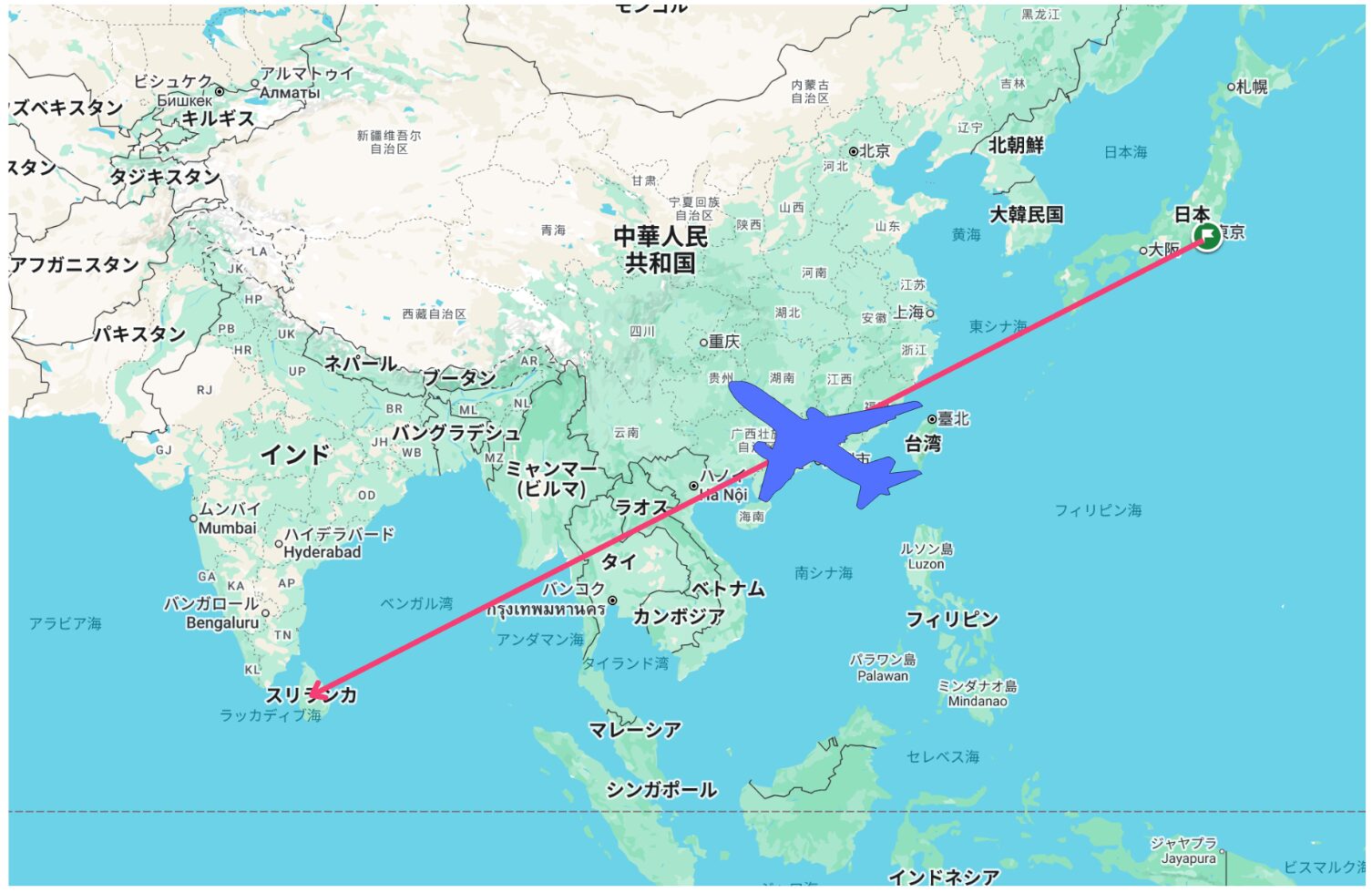
As of 2025, SriLankan Airlines operates several direct flights per week between Narita Airport and Colombo (Bandaranaike International Airport*), with a journey time of approximately nine hours.
Singapore Airlines and Malaysia Airlines also operate numerous connecting flights, with total journey times including transit at the stopover point generally taking around 12 to 15 hours.
Even when departing from regional hubs such as Kansai or Fukuoka, you can reach Colombo with just one transfer via an Asian hub airport.
The cost of airfare varies depending on the season, but a round trip typically costs around ¥70,000 to ¥100,000 (it can be cheaper if you use low-cost carriers or book well in advance).
Regarding the Acquisition of a Visa
Japanese nationals entering Sri Lanka for tourism purposes must obtain a visa (ETA: Electronic Travel Authorisation) in advance.is.
Apply and pay online, obtain your approval letter, and then travel (tourist single-entry visa for a 30-day stay costs approximately $50).
Following the Japanese instructions on the official website, the procedure is not difficult.
Whilst it was once possible to obtain a visa on arrival at the airport, the latest information recommends obtaining an ETA online.
Please note that your passport must have at least six months' validity remaining, so be sure to check this in advance.
In September 2024, the new eVISA system that had been temporarily operational was suspended, and a change was made to revert to the conventional ETA system.
Please always check the latest visa information on the websites of the Ministry of Foreign Affairs and the Embassy of Sri Lanka in Japan.
Even when an ETA has been obtained, there have been rare reports of cases where it cannot be verified during airport immigration checks due to system malfunctions.
In such cases, you may enter the country by presenting your printed ETA approval notice or by reapplying on the spot, so please remain calm and respond accordingly.
Immigration card and customs declaration
In Sri Lanka, it was previously necessary to submit an entry/exit card upon arrival; however, this paper card is currently suspended and submission is no longer required.
Customs declarations are often made verbally; there is no declaration form.
Provided it is not a prohibited item (such as fresh food or large amounts of cash), there should be no particular issues.
Transfer from the airport to the city centre. Colombo Bandaranaike International Airport is approximately 30 kilometres from the city centre.
Transport options include taxis (approximately 1 hour, costing around 6,000 to 9,000 rupees) or the airport bus (Airport Express).
Blue coaches operate to and from the airport, running every half hour to key locations in Colombo city centre in approximately one hour. Fares are remarkably low, ranging from just 150 to 500 rupees.
However, as mentioned in the section below, arranging a taxi charter in advance is most highly recommended.
Domestic modes of transport
If you wish to tour Sri Lanka efficiently and safely, chartering a taxi is the most viable option.
Whilst rail and long-distance coach fares are inexpensive, delays to timetables, the hassle of transfers, and the physical exhaustion caused by overcrowding are unavoidable.
Especially when travelling to the Cultural Triangle, dotted with World Heritage sites, or the southern beaches, numerous public transport connections are required, and simply getting around can easily take up an entire day.

With a chartered service, a driver fluent in Japanese or English will provide door-to-door service from your hotel entrance to your destination, maximising your precious sightseeing time.
The standard rate is approximately ¥10,000 to ¥15,000 per vehicle per day. For multiple passengers, it offers excellent value for money, with air-conditioned comfort and secure luggage storage.
It ensures safety even during night-time travel or sudden weather deterioration in the rainy season, making it a reassuring choice for solo female travellers and families alike.
Moreover, tuk-tuks are best suited to short distances; fare negotiations can be cumbersome, and driving manners can be erratic, making them a potential source of stress for longer journeys.
Chartered vehicles come with government-approved tourist licence plates and comprehensive insurance, and an increasing number of companies can provide Wi-Fi and child seats.
Obtain an online quote in advance and request a driver with excellent reviews, and you can relax and enjoy the scenery even on sections with poor road conditions.
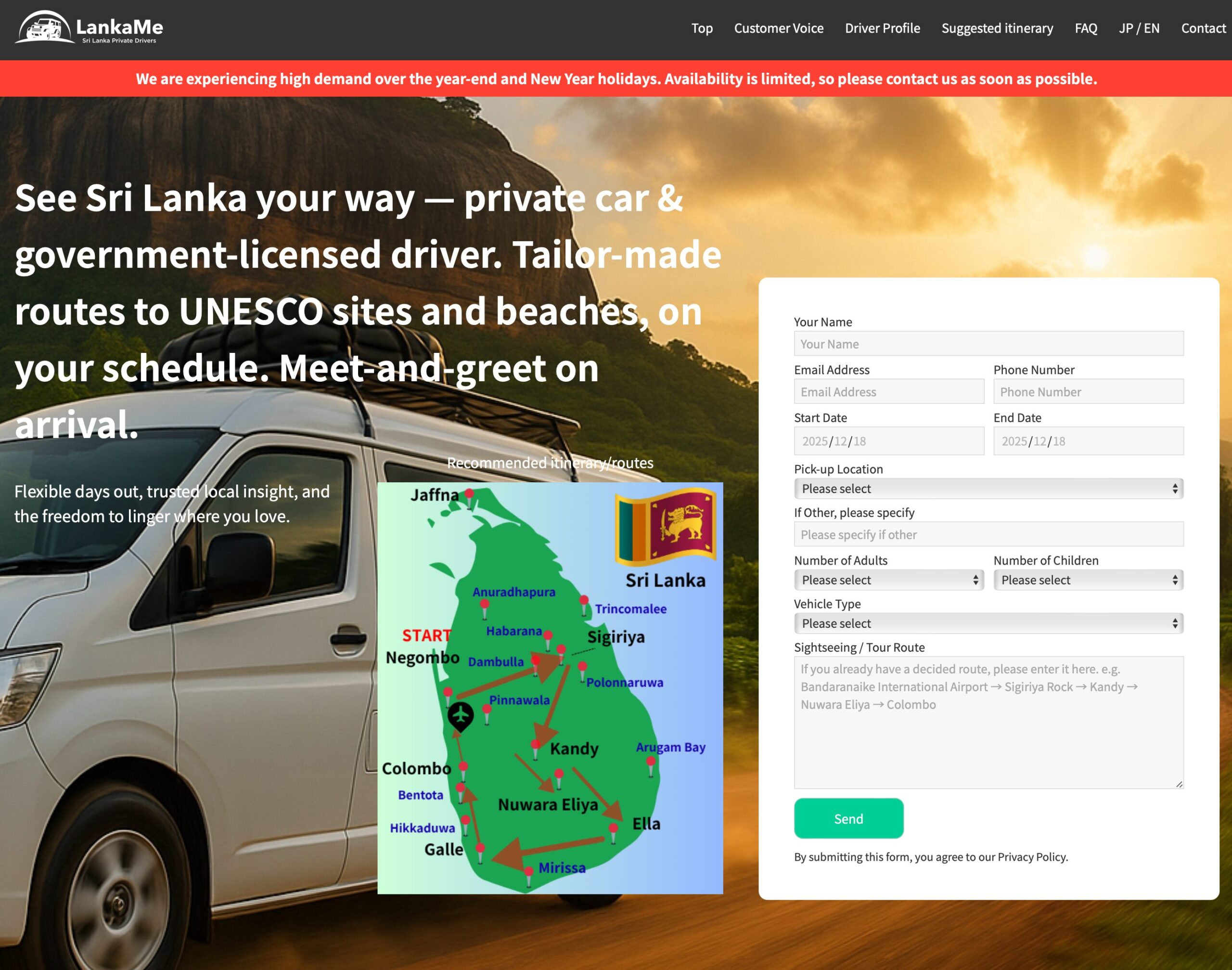
The Sri Lankan taxi charter service, Lanka Me, which the author utilised during their trip to Sri Lanka, is detailed below.

Advice on Getting By Locally (Communication, Etiquette, Money, etc.)
Communication Environment and SIM Card Situation
Major hotels and cafés offer Wi-Fi, though connectivity can be unreliable in some rural areas.
To use the internet cheaply locally, purchase a prepaid SIM card.is recommended.
Data SIM cards for travellers can be obtained in airport arrival halls and mobile phone shops around town.
Major telecommunications companies areDialogやMobitelAnd SIM cards with several gigabytes of data are available from around a few hundred yen.
Upon presenting your passport at the time of purchase, the SIM card will be activated immediately, allowing you to use your smartphone straight away.
If you wish to retain SMS reception to Japanese phone numbers, dual standby with a Japanese SIM and a local SIM is possible on SIM-free handsets.
For short trips, you could opt for a Japanese mobile provider's international roaming flat rate, though this tends to be rather pricey. Experienced travellers might consider trying a local SIM instead.
Power supply, voltage and socket configuration
Sri Lanka's voltage is 230V at 50Hz, requiring a voltage converter for Japanese electrical appliances (though many smartphone and PC chargers are compatible, it is advisable to check beforehand).
The plug shapes for sockets are predominantly the British BF type (three square pins) or the Indian B3 type (three round pins).
However, some hotels now increasingly offer universal-compatible sockets. If you are concerned, bringing a plug adapter compatible with both BF and B3 types will provide peace of mind.
Etiquette at Religious Sites
In Sri Lanka, a Buddhist nation, you will likely have many opportunities to visit temples. When doing so, please be mindful of your attire.is required.

both men and womenClothing that conceals the shoulders and knees, avoiding excessive skin exposurePlease wear appropriate clothing. Shorts and tank tops are not permitted.
Bringing a large shawl is convenient as it can be used as a wrap. Furthermore, at temples, you must remove not only your shoes but also your socks and worship barefoot.
On days when the cobblestones are hot, it's best to wear sandals so you can slip them off quickly at the entrance.
Please show respect towards Buddhist statues and monks, and only take photographs in designated areas where it is permitted. Taking selfies with your back to a statue is also considered a breach of etiquette.
At Hindu temples (kovils), it is customary to have holy water sprinkled on one's head at the entrance, and modest attire is advisable here as well.
Mosques and churches may be visited internally, but visitors are required to cover their skin.
When encountering religious ceremonies, observe quietly so as not to disturb them.
On the custom of tipping
Sri Lanka has a tipping culture due to British influence.
A service charge of 10% is generally added to restaurant bills, but it is also customary to give gratuities to hotel porters, room attendants, and guides or drivers.
As a guideline, it is advisable to hand over approximately 100 to 200 rupees for porters or pillow money, around 10 dollars per day (approximately 3,000 rupees) for a dedicated driver, and around 15 dollars (approximately 4,500 rupees) for a guide at the end of their service. Naturally, this is only if you are satisfied with the service, but a thoughtful tip is also important for creating fond memories of your trip.
Currency and Exchange/Payment Arrangements
The currency unit is the Sri Lankan rupee (abbreviation LKR). Banknotes range from 5,000 to 20,000 rupees, while coins of 10 rupees and below are in circulation.
Exchanging Japanese yen for rupees is rarely handled by banks within Japan,Exchange currency at the airport or city banks upon arrivalLet's do it.
The airport bank counters remain open even for late-night arrivals, and their exchange rates are largely comparable to those in town. It is advisable to compare rates across several providers before exchanging currency.
Major currencies (US dollar, euro, yen, pound sterling) can be exchanged directly.
As exchange rates fluctuate daily, it is advisable to check the latest rates on the Central Bank of Sri Lanka's website or similar sources for peace of mind.
Credit cards can be used at hotels, restaurants, and souvenir shops in urban areas.
However, due to infrastructure issues, communication errors may sometimes prevent its use, so do not rely solely on the card.Carry a reasonable amount of cash at all times.Please do so.
ATMs are available in Colombo and major tourist destinations, and you can withdraw cash using cards issued overseas.
Locate an ATM accepting VISA or Mastercard and withdraw local currency as required (taking note of any fees and withdrawal limits).
In terms of security, it is essential to avoid carrying large sums of money and to manage funds by keeping them separate.
Model Itinerary: First-Time Sri Lanka 8-Day Trip
Finally, for those visiting Sri Lanka for the first timeModel itinerary for approximately 8 daysWe propose a tour plan covering the south-western to central regions.
We have endeavoured to cover the highlights without rushing through them.
| Schedule | Itinerary and destinations | Content and Highlights |
|---|---|---|
| Day 1 | Departing from Japan ⇒ Arriving in Colombo | Afternoon: Colombo city tour (Gangaramaya Temple, Old Fort district, etc.). Overnight stay in Colombo. |
| Day 2 | Colombo ⇒ Sigiriya area | Morning: By express bus to Sigiriya (approx. 5 hours). Afternoon:Sigiriya RockSummit sightseeing. Overnight stay at a lodge in the jungle. |
| Day 3 | Sigiriya ⇒ Kandy | Morning: World Heritage SiteDambulla Cave TempleVisit. Afternoon: Travel to Kandy by car (approx. 2 hours). Stop at Spice Garden en route. Evening:Candy LakesideStroll andBuddha's Tooth Relic TemplePrayer viewing. Staying in Candy. |
| Day 4 | Candy ⇒ Nuwara Eliya | Morning: Participate in a tea factory tour (including tea tasting). Afternoon: Drive to the highland resort town of Nuwara Eliya (approx. 3 hours). Photo stop at tea plantations en route. In Nuwara Eliya, stroll through the British-style townscape. Overnight stay at a highland hotel. |
| Day 5 | Nuwara Eliya ⇒ Ella ⇒ Southern Yala area | Early morning:Horton Plains National ParkHighland trekking (World's End viewpoint). Morning: Travel to Ella by the Blue Train (approx. 3.5 hours). View the Nine Arch Bridge from the train window. Afternoon: Upon arrival in Ella, proceed immediately by private vehicle to Yala National Park in the southeast (approx. 4 hours). En route, pass near Udawalawe National Park with potential sightings of wild elephants. Overnight stay near Yala. |
| Day 6 | Yala National Park ⇒ South Coast Beach | Early morning:Yala National ParkJeep safari (searching for wildlife). Morning: After returning to the hotel, check out and travel west by car to the south coast (approximately 3 hours). Afternoon:Gol Old TownSightseeing (enjoying views of the Indian Ocean from the fort and browsing souvenir shops). Evening: Transfer to and overnight stay in the beach resort area (Unawatuna or Bentota). |
| Day 7 | Southern Beach ⇒ Colombo | Morning: Relaxed free time by the seaside (optional marine sports or Ayurveda experience). Afternoon: Transfer to Colombo by car or train (approx. 2–3 hours). Evening: Final shopping in Colombo (purchase souvenir tea and spices). Overnight stay in Colombo. |
| Day 8 | Departing Colombo ⇒ Arriving in Japan | Departing Colombo on a late-night flight. Arriving in Japan the following morning (overnight stay on board). |
※The above is an example.
Do take a look at my travelogue too!
Ladies planning a trip to Sri Lanka specifically for Ayurveda may also wish to refer to the following travelogue.
Summary
We've given you a quick overview of what Sri Lanka is like, from general information to practical travel tips.
Sri Lanka, a nation with a history of overcoming conflict, where people greet visitors with warm smiles and a welcoming spirit.
Time spent immersed in abundant nature and profound cultural heritage, soothed by delicious tea and fine dining, will surely linger in your heart.
Though it lies some distance from Japan, once you set off on your journey, an extraordinary adventure awaits.
Please use this article as a guide to prepare thoroughly and create wonderful travel memories in Sri Lanka, the 'Pearl of the Indian Ocean'. Have a splendid trip!